
Mechanical efficiency gains that cut energy costs fast

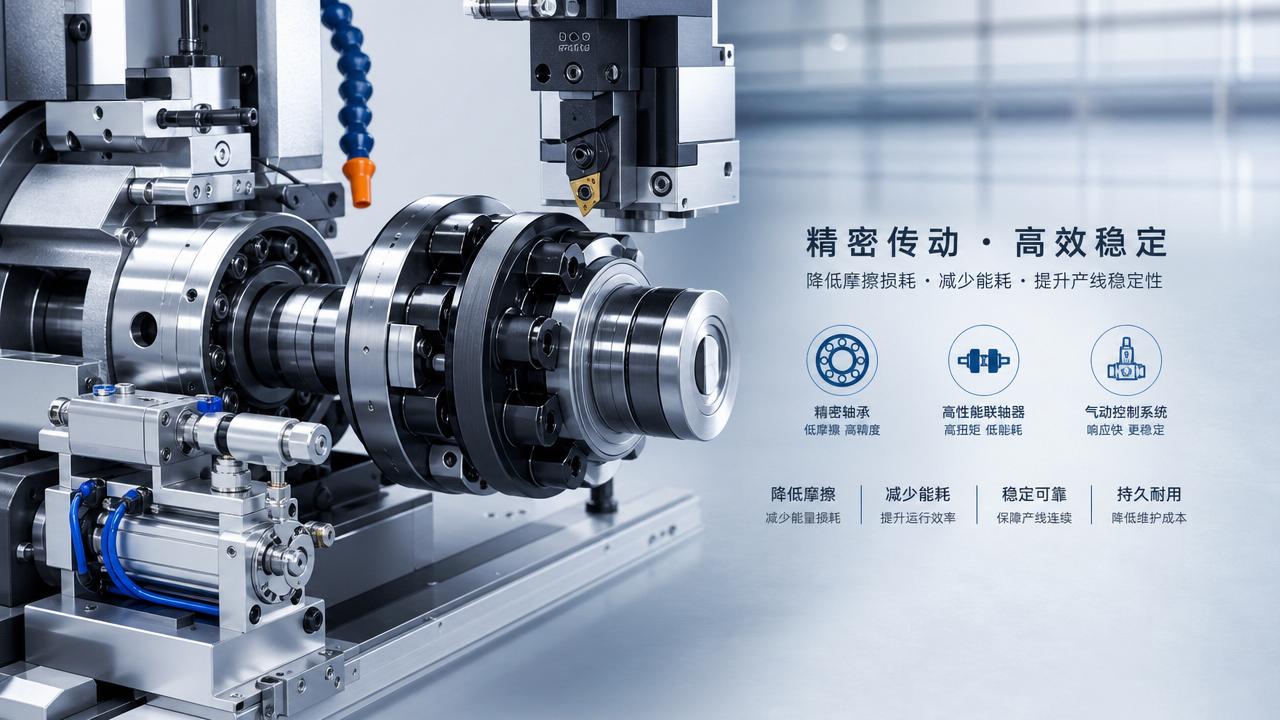
For finance decision-makers, mechanical efficiency is no longer just an engineering metric—it is a fast path to lower operating costs, stronger margins, and smarter capital allocation. By improving component performance, reducing friction losses, and optimizing tool and system reliability, manufacturers can cut energy expenses quickly while building long-term resilience across production lines.
Why mechanical efficiency matters to financial approvers now
In industrial operations, energy waste often hides inside ordinary components: bearings, couplings, pneumatic controls, cutting tools, drive assemblies, molds, and fastening systems. For a finance team, that means cost leakage is frequently mechanical before it appears on the utility bill.
Mechanical efficiency describes how much input energy becomes useful output after losses from friction, misalignment, vibration, leakage, heat, and wear are removed. Higher mechanical efficiency usually reduces power demand, lowers scrap risk, and extends service life across mixed production environments.
This matters across the broader industrial landscape because most facilities run interconnected systems rather than isolated machines. A small gain in rotating equipment, pneumatic actuation, mold cooling balance, or tool sharpness can influence throughput, maintenance labor, and line stability at the same time.
- Lower electricity use through reduced friction, drag, and mechanical loss.
- Fewer unplanned stoppages caused by premature wear, heat buildup, or unstable tooling.
- Better asset utilization because machines spend more time producing and less time being corrected.
- Improved capital discipline by targeting upgrades with visible payback rather than broad replacement.
For financial approvers, the real question is not whether mechanical efficiency is valuable. The question is where the fastest savings sit, what evidence supports the investment, and how to compare options without overbuying.
Where energy costs are lost fastest in mixed industrial operations
The quickest wins usually come from components that operate continuously, transfer torque, manage compressed air, or affect tool contact with material. These points often deliver faster returns than headline equipment replacements because they are cheaper to correct and easier to measure.
High-impact loss points
- Worn bearings and poor lubrication that increase drag and motor load.
- Misaligned shafts and couplings that create vibration, heat, and excess power draw.
- Compressed air leaks and inefficient pneumatic sequencing in automated lines.
- Dull cutting tools that force longer cycle times and higher spindle or feed energy.
- Mold and die systems with unstable thermal management, causing rework and longer runs.
- Fasteners or mechanical joints that loosen under load and create repeat adjustment needs.
GHTN’s value in this environment is its component-level view. Instead of treating energy cost as only a utilities issue, it connects material selection, tool wear behavior, pneumatic logic, and manufacturing reliability into a practical sourcing and upgrade framework.
Which mechanical efficiency upgrades usually pay back fastest?
Finance teams often need a quick screen before approving engineering requests. The table below highlights common upgrade areas, typical cost logic, and why certain measures improve mechanical efficiency faster than others in general industrial settings.
The strongest candidates are usually the ones affecting both energy use and operational continuity. When a component upgrade lowers power draw while also reducing downtime, the approval case becomes easier because savings are not dependent on a single accounting assumption.
How to evaluate proposals without relying on vague engineering claims
Many mechanical efficiency proposals fail at approval stage because they describe technical improvements but not investment logic. Finance leaders need a common structure that translates component performance into budget impact, risk reduction, and payback visibility.
A practical approval checklist
- Identify the exact loss mechanism: friction, leakage, slippage, thermal instability, or premature wear.
- Confirm the affected cost lines: electricity, compressed air, scrap, maintenance labor, spare parts, or lost output.
- Request baseline operating data before change, not only expected savings after change.
- Check whether the proposal requires shutdown time, retraining, or new compliance documentation.
- Compare the total landed cost, including installation, tooling compatibility, and service life.
- Rank projects by speed of return and strategic importance, not by technical novelty.
This is where GHTN can support procurement and finance alignment. Because it covers hardware, electrical interfaces, and mold-related manufacturing intelligence, it helps buyers see whether a lower purchase price may actually reduce mechanical efficiency and increase lifetime operating cost.
Mechanical efficiency comparison: low-price parts versus value-based sourcing
A common budgeting mistake is to evaluate industrial parts mainly by unit price. That approach may fit non-critical consumables, but it often fails where mechanical efficiency depends on tolerance control, material behavior, coating integrity, or operating stability under load.
The table below compares two common sourcing mindsets. It is especially relevant for financial approvers reviewing fasteners, rotating elements, cutting tools, pneumatic components, and mold-related parts used in demanding production conditions.
The decision is not simply premium versus economy. It is about whether the part sits in a value-critical position. If a low-cost part increases heat, drift, leakage, or wear in a high-duty application, its real cost can exceed the initial saving very quickly.
What technical signals should finance teams ask for before approval?
Financial reviewers do not need to become engineers, but they do need evidence that links specification choices to measurable operating outcomes. The most useful data points are the ones that explain why mechanical efficiency will improve in the actual application.
Useful decision signals
- Operating load, duty cycle, speed range, and ambient temperature.
- Expected reduction in friction, leakage, cutting resistance, or misalignment loss.
- Compatibility with existing hubs, shafts, actuators, molds, or machine interfaces.
- Maintenance interval changes and expected spare-part consumption.
- Any relevant conformity needs such as general electrical safety, material traceability, or documented process controls.
GHTN is especially useful when these signals cross categories. A tooling choice can affect motor load. A pneumatic choice can affect cycle balance. A fastening choice can affect vibration and structural repeatability. Those connections are where hidden financial risk often sits.
Implementation roadmap: how to cut energy costs fast without disrupting production
The best mechanical efficiency projects are staged, measurable, and narrow enough to deliver proof quickly. Large transformation plans often slow approval because they combine too many variables. A phased approach works better for both operations and capital control.
Recommended rollout sequence
- Audit the top energy-consuming lines and identify repeat downtime or quality losses.
- Select one or two component classes with clear loss patterns, such as bearings, cutting tools, or pneumatic controls.
- Run a controlled pilot with baseline data on energy use, cycle time, maintenance frequency, and scrap.
- Review payback using both direct utility savings and avoided operational losses.
- Scale only after confirming compatibility, supply continuity, and documented performance gains.
This staged model helps financial approvers avoid two extremes: rejecting worthwhile upgrades because benefits are unclear, or approving broad changes before the operating case is proven.
Common misconceptions about mechanical efficiency and cost control
“Energy savings only come from motors and drives”
Motors matter, but component-level losses are often easier to correct. Poor tooling, air leakage, friction, and unstable mechanical interfaces can quietly absorb energy every shift.
“Cheaper parts reduce budget pressure”
They may reduce purchase price, but they can also increase maintenance, energy use, and process variance. In high-duty applications, lower initial cost can become higher total cost within a short operating period.
“Mechanical efficiency is too technical for finance to judge”
Finance does not need to validate every engineering detail. It needs a disciplined framework: identify the loss, quantify the affected cost lines, test the upgrade, and compare lifecycle cost against risk.
FAQ: what financial approvers ask before funding efficiency upgrades
How do we know a mechanical efficiency project will cut energy costs fast?
Look for projects tied to continuous-use components, visible loss mechanisms, and simple installation paths. If the proposal can show baseline consumption, expected operating change, and limited production disruption, it is usually a stronger fast-payback candidate.
Which applications are most suitable for early action?
Start with rotating equipment, pneumatic automation, machining operations, and mold-dependent production where cycle time and thermal stability matter. These areas often combine energy waste with quality or maintenance penalties, making savings easier to validate.
What should procurement ask suppliers to provide?
Ask for application fit, material or tolerance rationale, expected wear behavior, compatibility notes, and any relevant conformity information. Suppliers should also explain how the proposed part improves mechanical efficiency under your specific load and duty conditions.
Is a pilot necessary before broader rollout?
In many cases, yes. A pilot limits risk, creates internal proof, and helps teams separate real gains from assumptions. It is especially useful when multiple variables affect performance, such as tooling geometry, air logic, or mold thermal behavior.
Why choose us for mechanical efficiency intelligence and sourcing guidance
GHTN supports finance, procurement, and operations teams that need more than catalog-level information. Our strength lies in connecting underlying industrial components with production logic, compliance awareness, and market insight across hardware, electrical, pneumatic, and mold-related applications.
- We help clarify which component upgrades are most likely to improve mechanical efficiency in your operating context.
- We support parameter confirmation, including load conditions, material selection, tolerance expectations, and interface compatibility.
- We assist with product selection across mechanical tools, electrical hubs, pneumatic logic, and mold-related supply chains.
- We help buyers review delivery timing, sourcing alternatives, sample support options, and practical quotation discussions.
- We provide insight into general compliance expectations and market-entry considerations where cross-border industrial sourcing is involved.
If your team is evaluating an efficiency-related purchase, contact GHTN with the application scenario, component category, operating conditions, target savings, and delivery requirements. We can help you narrow the shortlist, compare options on lifecycle value, discuss certification or documentation needs, and structure a sourcing path that supports faster cost reduction without losing technical fit.
Related News