
Tooling technology mistakes that slow production lines

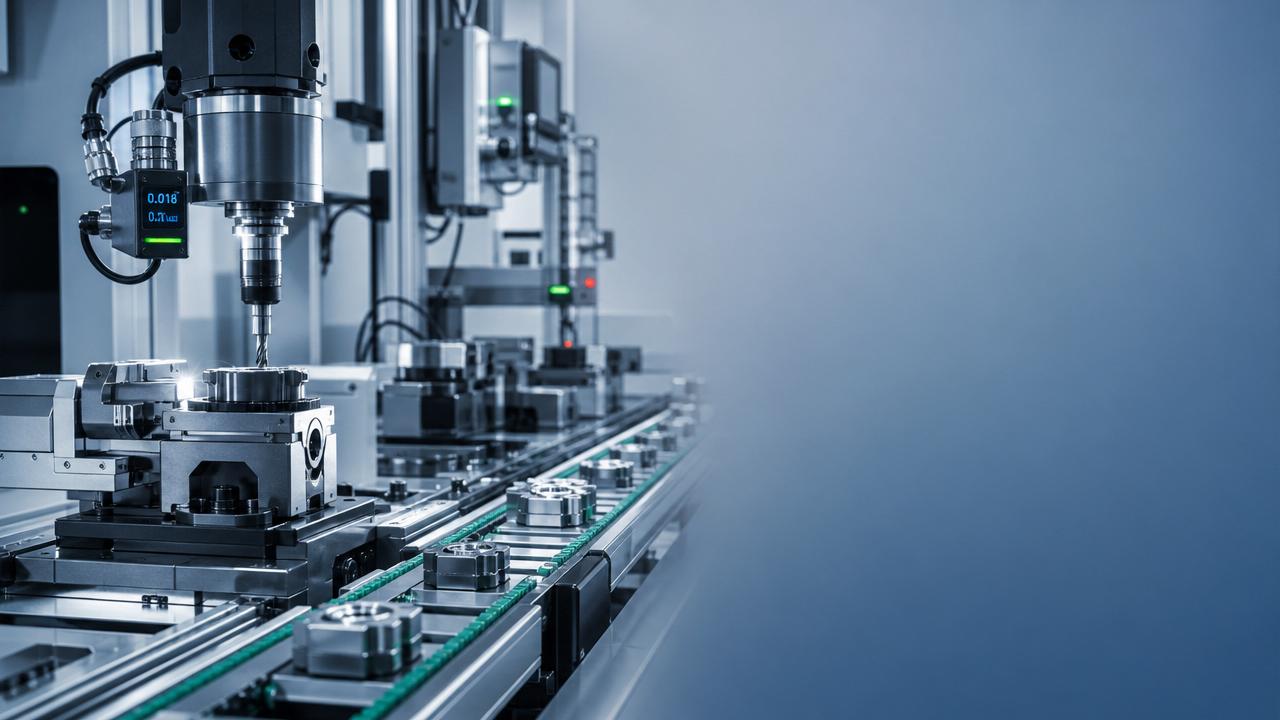
Small tooling technology mistakes can quietly drain line speed, raise scrap rates, and create avoidable downtime for operators. From poor tool selection to inconsistent maintenance and weak process integration, these issues often build up before teams notice the real cost. This article explores the most common errors that slow production lines and shows how smarter tooling decisions can improve efficiency, stability, and daily operating performance.
For operators and line users, the biggest issue is usually not a dramatic machine failure. It is the steady loss of rhythm caused by tools that wear too fast, fit poorly, or create constant adjustments.
The core search intent behind tooling technology in this context is practical problem-solving. Readers want to know which mistakes slow output, how to spot them early, and what actions improve uptime without overcomplicating production.
That means this article focuses on operator-relevant decisions: tool choice, setup quality, maintenance discipline, line compatibility, and process feedback. It avoids generic theory and concentrates on issues that directly affect daily production performance.
Why small tooling technology mistakes create big production losses
Many production delays do not begin with a major breakdown. They begin with a cutting edge that degrades earlier than expected, a mold insert that drifts slightly, or a fixture that no longer holds repeatable alignment.
These problems seem minor in isolation, but production lines depend on consistency. When tooling technology is not matched to real operating conditions, the line loses speed in small steps that accumulate across every shift.
Operators often see the first warning signs before anyone else. Cycle times stretch, material flow becomes less predictable, finished parts need more inspection, and more stops are required for cleaning, resetting, or compensation.
This is why tooling decisions matter beyond engineering teams. The practical value of good tooling technology is not only better technical performance. It is smoother daily work, fewer interruptions, and more stable output under normal production pressure.
Common mistake 1: choosing tools by price instead of process fit
A low purchase price can look attractive, especially when replacement volumes are high. But if the tool does not suit the material, operating speed, heat level, or tolerance requirement, the apparent savings disappear quickly.
For example, an inexpensive cutting tool may wear rapidly in harder materials. A lower-grade mold component may fail to hold dimensional stability across repeated cycles. In both cases, operators pay through slower production and more rework.
The better question is not “What is the cheapest tool?” but “What tool performs best under this exact process condition?” That includes material type, feed rate, vibration, temperature, lubrication, and changeover frequency.
Good tooling technology selection should also consider how easy the tool is to install, adjust, and monitor. A tool that performs well in theory but complicates routine handling may still reduce real line efficiency.
For operators, poor process fit usually appears as inconsistent part quality, frequent edge touch-ups, unstable machine behavior, or repeated line stops. If these symptoms appear often, the root issue may be the original tool choice.
Common mistake 2: ignoring early wear signals until failure happens
Many lines treat tooling wear as a replacement event rather than a monitored condition. This is one of the most expensive habits in production because tools usually give warning signs long before complete failure occurs.
These warning signs include rising cutting force, increased burr formation, more heat marks, unstable dimensions, unusual sound, and longer machine response times. Operators who notice these changes early can prevent larger interruptions.
Without a wear-monitoring routine, teams often continue running until quality drops sharply or the tool breaks. At that point, the line may need emergency stoppage, extra inspection, cleanup, and possibly machine or workpiece repair.
Effective tooling technology management does not always require advanced software. In many plants, a simple wear checklist, replacement interval record, and operator feedback log can significantly improve response timing.
When operators are trained to report trends instead of only failures, the line becomes easier to control. Planned intervention is almost always faster and cheaper than reactive repair after the process has already drifted out of tolerance.
Common mistake 3: weak setup discipline during tool changes
Even high-quality tools can underperform when setup practices are inconsistent. Incorrect clamping force, poor alignment, contamination at contact surfaces, and rushed offset entry can all create immediate process instability.
In fast-moving production environments, changeovers are often judged mainly by speed. But a fast tool change that causes five micro-stops afterward is usually worse than a slightly longer changeover done with proper verification.
Operators should pay close attention to seating surfaces, tightening sequences, calibration points, and trial-run validation. Small deviations during setup often lead to chatter, uneven wear, vibration, or non-repeatable results across the shift.
Tooling technology only delivers value when installation quality supports its design capability. A precision tool placed into a dirty, worn, or misaligned holder cannot deliver precision in real production conditions.
Standard work instructions help here, but they must be realistic. If the setup procedure is too vague, teams improvise. If it is too complex for line speed, people skip steps. The best procedures are short, visible, and easy to verify.
Common mistake 4: separating tooling decisions from machine and line conditions
Tools do not work alone. They operate inside a larger system that includes machine rigidity, spindle condition, pneumatic response, sensor timing, coolant delivery, fixture stability, and part handling accuracy.
A common mistake is blaming the tool when the wider production environment is actually the limiting factor. A new insert, die, or fixture may not solve a problem caused by machine backlash, pressure inconsistency, or poor lubrication flow.
This is where tooling technology must be viewed as part of process integration, not an isolated component. Operators often have valuable insight because they see how the tool behaves during real cycle transitions, not just test conditions.
If a tool repeatedly shows uneven wear or unstable cutting despite correct specification, teams should review adjacent variables. Check holder condition, machine vibration, coolant path, workholding pressure, and part feed consistency.
In automated lines, synchronization matters even more. A well-designed tool can still slow production if robotic loading is slightly off position, pneumatic clamps react late, or upstream variation changes the tool’s effective workload.
Common mistake 5: using one tooling standard for very different jobs
Some factories try to simplify purchasing by standardizing heavily across lines. Standardization has benefits, but it becomes a mistake when very different materials, tolerances, or batch patterns are forced into one tooling strategy.
A tool that performs well in a stable, high-volume run may not be the best option for frequent changeovers or mixed-material production. Similarly, a robust general-purpose tool may not support the precision needed for tighter tolerance work.
Operators feel this mismatch through extra adjustments, inconsistent tool life, and more inspection holds. In practice, the line is paying for convenience in procurement with reduced flexibility and lower operating efficiency.
Good tooling technology strategy balances standardization with application-specific selection. The goal is not endless customization. It is to identify where a common platform works and where process-critical differences require a better-fit solution.
This approach also supports training. When teams understand why certain jobs need different tooling rules, they make better decisions during setup, monitoring, and troubleshooting instead of assuming every station behaves the same way.
Common mistake 6: poor maintenance of holders, fixtures, and supporting components
Tool performance depends heavily on the condition of the supporting hardware around it. Worn holders, damaged collets, loose fixtures, and contaminated seating surfaces can reduce accuracy even when the primary tool is still new.
These supporting parts are easy to overlook because they fail gradually. The line adapts little by little, and operators may compensate manually without realizing that the underlying hardware is degrading.
Typical symptoms include repeatability issues, unusual vibration, part marking, inconsistent clamping, and shortened tool life. When these appear, replacing only the cutting or forming element may not solve the problem.
A strong tooling technology program includes inspection and replacement standards for the entire tool interface, not just the visible working edge. This is especially important in precision manufacturing where micron-level drift creates downstream quality costs.
Operators benefit from simple maintenance triggers: visual checks, cleaning intervals, torque verification, and run-count thresholds. These routines reduce avoidable instability and make troubleshooting more objective.
How operators can identify tooling-related slowdowns faster
Operators are often the first to notice when line performance changes, but the signal gets missed if observations are not organized. The key is to connect visible symptoms with likely tooling causes.
If cycle time rises gradually, look at wear progression, chip evacuation, fixture repeatability, and setup drift. If scrap increases suddenly, check for tool damage, clamping errors, contamination, or unexpected material variation.
If the machine sounds different, do not ignore it. Noise changes can indicate vibration, alignment problems, poor seating, or lubrication issues. In many cases, sound is an earlier warning than visible quality failure.
It also helps to track problems by shift, part type, and tool batch. Patterns often reveal whether the issue is a specific tooling technology mismatch or a broader process problem affecting several stations.
When teams share these observations consistently, troubleshooting becomes faster. Instead of changing multiple variables at once, they can isolate the most probable cause and avoid unnecessary downtime.
What better tooling technology decisions look like in daily production
Better decisions usually start with better questions. Which tool delivers stable output across a full run, not just at startup? Which option reduces adjustment frequency? Which setup method gives repeatable results between operators?
On the floor, good tooling technology decisions are visible in practical ways. Tool life becomes more predictable, line stops are easier to plan, part quality stays stable longer, and operators spend less time correcting recurring issues.
Another sign is clearer communication between production, maintenance, and engineering. When tooling problems are described with consistent data and observations, improvements happen faster and replacement decisions become more accurate.
Even small upgrades can produce meaningful gains. Better holder quality, improved wear tracking, cleaner setup routines, or a more suitable insert grade may raise effective output without major capital investment.
The goal is not perfection. It is control. A controllable process lets operators maintain pace, respond early, and avoid the hidden losses that slowly reduce the line’s true capacity.
Practical steps to reduce tooling mistakes on the line
Start with a short review of the stations that create the most stoppages, scrap, or adjustments. These are usually the best places to find tooling technology issues with the highest improvement potential.
Next, document the current tool, expected life, actual life, setup method, and common failure mode. Many teams discover that the biggest issue is not the tool itself but inconsistent handling across shifts.
Create a simple operator checklist for wear signs, cleaning points, clamping verification, and abnormal sound or vibration. Keep it brief enough to use under production pressure, or it will not support real behavior.
Then review whether each critical job is using the right tool for its actual material, tolerance, and cycle demand. If not, test alternatives based on line conditions, not only supplier catalog claims.
Finally, close the loop. After any change, measure whether downtime, scrap, setup time, or output stability actually improved. Strong tooling technology decisions should show visible production results, not just technical promises.
Conclusion
Production lines are rarely slowed by one dramatic tooling mistake alone. More often, performance declines through small errors in selection, setup, maintenance, and process integration that gradually reduce speed and stability.
For operators, the value of better tooling technology is practical and immediate: fewer interruptions, more predictable quality, easier troubleshooting, and smoother daily work. These gains matter even more in high-pressure production environments.
The most effective response is to treat tooling as a live production system, not a fixed purchase item. When teams monitor wear, improve setup discipline, maintain supporting components, and match tools to real conditions, lines run better.
In short, smarter tooling decisions do not just protect equipment. They protect throughput. And for any production team focused on reliable output, that is where tooling technology delivers its real value.
Related News