
China-Europe Railway Express Surpasses 130,000 Trains
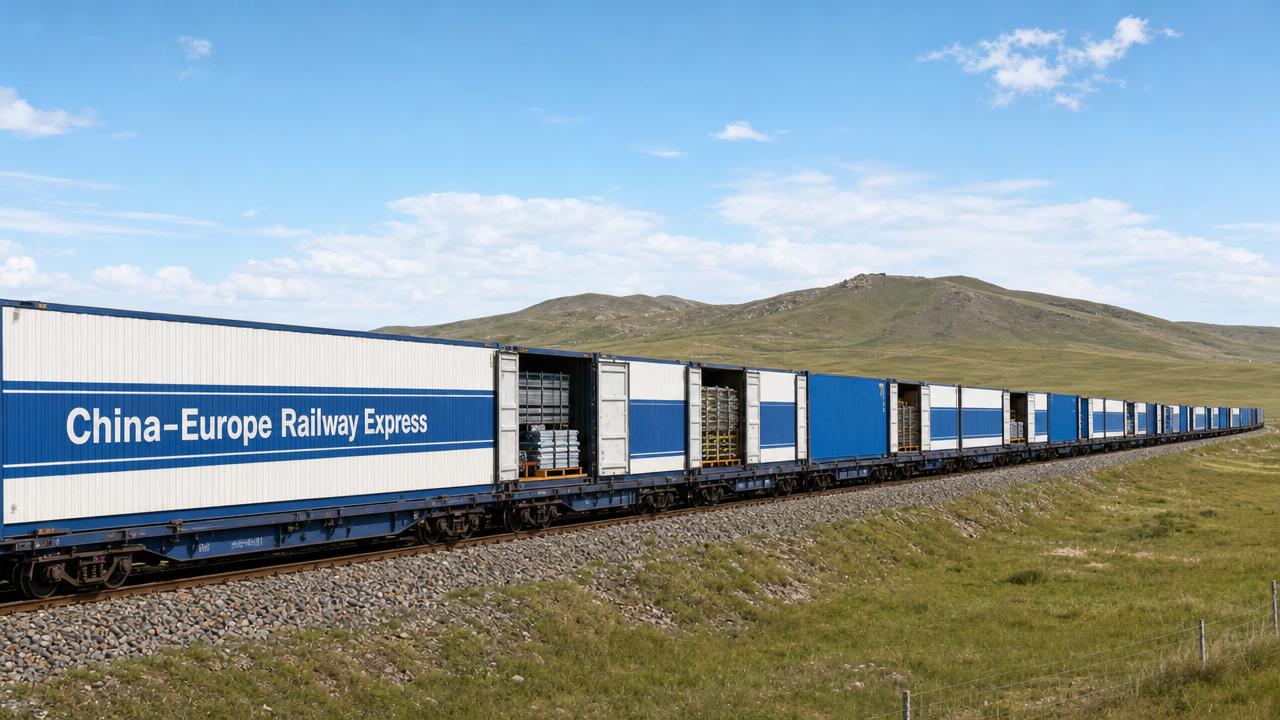
As of May 15, 2026, the China-Europe Railway Express has exceeded 130,000 cumulative departures. This milestone reflects sustained growth in operational scale and market competitiveness. The development is especially relevant for overseas distributors and importers relying on Chinese exports of molds, bolts & screws, air cylinders, and circuit breakers — sectors where delivery reliability and multimodal compliance have become increasingly critical.
Event Overview
According to publicly available information, the China-Europe Railway Express reached over 130,000 total train departures by May 15, 2026. Two new routes were recently launched: the ‘Xi’an–Istanbul–Budapest’ corridor and the ‘Chongqing–Riga’ cold-chain dedicated service. These additions are reported to reduce delivery lead times for procurement partners in Central Europe, Eastern Europe, and the Middle East.
Impact on Specific Industry Segments
Direct Trading Enterprises
These include overseas importers and trading companies sourcing molds, bolts & screws, air cylinders, and circuit breakers from China. They are affected because shorter transit times and improved schedule consistency directly improve inventory planning and order fulfillment cycles. The new routes also strengthen multimodal documentation alignment — easing customs clearance and reducing demurrage risk at European terminals.
Supply Chain & Distribution Intermediaries
Regional distributors and logistics service providers serving Central/Eastern Europe and the Middle East face revised expectations on delivery windows and regulatory traceability. With cold-chain capability now extended to Riga and expanded transshipment options via Istanbul, intermediaries must reassess their inland transport linkages, warehousing locations, and Incoterms execution — particularly for temperature-sensitive or time-bound components.
Manufacturers Exporting Key Components
Chinese producers of low-voltage circuit breakers, pneumatic actuators (air cylinders), and precision fasteners (bolts & screws) experience indirect but material impact. Improved rail reliability strengthens their ability to commit to fixed delivery dates under EXW or FCA terms. However, this benefit is contingent on consistent upstream component supply and adherence to EU REACH/CE marking documentation requirements across intermodal handovers.
What Relevant Enterprises or Practitioners Should Focus On
Monitor official route operational updates and tariff announcements
While the Xi’an–Istanbul–Budapest and Chongqing–Riga services are confirmed, frequency, transit time guarantees, and applicable surcharges remain subject to adjustment. Stakeholders should track announcements from China State Railway Group and key European rail operators (e.g., PKP Cargo, CFR Marfă) rather than rely solely on initial launch statements.
Verify documentation readiness for multimodal compliance
The enhanced connectivity does not automatically resolve paperwork gaps. Distributors and exporters must confirm that CMR consignment notes, TIR carnets (where applicable), and product-specific conformity declarations (e.g., CE for circuit breakers, PED for pneumatic components) are fully aligned with both Chinese export controls and EU import regulations — especially when transiting Turkey or Latvia.
Evaluate inventory buffer strategies in light of reduced but not eliminated variability
Although transit times are shortening, rail remains subject to border delays, seasonal capacity constraints, and geopolitical factors affecting Eurasian corridors. Analysis shows that a 10–15% safety stock buffer remains advisable for high-turnover items like standard bolts & screws, particularly when serving markets without established local consolidation hubs.
Assess cold-chain applicability for non-perishable industrial goods
The Chongqing–Riga cold-chain service was introduced for temperature-sensitive cargo, but its infrastructure (e.g., controlled-humidity wagons, certified handling protocols) may offer secondary benefits for moisture- or corrosion-sensitive components such as untreated fasteners or unpackaged electrical contacts. Observation suggests some forward-thinking suppliers are piloting use of these assets for premium-grade industrial parts — though this remains an emerging practice, not a standardized offering.
Editorial Perspective / Industry Observation
This milestone — surpassing 130,000 trains — is better understood as a signal of maturing infrastructure coordination rather than an immediate inflection point in cost or speed. From an industry perspective, the addition of Istanbul- and Riga-linked services indicates a strategic shift toward geographic diversification beyond traditional northern routes (e.g., via Malaszewicze). However, actual throughput gains depend on terminal handling efficiency, customs interoperability, and real-time data sharing — none of which are yet uniformly implemented across all new nodes. Current developments warrant ongoing observation, not wholesale operational reconfiguration.
Consequently, stakeholders should treat this update as reinforcing existing rail advantages — not replacing ocean or air alternatives outright. It expands viable options for mid-frequency, mid-volume shipments where predictability matters more than absolute speed or lowest unit cost.
Concluding, the 130,000-train milestone signifies progress in network scale and route flexibility, but its practical value lies in incremental improvements to delivery stability and documentation coherence — not in disruptive cost reduction or timeline compression. For businesses managing cross-border industrial supply chains, it reinforces the need for calibrated, evidence-based adjustments rather than broad assumptions about rail’s evolving role.
Source: Publicly reported milestone data as of May 15, 2026; official announcements regarding the Xi’an–Istanbul–Budapest and Chongqing–Riga services. Note: Frequency, pricing, and service-level commitments for the new routes remain subject to verification and are under continuous observation.
Related News