
How to judge OEM components quality before bulk orders

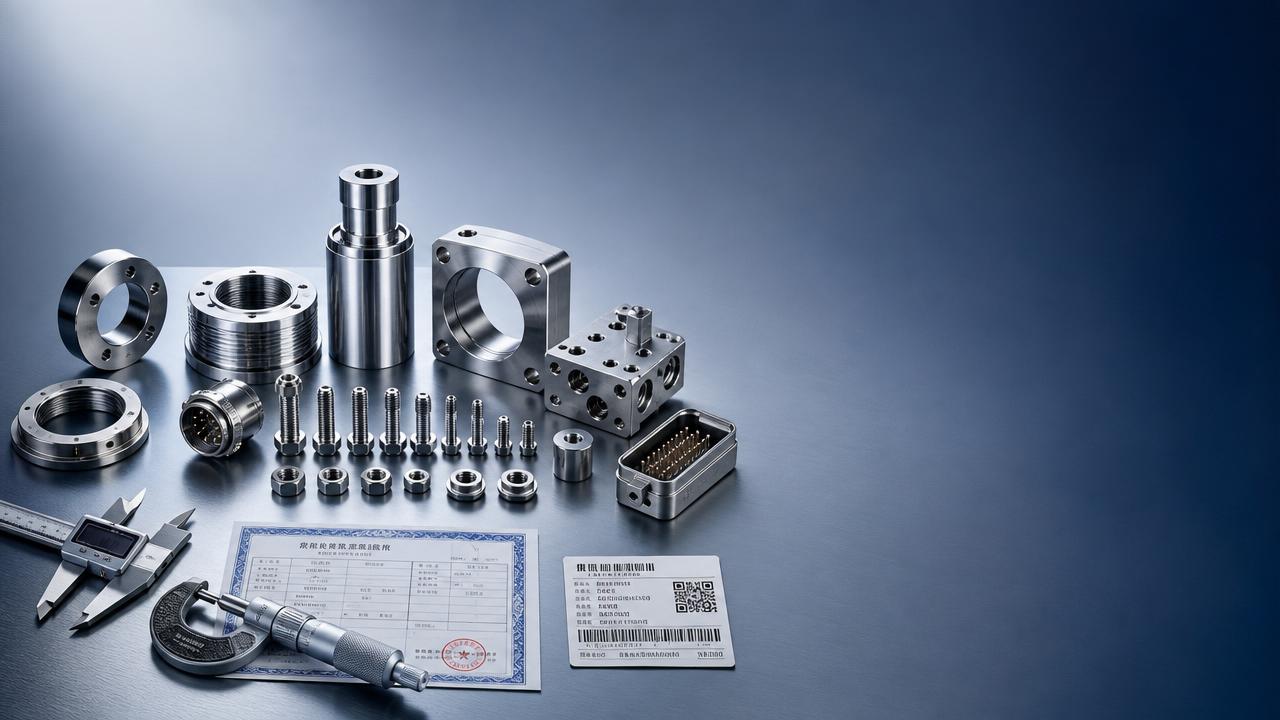
Before placing bulk orders, quality teams and safety managers need a reliable way to evaluate OEM components beyond price and samples. From material consistency and dimensional accuracy to compliance records and process stability, early verification reduces production risks, recalls, and hidden costs. This guide outlines practical checkpoints to help you judge OEM components quality with greater confidence and make safer purchasing decisions.
What buyers really need to know before approving OEM components
When professionals search how to judge OEM components quality before bulk orders, they usually want a practical decision framework, not a generic quality definition.
They need to know whether a supplier can deliver stable, compliant, and traceable parts at production scale, not just a good-looking prototype or pre-shipment sample.
For quality control personnel, the main concern is process consistency. For safety managers, the main concern is whether component failure could trigger incidents, recalls, downtime, or legal exposure.
That means the best early judgment method combines technical verification, supplier capability review, risk analysis, and a clear acceptance plan before purchase orders are released.
Start with the application risk, not the supplier presentation
The fastest way to make a poor sourcing decision is to assess OEM components in isolation from their actual operating environment and failure consequences.
Before evaluating any supplier, define what the component must withstand in real use: load, temperature, vibration, corrosion, electrical stress, duty cycle, and maintenance conditions.
A fastener for standard indoor assembly and one for outdoor vibration service may look similar on paper, yet require very different material grades and coating reliability.
Safety managers should classify components by criticality. Ask a simple question: if this part fails, what happens to people, equipment, product integrity, and regulatory compliance?
Critical parts deserve stricter controls, deeper documentation review, more samples, tighter tolerances, and stronger traceability than low-risk commodity components.
Check whether the specification is complete enough to control quality
Many quality problems begin before manufacturing starts. If the technical specification is vague, even a capable supplier may produce parts that pass basic inspection but fail in use.
Review whether drawings and purchase specifications clearly define dimensions, tolerances, materials, hardness, coatings, surface finish, performance limits, and test requirements.
Also confirm packaging, labeling, marking, storage conditions, and any shelf-life or contamination controls if the OEM components are sensitive to moisture, dust, or handling damage.
If multiple acceptable standards exist, identify exactly which standard revision applies. Ambiguity around testing methods or acceptance criteria often causes disputes during incoming inspection.
A useful rule is simple: if two different engineers could interpret the requirement differently, your specification is not strong enough for bulk ordering.
Material verification is often the first real quality filter
For many OEM components, material consistency is the hidden driver of field reliability. A part may match dimensions while still underperforming because the raw material is wrong or unstable.
Ask for material certificates, heat numbers, resin grades, plating chemistry records, or alloy composition data depending on the component type and industry requirement.
Then verify whether those documents can be linked to actual production lots. Certificates without traceability are paperwork, not evidence of effective material control.
Where risk is high, consider independent checks such as hardness testing, coating thickness measurement, spectrometer analysis, salt spray testing, or polymer identification.
Pay special attention to material substitutions. Suppliers sometimes propose “equivalent” grades that appear cost-effective but change fatigue performance, corrosion resistance, conductivity, or temperature behavior.
Dimensional accuracy matters, but measurement capability matters more
Most buyers review dimensional reports, but fewer check whether the supplier can measure critical features accurately and repeatedly across production lots.
Ask for first article inspection reports, control plans, gauge lists, calibration records, and measurement system details for critical dimensions and functional interfaces.
If a tolerance is tight, confirm the inspection method is suitable. A general caliper may be inadequate for features requiring micron-level repeatability or geometric tolerance control.
Quality teams should examine whether the supplier distinguishes between critical, major, and minor dimensions and whether in-process checks focus on the features that drive assembly performance.
Look beyond one inspection report. A stronger sign of quality is evidence that dimensions remain centered and stable over time, not just barely within tolerance on sampled pieces.
Judge process stability before trusting production capacity
Bulk order quality depends more on process control than on sample appearance. A supplier may produce good pilot parts while still lacking a stable manufacturing system.
Ask how key processes are controlled: machining parameters, mold maintenance, heat treatment, plating conditions, torque settings, curing cycles, or assembly checks as applicable.
Request process flow charts, PFMEA summaries, control plans, and examples of corrective actions from prior deviations. These show whether quality is built into the process or inspected afterward.
For recurring parts, capability indicators such as Cp, Cpk, Pp, and Ppk can help, but only if the underlying data are credible and linked to actual production conditions.
Also assess change control. If tooling, sub-suppliers, materials, or process settings change, how will the supplier notify you, validate the change, and protect ongoing conformity?
Compliance documents should be validated, not merely collected
Safety managers often receive folders of declarations, test reports, and certificates. The mistake is treating document volume as proof of compliance.
Instead, verify whether each document is current, relevant to the exact product, issued by a credible body, and aligned with the destination market’s regulatory requirements.
Depending on the component, this may include RoHS, REACH, UL-related data, CE support documents, conflict minerals declarations, or industry-specific fire, pressure, or electrical safety standards.
Check part numbers, revision levels, dates, laboratory scope, and whether the sample tested matches the construction used in production. Mismatches are more common than many buyers expect.
For high-risk applications, ask how compliance is maintained after approval. One valid report from last year does not control today’s raw material or process changes.
Evaluate the supplier’s quality system where failures actually occur
Certifications such as ISO 9001 can be useful, but they should not be the main basis for judging OEM components quality before bulk orders.
What matters is how the supplier handles purchasing control, incoming verification, operator training, maintenance, nonconforming product, lot traceability, and customer complaints.
During a remote or on-site audit, focus on practical evidence. Can they retrieve lot records quickly? Are rejected parts clearly segregated? Are corrective actions specific and verified?
Ask to see examples of real problems and how they were resolved. Mature suppliers can explain root cause, containment, corrective action, and prevention without becoming defensive.
Sub-supplier control is especially important for plated, molded, heat-treated, or electronic elements. Weak control over outsourced steps often creates invisible quality variation.
Use pilot orders and approval samples to test consistency, not just appearance
Many teams approve OEM components after reviewing a small sample set that was likely produced under ideal conditions with extra attention.
A better method is to run a pilot order that reflects actual production conditions, standard operators, normal material flow, and routine packaging.
Compare parts from different cavities, shifts, machines, or lots if relevant. Variation across these groups reveals more than a single polished sample package ever will.
Whenever possible, conduct fit, function, endurance, and safety-related tests in the real application or a realistic simulation. Functional failure matters more than cosmetic acceptance.
If the component enters a regulated or safety-sensitive system, define a formal approval stage with signed records, retained samples, and lot-specific acceptance criteria.
Watch for commercial warning signs that often predict quality problems
Quality risk is not only technical. Certain commercial behaviors strongly correlate with future supply and conformity issues.
Be cautious if the supplier avoids technical questions, refuses process visibility, offers unusually low prices without explanation, or changes material proposals repeatedly during quotation.
Other warning signs include slow document turnaround, inconsistent answers from sales and engineering, unclear traceability, and resistance to defining defect handling responsibilities.
Lead time promises that seem unrealistic can also signal trouble. Suppliers under schedule pressure may skip inspections, rush tooling qualification, or mix lots to meet shipment targets.
In short, if communication is unstable before the order, process discipline may be unstable after the order as well.
Create a pre-bulk-order checklist that supports clear go or no-go decisions
To avoid subjective approval, build a simple checklist that converts quality evidence into a sourcing decision. This is especially useful for cross-functional reviews.
Your checklist should cover specification completeness, material verification, dimensional results, process capability, compliance status, traceability, packaging control, and supplier responsiveness.
Score each area by risk and evidence strength. A component with limited compliance proof but low safety impact may still proceed, while the same gap on a critical part should block release.
Also define what evidence is mandatory before order placement, what can be completed during pilot production, and what requires ongoing monitoring after supplier approval.
This structured approach helps quality teams explain decisions internally and gives procurement a defensible basis beyond price and delivery promises.
Questions quality and safety teams should ask every OEM supplier
Several direct questions can quickly expose whether a supplier is truly ready for bulk orders or only prepared for quoting.
Ask: What are the critical product characteristics? How are they measured? What process controls prevent drift? What material substitutions have been considered or used before?
Also ask: How is lot traceability maintained? What happens when a nonconforming batch is found? Which processes are outsourced? How are sub-suppliers approved and monitored?
For safety-related applications, ask: What failure modes are known? What validation has been completed? What standards apply in the destination market? How are changes controlled after approval?
The quality of the answers often tells you as much as the content. Competent suppliers respond clearly, specifically, and with evidence.
Conclusion: good bulk-order decisions come from evidence, not confidence alone
To judge OEM components quality before bulk orders, do not rely on low price, visual samples, or certificates in isolation.
The strongest decisions come from linking application risk to technical specifications, verified materials, measurement capability, process stability, valid compliance evidence, and disciplined supplier controls.
For quality control personnel, this reduces incoming defects and production disruption. For safety managers, it lowers the chance of hidden failures, incidents, and costly corrective actions later.
If you evaluate OEM components through a structured pre-order process, you can move sourcing decisions from assumption to evidence and buy with far greater confidence.