
Manufacturing insights that explain rising fastener costs

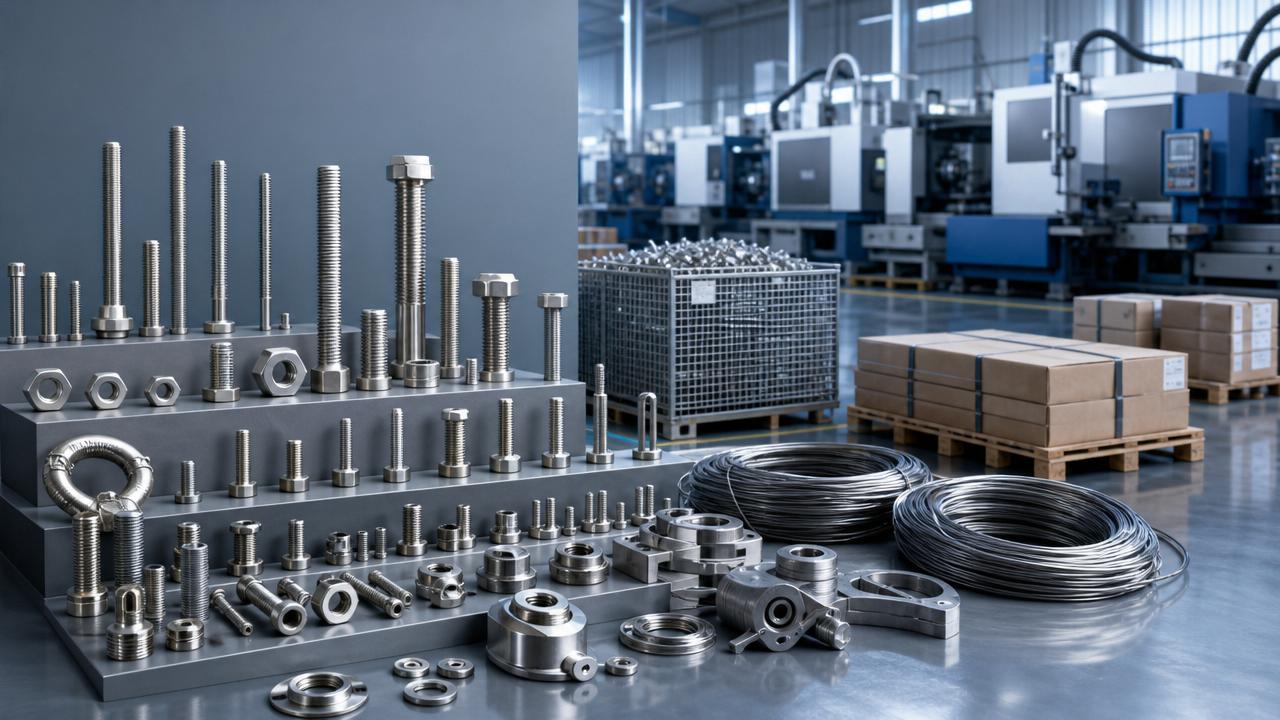
Why rising fastener costs matter across real manufacturing scenarios
Rising fastener costs are no longer a narrow purchasing issue. They reflect wider pressure across steel, energy, freight, compliance, and supplier capacity.
These manufacturing insights help explain why bolts, screws, nuts, rivets, and specialty fixings now behave like strategic cost indicators.
For industrial operations, fasteners sit inside almost every product family. Small price movements therefore multiply across assemblies, contracts, and inventory positions.
At GHTN, manufacturing insights begin with component-level logic. A fastener cost change usually starts upstream, then spreads through processing, finishing, logistics, and market timing.
Understanding that chain supports better forecasting, tighter sourcing discipline, and stronger margin protection in volatile industrial markets.
Scenario judgment starts with the cost structure behind a single fastener
A standard fastener may look simple, but its price includes many linked cost layers. Each layer reacts differently under different operating conditions.
Useful manufacturing insights come from separating those layers rather than treating every increase as a general inflation effect.
Material volatility is often the first trigger
Carbon steel, stainless steel, brass, and alloy inputs remain the biggest cost drivers. Stainless grades are especially exposed to nickel and chromium movements.
When mills tighten supply or adjust surcharges, finished fastener pricing rarely stays stable for long. The effect is stronger in engineered or certified parts.
Energy and processing costs are now harder to absorb
Wire drawing, cold heading, heat treatment, threading, plating, and sorting all consume power. Utility inflation directly raises conversion cost.
Environmental controls also add overhead. Surface treatment lines, wastewater compliance, and emissions rules raise the cost per finished unit.
Freight and packaging shift total landed cost faster than expected
Fasteners are dense but often low in unit value. That makes handling, consolidation, repacking, and route disruption unusually important.
Manufacturing insights often show that the price rise on paper is smaller than the increase in landed cost after transport and storage variables are included.
Scenario one: standard industrial fasteners under commodity pressure
In general industrial applications, standard hex bolts, washers, and machine screws usually follow commodity cycles most closely.
Here, manufacturing insights point to raw material timing, order scale, and container efficiency as the main pricing levers.
When market demand softens, prices may not fall immediately. Producers often keep rates firm to recover earlier energy and labor increases.
This explains why some standard items remain expensive even after steel benchmarks cool. There is usually a lag between metal correction and invoice adjustment.
Scenario two: stainless and corrosion-resistant fasteners in harsh environments
Marine, outdoor, chemical, and humidity-heavy applications create a different cost pattern. Material grade matters more than volume optimization.
Manufacturing insights for this scenario focus on alloy chemistry, passivation, coating integrity, and traceability requirements.
Even small grade upgrades can create large cost jumps. Moving from common carbon steel to 304 or 316 stainless changes both material and process economics.
Price pressure also persists longer here because substitute options are limited. Failure risk in corrosive settings makes low-grade replacement economically dangerous.
Scenario three: precision or engineered fasteners with tighter tolerances
Automated lines, electrical equipment, molds, and precision assemblies rely on dimensional consistency more than lowest unit cost.
In these applications, manufacturing insights show that quality assurance can outweigh raw material volatility as the main price driver.
Thread accuracy, hardness windows, plating thickness, and lot consistency require tighter control. Scrap risk and inspection time increase accordingly.
If tolerances tighten further, production runs may slow. Lower throughput means the cost per thousand pieces rises even without a major steel increase.
Scenario four: urgent replenishment during supply disruption
A shortage event creates the sharpest pricing spikes. Common triggers include port congestion, geopolitical risk, compliance delays, and sudden demand concentration.
These manufacturing insights matter because shortage pricing is often driven by time, not by actual production cost alone.
Expedited tooling changes, split shipments, premium freight, and unplanned subcontracting all raise the invoice quickly.
In such cases, a cheap quoted unit price from a nonqualified source can produce higher total cost through delays, rework, and missing documentation.
How fastener demand differs by scenario
Practical adaptation strategies when manufacturing insights point to persistent inflation
When cost pressure looks structural rather than temporary, a reactive buying pattern becomes expensive. A more disciplined response is usually needed.
- Separate fasteners into commodity, engineered, and critical-risk groups.
- Track raw material exposure by grade instead of using one blended metal assumption.
- Review whether finishing requirements are necessary, excessive, or outdated.
- Compare unit price with landed cost, failure cost, and replenishment risk.
- Use dual-source logic where validation time and compliance rules allow.
- Align safety stock with disruption probability, not historic averages only.
These actions turn manufacturing insights into practical controls. They also reduce the chance that one missing component disrupts a larger production system.
Common misjudgments that distort fastener cost decisions
One frequent mistake is assuming all fasteners follow the same pricing logic. In reality, standard, stainless, and precision parts behave very differently.
Another mistake is chasing the lowest quote without checking plating quality, documentation, hardness, or dimensional repeatability.
Manufacturing insights repeatedly show that hidden cost appears later, through assembly problems, corrosion failure, or inconsistent automated feeding.
A third misjudgment is ignoring supplier investment pressure. Tooling renewal, environmental upgrades, and labor scarcity all reshape future price floors.
If those structural changes are missed, budget expectations remain anchored to a cost base that no longer exists.
What to do next with these manufacturing insights
Start by mapping fastener spend into real application scenarios. The right response depends on where cost pressure originates and how failure risk is distributed.
Then review specifications, supplier concentration, freight exposure, and inventory policy together. Fastener economics rarely improve through isolated action.
GHTN supports this analysis with component-level manufacturing insights, technical trend interpretation, and trade intelligence across hardware, electrical, and mold ecosystems.
In a volatile market, the goal is not only to explain rising fastener costs. The goal is to convert that knowledge into stronger resilience, cleaner sourcing decisions, and better margin protection.
Related News
- Greening components or lower cost materials: which wins long termTime : Apr 29, 2026
- China-UAE Open Direct Sea Route, Cutting Export Lead Times for Industrial Fasteners and Pneumatic Parts by 7-10 DaysTime : Aug 16, 2026
- What Defines Precision Fastener Technology in High-Tolerance Industrial Assembly?Time : Aug 11, 2026