
Choosing cutting tools for industrial automation lines

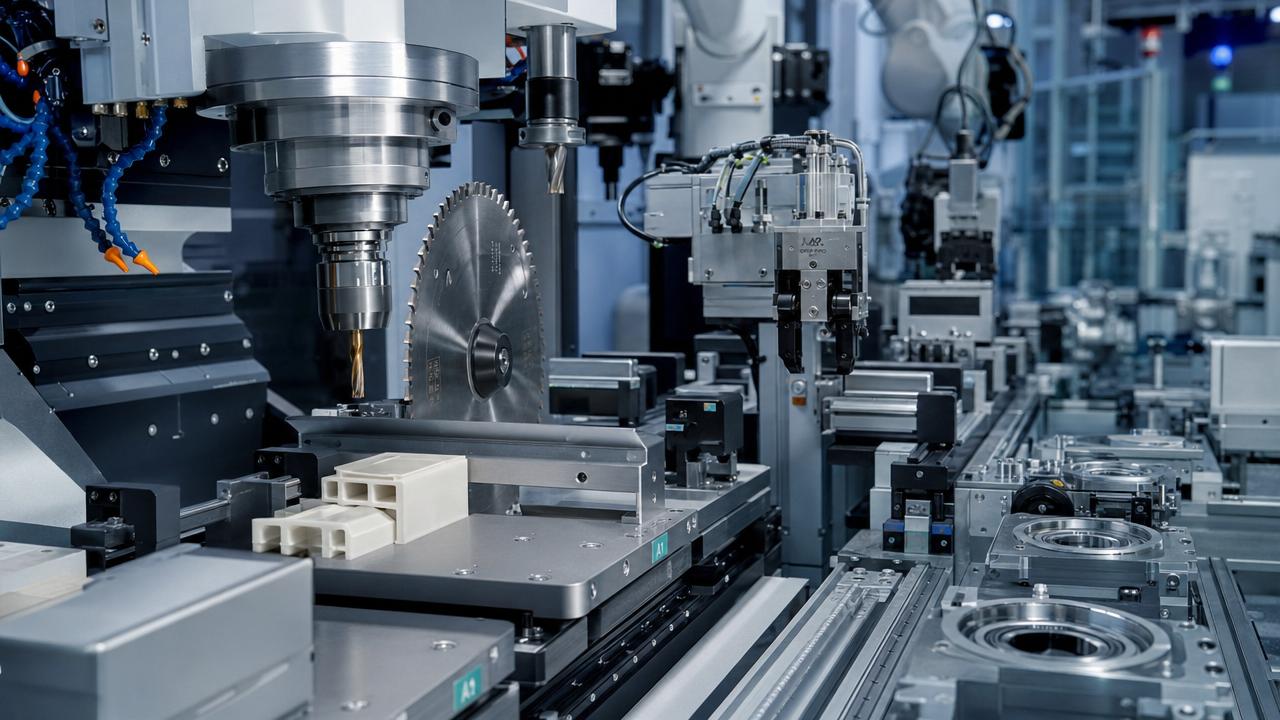
For aftermarket maintenance teams, choosing cutting tools for industrial automation lines has become more strategic than routine. Tool choice now affects uptime, cut accuracy, energy use, scrap rates, and maintenance cycles across integrated production environments.
As automation lines run faster and with tighter tolerances, traditional replacement habits are no longer enough. Cutting tools for industrial automation must match machine dynamics, material variation, and data-driven maintenance expectations.
Across the broader industrial landscape, this shift reflects a larger trend. Precision tooling is moving from a consumable category into a performance lever for line stability, service efficiency, and long-term asset protection.
Automation line maintenance is entering a higher-precision tooling cycle
Industrial lines increasingly combine robotics, pneumatic handling, vision inspection, and synchronized cutting operations. In this environment, small tool deviations create larger downstream disruptions than in standalone manual stations.
This is why cutting tools for industrial automation are receiving closer attention. Service teams are evaluating not only edge sharpness, but also vibration behavior, coating stability, chip control, and compatibility with automatic feeds.
Another visible signal is the rise of mixed-material processing. Automated lines increasingly cut aluminum, stainless steel, engineered plastics, composites, and coated metals within one facility or even one production family.
That diversity changes replacement logic. A blade that performs well on one substrate may accelerate wear, burr formation, or thermal distortion on another. Selection is becoming more application-specific and less generic.
Why demand for smarter cutting tools for industrial automation is rising
Several forces are pushing this transition. They come from production engineering, compliance pressure, cost control, and maintenance digitalization across the comprehensive industrial sector.
These pressures explain why cutting tools for industrial automation are now assessed through lifecycle performance rather than purchase price alone. The best tool often lowers total cost by preventing micro-failures that escalate into larger stoppages.
Selection criteria are shifting from basic fit to system compatibility
Basic dimensional fit still matters, but it is no longer sufficient. Modern cutting tools for industrial automation must work as part of an entire motion, sensing, and maintenance system.
Tool material must follow the workpiece and duty cycle
High-speed steel remains useful for some lower-intensity operations. Carbide is often preferred for high-volume lines because it holds edges longer under heat and repetitive loading.
Ceramic, cermet, and coated solutions may fit specialized applications. However, each option must be checked against impact risk, spindle behavior, coolant strategy, and machine rigidity.
Geometry influences cut quality more than many teams expect
Tooth profile, rake angle, helix design, and edge preparation shape cutting force and chip evacuation. Wrong geometry can produce heat spikes, burrs, chatter, and premature wear.
In automated cutting, geometry consistency also supports repeatable results. Stable geometry reduces variance between cycles, which helps maintain vision checks and assembly fit downstream.
Coatings now serve both durability and process control
TiN, TiAlN, AlCrN, and diamond-like coatings can reduce friction and extend life. Yet coatings should not be selected by trend alone.
The right coating depends on heat generation, material adhesion, dry or wet cutting conditions, and cut speed. Poor coating choice may increase built-up edge or surface damage.
The impact extends beyond the cut point to the whole automation line
When cutting tools for industrial automation are mismatched, the problem rarely stays local. Secondary effects spread into conveyors, robotic gripping, inspection stations, part nesting, and packaging steps.
- Burrs can disrupt automated insertion or fastening operations.
- Excess heat can distort parts and trigger measurement failures.
- Inconsistent edge finish can reduce bonding or sealing reliability.
- Unstable chip flow can contaminate sensors and moving components.
- Unexpected breakage can stop multiple linked stations at once.
The opposite is also true. Well-matched cutting tools for industrial automation improve line predictability. They support smoother handoff between processes and reduce hidden quality losses that often escape immediate diagnosis.
This matters across comprehensive industry applications, from electrical enclosures and fastener production to mold-related trimming and precision component finishing. Tooling choices influence both throughput and reputation for consistency.
Key points worth watching when evaluating tooling options
A reliable evaluation process should combine technical data, field observation, and replacement history. The following points deserve close attention before standardizing any tooling setup.
- Confirm workpiece material, hardness range, coating, and thickness variation.
- Check whether the operation is continuous, intermittent, dry, wet, or mixed.
- Measure current failure mode: wear, chipping, thermal cracking, or chatter.
- Review spindle speed, feed rate, clamp stability, and machine vibration.
- Assess cut quality targets, including burr limits and edge finish requirements.
- Track average life by cycle count, not only by calendar replacement intervals.
- Verify supply consistency for replacement tools across locations and shifts.
- Compare total cost per acceptable part, not just unit tool price.
These checkpoints help turn cutting tools for industrial automation into a managed performance category. They also reduce the risk of over-specifying expensive tools that do not deliver measurable gains.
A practical response framework is replacing trial-and-error decisions
The next step is not buying the most advanced tool available. It is building a disciplined selection and review method that connects tooling performance with line outcomes.
This structured approach reflects a broader industrial trend. Precision decisions on components and tools increasingly depend on traceable data, material knowledge, and system-level understanding rather than isolated maintenance habits.
The next competitive edge will come from informed tooling intelligence
Looking ahead, cutting tools for industrial automation will be influenced by smarter sensors, tighter sustainability targets, and greater process integration. Tool choice will continue moving closer to predictive maintenance and digital production planning.
That makes informed evaluation essential. Teams that connect material behavior, machine conditions, and wear data can improve line resilience without unnecessary tooling inflation.
For deeper insight into precision tooling trends, material-performance analysis, and industrial parts intelligence, GHTN continues to connect hidden manufacturing detail with real global application value. Linking Precision, Tooling the Future.
Start by reviewing one high-frequency cutting station this week. Record failure modes, compare tool life against part quality, and identify whether your current cutting tools for industrial automation truly match line demands.
Related News