
Mold Design Software Features That Save Rework Time

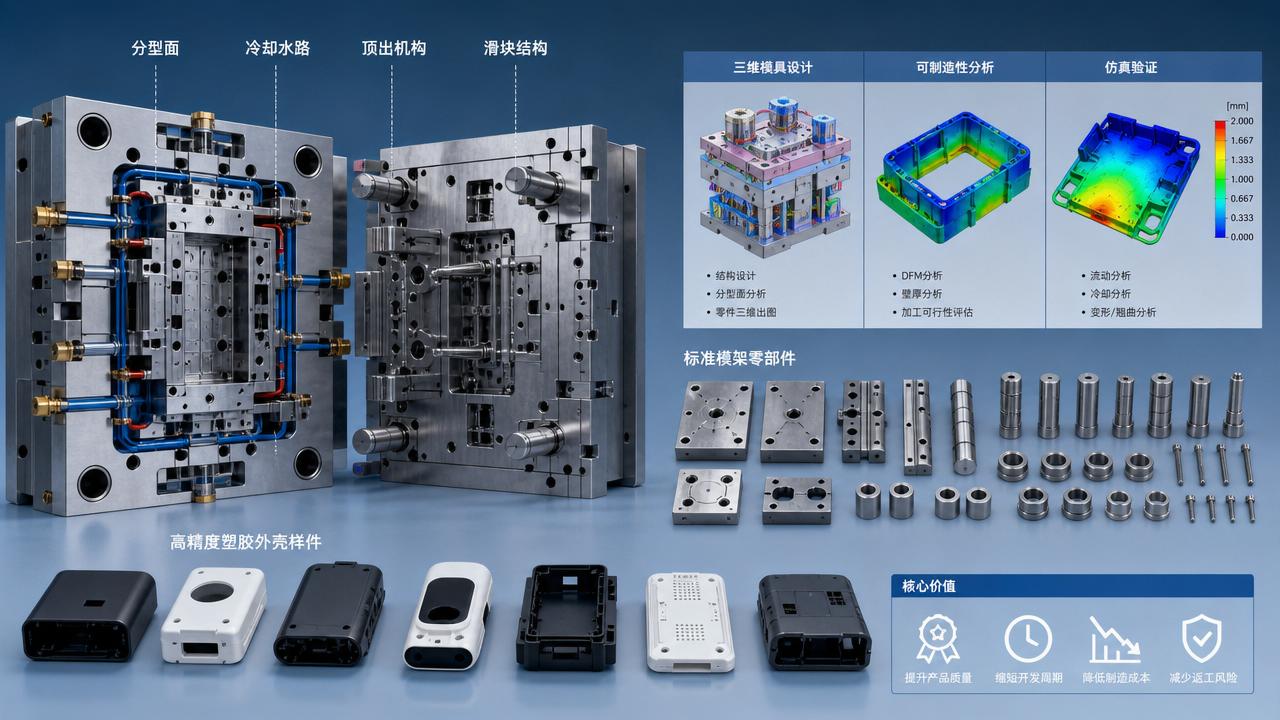
For technical evaluators, selecting mold design software is less about flashy interfaces and more about reducing iteration cycles, preventing manufacturability issues, and accelerating approval decisions. The right feature set can cut rework time significantly by improving design accuracy, collaboration, simulation reliability, and tooling validation before production begins.
What mold design software means in a modern evaluation context
In industrial manufacturing, mold design software refers to the digital environment used to create, validate, revise, and prepare tooling designs for production. For technical evaluators, however, the term should be understood more narrowly. It is not simply a CAD package with mold libraries. It is a decision platform that determines how early teams can detect parting issues, wall-thickness risks, cooling limitations, undercut conflicts, ejection problems, and tolerance stack concerns before steel is cut.
This is why mold design software has become a strategic topic across tooling, hardware, electrical component housings, consumer product enclosures, and precision industrial parts. In all of these sectors, mold rework consumes time, labor, machine capacity, and credibility. A design that looks acceptable in geometry review can still fail during mold trial because the software lacked practical tooling intelligence. Evaluators therefore focus on features that reduce downstream uncertainty, not only those that speed up drawing creation.
Why rework time remains a major industry concern
Rework in mold programs often starts with small upstream omissions. A draft angle missed in a cosmetic zone, a gate location chosen without balanced filling analysis, or a cooling circuit planned too late can trigger extensive redesign. In integrated industrial supply chains, these issues affect more than one department. Toolmakers face schedule slips, OEMs delay pilot builds, quality teams repeat approvals, and procurement teams absorb unplanned tooling costs.
For a network like GHTN, which tracks precision manufacturing logic across hardware, electrical, and mold sectors, the pattern is clear: rework is rarely caused by one dramatic error. It is more often the cumulative result of weak design visibility, fragmented data handoff, and software environments that do not support manufacturability decisions early enough. That is why the best mold design software features are those that compress the gap between design intent and production reality.
Core features in mold design software that directly save rework time
Technical evaluators usually see the greatest time savings when mold design software supports the following capabilities as a connected workflow rather than isolated tools.
1. Automated manufacturability checks
Early detection of draft, undercut, shutoff, wall-thickness, and parting-line issues prevents redesign loops later. Good software should flag geometric risks while the tool concept is still flexible. Automated DFM analysis is especially valuable for multi-cavity programs and parts with cosmetic, sealing, or structural requirements.
2. Associative model updates
Part geometry changes are common. When product revisions occur, mold design software should update inserts, electrodes, sliders, and assembly views without forcing teams to rebuild from scratch. Associativity reduces revision errors and preserves design intent across the tooling package.
3. Integrated filling, cooling, and warpage simulation
Simulation is not useful if it exists outside the normal design process. Evaluators should prefer mold design software that allows designers to test gate options, cooling layouts, pressure behavior, sink risk, and deformation trends before trial. Reliable simulation cuts rework because teams can correct tool concepts before machining begins.
4. Standard component libraries with rule-based placement
Libraries for ejector systems, guide elements, sprue bushings, cooling fittings, and mold bases save time only when they reflect real standards and can be configured intelligently. Rule-based placement reduces omission risk and improves consistency between designers, which is critical in distributed engineering environments.
5. Collision detection and motion validation
Sliders, lifters, unscrewing systems, and ejection sequences can create hidden interference problems. Mold design software with dynamic motion review helps teams catch mechanical conflicts before assembly and testing. This is one of the most practical ways to avoid expensive fitting and rework on the shop floor.
6. Tolerance-aware detailing and documentation
Rework often comes from misread drawings, incomplete notes, or inconsistent dimensioning between tool design and machining. Strong detailing tools with BOM generation, revision traceability, and manufacturing documentation reduce communication gaps between design, CAM, quality, and suppliers.
Industry overview: where these features matter most
Across the broader industrial landscape, not every program carries the same rework risk. The table below highlights where mold design software features create the highest value.
How technical evaluators should judge feature quality, not just feature presence
A common evaluation mistake is checking whether mold design software “has” simulation, automation, or libraries without testing how usable those functions are in real workflows. The real question is whether the feature changes decision speed and design reliability. For example, a simulation module that requires separate model rebuilding may be too slow for day-to-day iteration. A component library that cannot reflect local standards or approved suppliers may create more cleanup work than savings.
Technical evaluators should therefore look at operational depth. Can DFM results be shared clearly with product teams? Can revision changes propagate automatically into 2D outputs and assembly structures? Can cooling analysis compare alternatives quickly enough to influence tooling strategy? Can collision checks cover motion paths, not just static overlap? These details determine whether mold design software prevents rework or merely documents it after the fact.
Application value across design, tooling, and approval stages
The value of mold design software should be measured across the full tooling lifecycle. During concept review, it helps identify feasibility risks before quotation assumptions harden. During detailed design, it supports standardization, consistent component usage, and faster release packages. During machining and assembly, it reduces ambiguity and avoids preventable fit adjustments. During trial and approval, it improves the probability that first samples meet dimensional and functional expectations.
For organizations serving global OEMs, this matters even more. Programs often involve distributed teams, supplier collaboration, regional compliance requirements, and compressed launch windows. Mold design software that improves traceability and shared visibility can shorten approval cycles because reviewers see not only the final geometry but also the logic behind gates, cooling circuits, actions, and tolerance decisions.
Typical evaluation scenarios and the features that matter most
Practical evaluation advice before committing to a platform
When assessing mold design software, evaluators should request a workflow demonstration based on a realistic part, not a generic sales sample. The test case should include at least one geometry revision, one manufacturability issue, one cooling decision, and one documentation release step. This reveals whether the platform supports real engineering behavior under schedule pressure.
It is also wise to examine interoperability. Many manufacturers already use separate CAD, CAM, PLM, and quality systems. Mold design software must pass data cleanly between these systems or the rework problem simply moves from design to downstream translation. In addition, evaluators should review how the software supports standardization. Teams save more time when best practices, approved components, and repeatable design rules are embedded into templates rather than stored only in individual designer experience.
Training demands should be considered as well. Advanced capability has limited value if only one specialist can use it. The best mold design software for rework reduction is often the system that allows broader teams to make sound decisions consistently, including designers, tooling engineers, reviewers, and manufacturing planners.
Frequently asked questions from technical evaluators
Is simulation always the most important feature in mold design software?
Not always. Simulation is highly valuable, but if revision handling, DFM automation, and documentation control are weak, teams may still lose time in redesign and communication errors. Rework reduction usually comes from a balanced feature set.
Can standard libraries really reduce tooling errors?
Yes, provided the libraries are current, configurable, and aligned with manufacturing standards. They reduce inconsistency, speed detailing, and lower the chance of omitted or mismatched components.
What should be tested in a software trial?
Test a full workflow: import part data, run manufacturability checks, create the mold concept, revise the part, validate collisions, and issue final documentation. This is the best way to judge whether mold design software will truly save rework time.
A clear path forward for evaluators
For technical evaluators, the most effective mold design software is the one that prevents avoidable decisions from reaching the shop floor. It should connect geometry intelligence, simulation confidence, mechanical validation, and documentation discipline into one practical workflow. In sectors where precision components, tooling reliability, and launch timing all matter, that combination can deliver measurable savings in trial reduction, engineering hours, and approval speed.
As industrial supply chains become more integrated and more demanding, evaluating mold design software through the lens of rework prevention is a sound strategy. Organizations that align software selection with real tooling risks, collaboration needs, and production standards will be better positioned to shorten development cycles and support more consistent manufacturing outcomes. For teams looking to strengthen design evaluation with deeper industrial insight, this is precisely the kind of precision-led thinking that drives long-term competitiveness.
Related News