
Technical Analysis for Mold Design Should Start Earlier

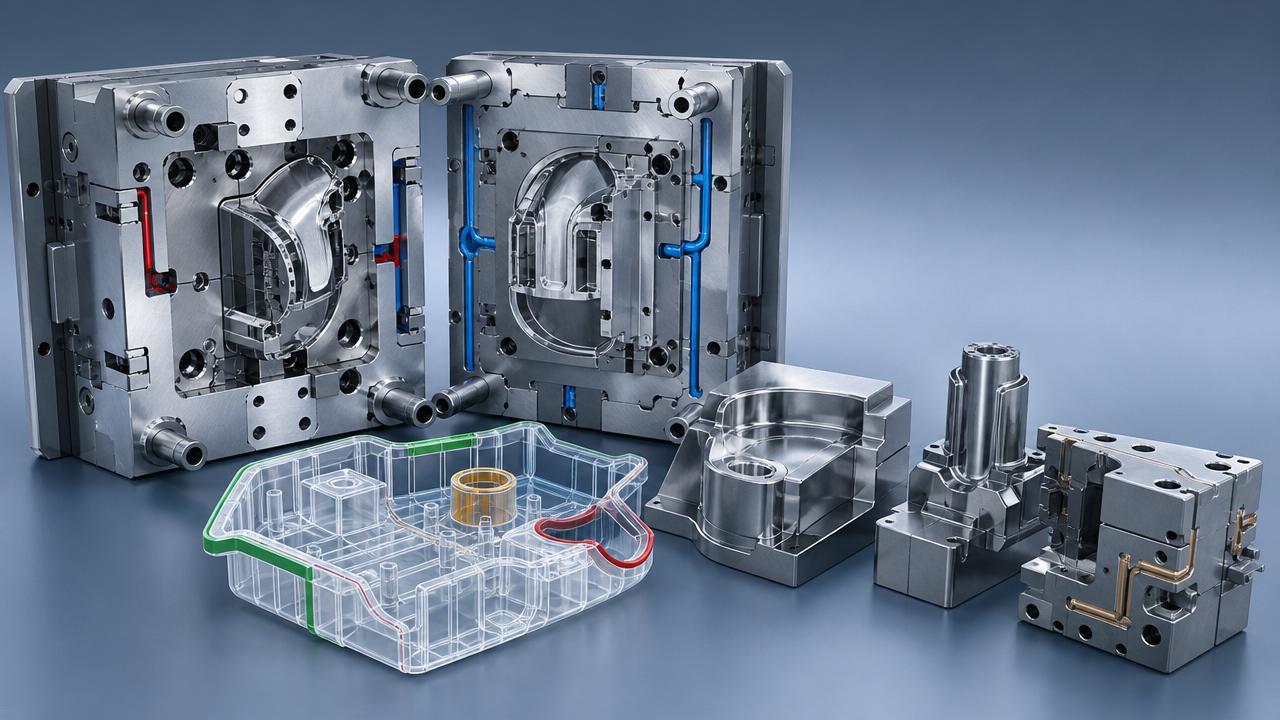
For technical evaluators, technical analysis for mold design should begin well before detailed drawings are finalized. Early-stage assessment helps identify material behavior, manufacturability risks, tolerance conflicts, and cost drivers before they become expensive production issues. In complex industrial environments, a proactive analytical approach not only improves mold performance and lifecycle reliability, but also supports faster decisions, better tooling outcomes, and more competitive manufacturing strategies.
What Early Technical Analysis for Mold Design Really Means
In practical manufacturing terms, technical analysis for mold design is the structured evaluation of how a part, material, process route, and tooling concept will behave before the mold is fully engineered. It goes beyond checking dimensions on a drawing. It includes part geometry review, shrinkage prediction, draft and undercut analysis, wall thickness distribution, gate strategy, thermal balance, ejection feasibility, venting logic, steel selection, cycle-time impact, and long-term maintenance considerations.
For technical evaluators, this work is not only a design support task. It is a risk-filtering function that protects product quality, project budgets, and launch timing. When the analysis starts early, teams can challenge unrealistic tolerances, detect molding instability, and compare alternative tooling structures while changes are still affordable. When it starts late, even small design corrections may require major rework, schedule delay, or acceptance of hidden quality compromises.
This is why leading industrial networks such as GHTN emphasize deep technical insight at the component and tooling level. In modern supply chains, precision molds are not isolated assets. They are enabling systems that affect part consistency, automation compatibility, electrical assembly fit, downstream machining, and total manufacturing efficiency.
Why the Industry Is Paying More Attention to Earlier Evaluation
Across hardware, electrical, and mold manufacturing sectors, products are becoming more complex while timelines are becoming shorter. OEMs expect faster launch cycles, distributors need predictable quality, and suppliers are under pressure to control cost without sacrificing durability. In this environment, technical analysis for mold design has become an upstream decision tool rather than a downstream troubleshooting activity.
Several industry trends explain this shift. First, lightweight and engineered materials introduce more variation in flow behavior, shrinkage, and warpage. Second, tighter integration of molded parts with metal inserts, fasteners, or electrical interfaces creates stricter fit and function requirements. Third, global compliance and quality expectations leave less room for trial-and-error corrections after tooling release. Finally, automated production lines demand stable molds that support repeatable cycles and low intervention rates.
For evaluators working in a comprehensive industrial context, earlier analysis also improves communication between product development, tooling suppliers, procurement teams, and plant engineering. It creates a common technical basis for deciding whether a concept is robust enough to proceed, where modifications are needed, and how supplier capability should be matched to part complexity.
Core Evaluation Areas Before Detailed Mold Design Begins
The most effective technical analysis for mold design starts with a disciplined review of the part and production context. Evaluators should look at the part not only as a geometry file, but as a manufactured object that must meet dimensional, cosmetic, mechanical, and economic targets at scale.
Part geometry and manufacturability
Sharp transitions, uneven wall thickness, deep ribs, insufficient draft, and hidden undercuts are early warning signs. These features can increase filling difficulty, sink marks, deformation, or tool complexity. Identifying them early allows product teams to optimize the part before expensive tooling decisions are locked in.
Material behavior
Material choice directly affects gate location, mold temperature strategy, cooling balance, venting needs, shrinkage control, and wear resistance. Filled polymers, flame-retardant compounds, and high-performance resins may require very different tooling assumptions from commodity materials. Evaluators should confirm whether material data used in design reflects actual production-grade resin rather than a general assumption.
Tolerance logic
Not every nominal dimension deserves the same level of tooling investment. A strong evaluator checks whether tolerance zones align with actual functional requirements, assembly interfaces, and process capability. Over-specified tolerances often inflate mold complexity and inspection cost without creating practical customer value.
Tool structure feasibility
The number of cavities, slider requirements, insert strategy, cooling layout, vent design, and ejection mechanism should all be discussed at concept stage. This is where technical analysis for mold design protects both cost and reliability, because unnecessary complexity can be challenged before it becomes embedded in the tool architecture.
Industry Overview Table for Technical Evaluators
The table below summarizes how early analysis priorities often differ across industrial segments connected to hardware, electrical systems, and precision mold manufacturing.
Business Value of Starting Technical Analysis Earlier
The value of early technical analysis for mold design is measurable in both engineering and commercial terms. First, it reduces tooling iteration. A mold that is conceptually right from the beginning needs fewer corrective modifications after trial runs. Second, it improves supplier alignment. When requirements and risks are clarified in advance, mold makers can quote more accurately and propose more suitable technical solutions. Third, it supports realistic cost planning by distinguishing essential complexity from avoidable complexity.
It also creates a stronger basis for lifecycle thinking. A tool should not only pass initial sampling; it should remain stable through production volume, maintenance cycles, material lot variation, and operator changes. Early analysis helps evaluators ask the right long-range questions: Will wear occur at gates or shut-offs? Is the cooling layout maintainable? Are spare inserts practical? Can the mold support future part revisions without full replacement?
For organizations operating globally, this discipline has strategic value. Better molds mean more predictable quality across regions, easier handover between sites, and stronger competitiveness in markets where timing, consistency, and total cost of ownership matter as much as unit price.
Typical Scenarios Where Early Analysis Delivers the Most Benefit
Although technical analysis for mold design is useful in almost every tooling project, certain scenarios make early assessment especially important.
Practical Recommendations for Technical Evaluators
To make technical analysis for mold design more effective, evaluators should use a staged and evidence-based approach rather than relying only on past intuition.
Start by gathering complete input data. This includes 3D part files, intended annual volume, resin grade, assembly requirements, cosmetic expectations, target cycle time, and downstream process constraints. Incomplete inputs often cause flawed tooling assumptions that are difficult to reverse later.
Next, prioritize risk ranking. Not every feature deserves equal depth. Focus first on function-critical dimensions, areas prone to sink or warpage, thin-wall sections, sealing surfaces, snap fits, insert interfaces, and automation contact points. A good evaluator distinguishes what is merely visible from what is truly performance-critical.
Simulation and empirical review should be combined. Mold flow software, thermal analysis, and tolerance stack evaluation are powerful, but they are most valuable when interpreted by people who understand real shop-floor behavior. GHTN’s industry perspective is relevant here: deep tooling knowledge comes from linking material science, process logic, and manufacturing realities, not from isolated modeling alone.
Evaluators should also challenge design timing. If a product team says the part is already frozen, that should not stop analytical review. It should trigger a focused discussion on whether the frozen geometry is truly mold-ready. The earlier concerns are documented, the easier it is to assign responsibility and make justified trade-offs.
Common Points of Attention That Are Often Missed
Several issues are repeatedly underestimated. One is maintenance accessibility. A mold may look efficient on paper but become costly if inserts, vents, or cooling channels are difficult to service. Another is material substitution risk. If future supply conditions force a resin change, the mold should have enough robustness to tolerate reasonable variation. A third is data discipline. Technical analysis for mold design loses value when assumptions about shrinkage, gate freeze, or tolerance capability are not recorded and reviewed across teams.
There is also a commercial blind spot: many organizations evaluate mold cost without evaluating mold consequence. A lower initial quote may hide higher launch risk, longer tuning time, shorter tool life, or weaker dimensional stability. Technical evaluators should help decision-makers understand this full-value picture.
A Stronger Decision Framework for Future Tooling Projects
As industrial products become more interconnected and precision-dependent, technical analysis for mold design should be treated as an early strategic discipline, not a late corrective step. It helps organizations understand what the mold must achieve, why specific risks matter, which design choices influence lifecycle performance, and how cost should be judged in relation to reliability and throughput.
For technical evaluators, the practical takeaway is clear: begin analysis before detail release, ground decisions in material and process reality, and connect tooling choices to broader manufacturing objectives. That approach supports better molds, more confident investment decisions, and stronger industrial competitiveness. For companies seeking a deeper view of tooling trends, precision components, and manufacturing intelligence, GHTN provides the kind of cross-sector insight needed to link precision and tool the future.
Related News