
Technical analysis for mold design should start here

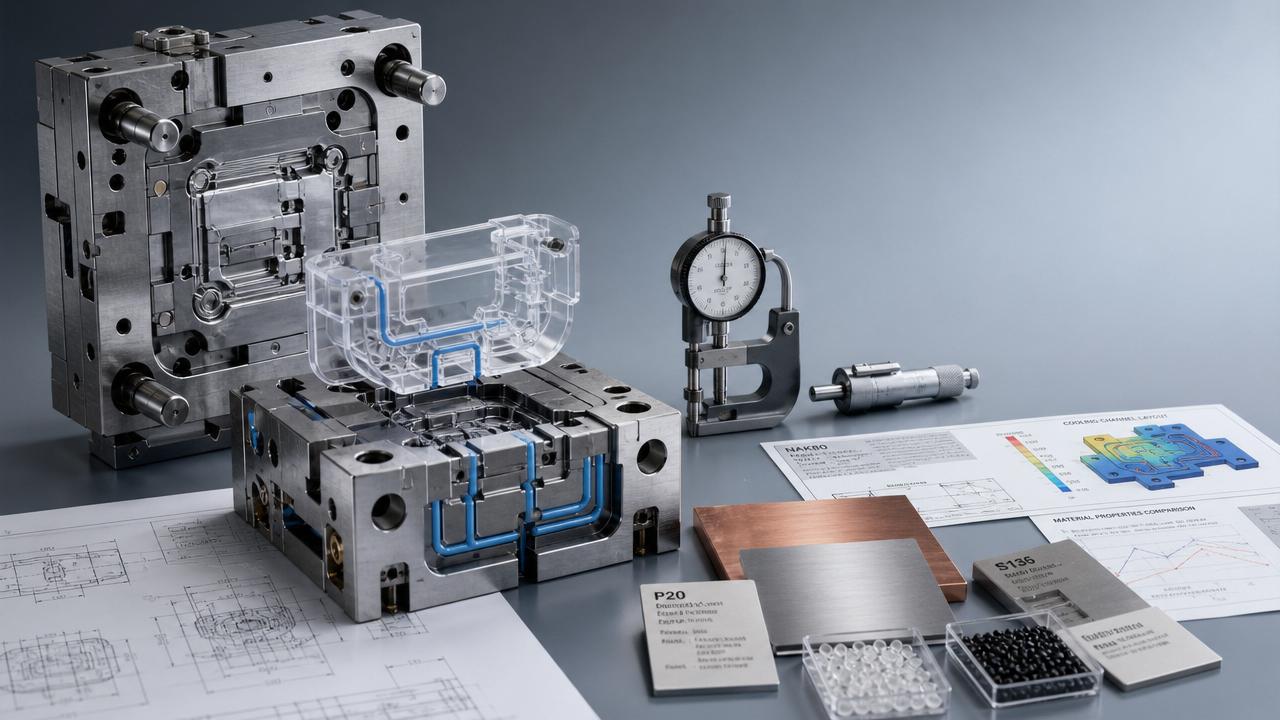
Technical analysis for mold design starts with understanding how precision, material behavior, and process efficiency shape manufacturing results. For researchers and industry observers, this introduction highlights the critical factors behind reliable mold performance, cost control, and production quality. Backed by GHTN’s industrial insight, it opens a clear path to evaluating mold design trends, engineering logic, and market relevance in today’s global manufacturing landscape.
In practical terms, technical analysis for mold design is not limited to CAD geometry or tooling drawings. It connects material shrinkage, thermal balance, cycle time, venting, gating, maintenance access, and end-market quality targets into one engineering decision chain.
For OEM sourcing teams, distributors, and industrial researchers, early-stage evaluation often determines whether a mold will support stable output for 50,000 cycles or require costly correction after pilot production. That is why analytical discipline should start before steel cutting begins.
Why Technical Analysis for Mold Design Matters at the Earliest Stage
A sound technical analysis for mold design reduces uncertainty across 3 critical dimensions: manufacturability, durability, and commercial viability. In many industrial projects, a design review completed 2–4 weeks earlier can prevent several rounds of rework after T1 sampling.
From concept risk to production stability
Mold design affects dimensional repeatability, flash control, fill balance, part ejection, and downstream assembly. Even a tolerance drift of ±0.05 mm can create fit issues in electrical housings, hardware inserts, or precision fastening systems.
In injection and die-casting applications, the first technical checkpoint usually covers 5 factors: part geometry, draft angle, wall thickness, material behavior, and expected annual volume. Missing one of these can increase trial iterations from 2 rounds to 5 or more.
Common early questions
- Is the part structure compatible with a 2-plate mold, or does it require sliders, lifters, or collapsible cores?
- Will the selected resin or alloy create shrinkage variation above the acceptable assembly threshold?
- Can the cooling circuit support a target cycle time of 18–35 seconds without local overheating?
- Does the tool design allow routine cleaning and replacement of wear-prone components within 30–60 minutes?
These questions matter because mold performance is inseparable from the wider industrial chain. GHTN’s perspective is especially relevant here: mold engineering is linked to fastener fit, electrical compliance interfaces, and precision tool compatibility across multiple sectors.
Core engineering variables that shape outcomes
A reliable technical analysis for mold design should identify how each variable affects output quality and cost. Instead of treating mold design as a single drawing task, decision-makers should review a matrix of thermal, mechanical, and process variables.
The following table outlines a practical review framework used by many industrial teams during feasibility screening and DFM evaluation.
The key lesson is that technical analysis for mold design works best when these variables are reviewed together, not in isolation. A faster cycle time may look attractive, but if cooling uniformity is weak, reject rates can rise and erase the expected gain.
How to Evaluate Mold Design Logic Across Materials and Processes
Different processes demand different analytical priorities. A mold designed for glass-filled engineering plastic faces different wear, venting, and gate balance issues than a die-casting tool handling thermal shock and metal flow turbulence.
Material behavior is never secondary
Material selection influences shrinkage, abrasion, corrosion risk, molding temperature, and surface finish. In technical analysis for mold design, this means the tool cannot be reviewed independently from the resin, insert material, or alloy it will process.
For example, abrasive filled materials may require harder tool steel, protective coatings, or insert-based wear management if projected output exceeds 100,000 shots. Hygroscopic polymers may also require stricter drying control before mold trials begin.
Typical process-sensitive design checks
- Confirm shrinkage assumptions before final cavity sizing.
- Review gate type against cosmetic and pressure requirements.
- Check vent layout in deep ribs, corners, and flow-end zones.
- Match steel grade with wear resistance and maintenance frequency.
- Validate ejection force for thin-wall or undercut features.
A robust review also compares production volume with tooling strategy. For a prototype run of 1,000–5,000 parts, simplified construction may be acceptable. For annual demand above 200,000 parts, maintainability and thermal efficiency become more important than lowest initial tool cost.
Decision points for sourcing and technical review
Information researchers often need a practical structure for comparing mold concepts from multiple suppliers. The next table summarizes key decision factors that link engineering logic with sourcing risk.
This comparison approach helps technical analysis for mold design move beyond generic promises. Buyers and researchers can judge whether a supplier understands not only mold build quality, but also machine fit, process control, and long-term serviceability.
A Practical Framework for Researchers, OEMs, and Distributors
In global manufacturing, mold decisions increasingly affect adjacent component systems. A housing mold may influence terminal alignment, fastener torque consistency, sealing reliability, or robotic pick-and-place behavior on automated lines.
A 4-step review path before supplier engagement
Researchers and sourcing teams can use a 4-step path to structure technical analysis for mold design before RFQ release. This improves internal alignment and shortens clarification cycles once suppliers begin quoting.
Step 1: Define product function and risk zones
Identify 3–6 critical-to-function areas such as sealing edges, snap fits, screw bosses, connector windows, or cosmetic surfaces. This ensures mold decisions support actual performance requirements rather than only nominal dimensions.
Step 2: Build a process assumption sheet
Include resin or alloy type, annual volume, expected machine tonnage, target cycle time, and post-processing needs. Even a simple one-page brief can reduce repeated questions during the DFM stage by 20%–30%.
Step 3: Compare tooling concepts, not just prices
Request clarification on gate strategy, cooling method, insert replacement logic, and maintenance accessibility. A lower quoted price may hide later costs if wear components require long downtime or difficult disassembly.
Step 4: Align approval criteria before T1
Set measurable standards for dimensions, appearance, assembly fit, and trial documentation. If the acceptance logic is vague, T1 and T2 samples often trigger debate rather than clear engineering decisions.
Frequent mistakes in technical analysis for mold design
- Assuming part geometry can be optimized after the tool is already committed.
- Focusing on cavity count without checking machine utilization and balance risk.
- Ignoring maintenance intervals until wear or flashing becomes visible in production.
- Treating mold cost, material choice, and cycle time as separate purchasing issues.
- Overlooking export, packaging, and spare part planning for cross-border supply chains.
This is where GHTN’s cross-sector view adds value. Because modern industrial components are interconnected, mold analysis should consider downstream realities in hardware assembly, electrical enclosure standards, and precision manufacturing workflows rather than tool geometry alone.
What Market Observers Should Track Next
The next phase of technical analysis for mold design is increasingly digital and lifecycle-oriented. More teams now evaluate simulation accuracy, modular tool architecture, and greener production targets alongside traditional concerns such as hardness and cycle time.
Three trends reshaping evaluation priorities
First, design-for-maintenance is gaining attention. Tools that simplify insert change, cleaning access, and spare management can reduce stoppage windows from several hours to less than 90 minutes in some production settings.
Second, energy and cooling efficiency are becoming stronger buying criteria. A small cycle-time reduction of 2–4 seconds, repeated over large volumes, can materially affect machine utilization and operating cost.
Third, global sourcing teams want greater transparency in engineering assumptions. They increasingly ask for DFM records, trial feedback loops, and measurable correction plans instead of accepting broad claims about tool quality.
Why this matters for industrial intelligence
For information researchers, the value of technical analysis for mold design lies in its predictive power. It helps explain not only whether a mold can be built, but whether it can support long-term manufacturing logic across cost, quality, compliance, and scale.
That perspective aligns closely with GHTN’s mission of linking precision with market insight. In mold manufacturing, hidden risks often begin at the micron level but end with major supply chain consequences if they are not analyzed early.
Effective technical analysis for mold design begins with disciplined review of geometry, materials, process assumptions, and maintenance logic. For OEMs, distributors, and market researchers, this approach improves sourcing judgment, reduces correction loops, and clarifies long-term production value.
If you are assessing mold trends, comparing suppliers, or planning a precision manufacturing project, GHTN can help you connect engineering details with broader industrial decision-making. Contact us today to explore tailored insights, discuss tooling questions, or learn more solutions for hardware, electrical, and mold applications.
Related News