
Australia’s Welded Pipe Ruling Raises Origin Risks

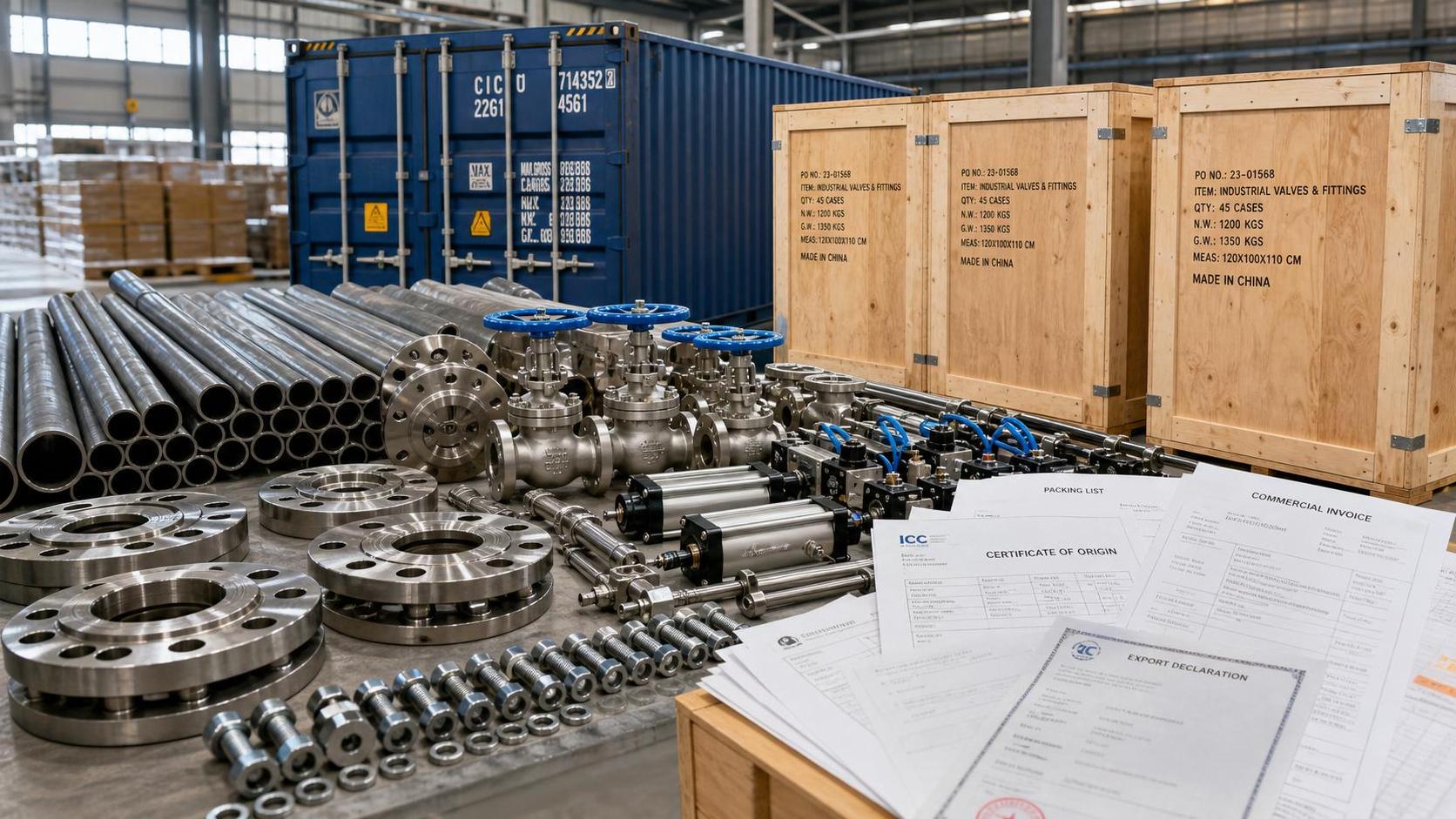
On June 18, 2026, Australia’s anti-dumping authority issued a final anti-circumvention ruling on welded pipe from China, finding that some Chinese exporters used simple processing in third countries to avoid anti-dumping duties and stating that duty differences will be collected retroactively. Because the products involved are widely used in brackets, flange connection parts, and pneumatic piping systems, the development deserves close attention from exporters and supply-chain participants linked to Bolts & Screws, Valves, and Air Cylinders, especially where origin documentation, routing arrangements, and customs paperwork are concerned.
What the ruling confirms
The confirmed facts are limited but commercially significant. The final ruling was released on June 18, 2026 by Australia’s anti-dumping authority. It concerns an anti-circumvention investigation into welded pipe from China. The authority determined that some Chinese exporters circumvented anti-dumping duties through simple processing in third countries. It also stated that differential duties will be levied retroactively. The products concerned are broadly used in bracket structures, flange connection components, and pneumatic pipeline systems, and the ruling directly affects origin certification, supply-chain routing, and customs document preparation for related exporters, including those associated with Bolts & Screws, Valves, and Air Cylinders.
Why adjacent exporters may now face closer scrutiny
Origin claims become a frontline trade issue
From an industry perspective, the most immediate pressure is not limited to welded pipe producers themselves. Exporters whose products incorporate or depend on these pipe-related applications may face closer review of origin claims, particularly where goods move through multiple processing or transit locations. The practical impact is likely to appear in certificate preparation, supporting records, and consistency between commercial documents and declared supply-chain routes.
Supply-chain design matters as much as product classification
Observably, businesses serving bracket assemblies, flange-linked products, and pneumatic system components may need to reassess whether current processing paths could invite questions during customs clearance. For traders, manufacturers, and logistics coordinators, the issue is not only what is exported, but also how the product moved, where processing took place, and whether that processing could be viewed as too limited to support the declared origin position.
Procurement and delivery teams may feel the effect downstream
For procurement teams and channel operators, the ruling may affect supplier selection, order scheduling, and document readiness. If a shipment depends on upstream materials or semi-finished items linked to the products in question, buyers and distributors may need to pay closer attention to origin statements, traceability records, and the alignment of shipping, customs, and technical files. What deserves closer attention is that document weakness can become a delivery risk even before a formal dispute over classification or duties emerges.
Where companies should tighten control now
Recheck origin support across the full document set
Analysis shows that companies connected to the affected product applications should review whether origin-related files are internally consistent across invoices, packing documents, declarations, and supporting trade records. This is especially relevant where shipments involve third-country processing or multi-stage routing.
Map the real processing path behind exported goods
It is more appropriate to understand this ruling as a prompt to verify the actual supply-chain path behind export transactions. Companies may need to compare declared origin positions with the real sequence of sourcing, processing, consolidation, and export handling, so that customs submissions do not rely on incomplete or outdated assumptions.
Prepare for stricter clearance questions on related product lines
For exporters tied to Bolts & Screws, Valves, Air Cylinders, and related assemblies, closer attention may be needed on clearance files and pre-shipment documentation. The input provided does not specify detailed enforcement procedures, so this should not be treated as a confirmed universal inspection outcome. Still, businesses may benefit from preparing for more detailed questions on origin proof, supply-chain routes, and supporting paperwork.
Watch for changes in customer and tender documentation
Analysis shows that the commercial effect may also appear in buyer-side requirements. Even without new details on implementation, exporters should pay attention to whether customers, distributors, or project buyers begin requesting stronger origin evidence, revised supplier declarations, or more detailed compliance documents in tenders and shipment reviews.
How this development should be read at this stage
Observably, this is best understood as both a landed enforcement signal and a rule-execution development rather than a purely symbolic policy statement. The confirmed part is the final anti-circumvention ruling and the retroactive duty consequence for conduct identified in the case. The open question is how broadly related market participants will feel the practical impact in day-to-day documentation review, customs handling, and buyer compliance demands. For that reason, the market still needs to watch how official wording is applied in practice and how quickly related documentation expectations change.
A compliance signal with wider supply-chain implications
In practical terms, this development matters because it shifts attention from product shipment alone to the credibility of origin claims and the transparency of processing routes. For exporters and supporting suppliers connected to welded pipe applications, the issue is less about abstract trade policy and more about whether existing sourcing, processing, and clearance files can withstand closer review. At this stage, it is more appropriate to understand the ruling as an enforceable compliance signal with broader supply-chain implications, while the exact scope of downstream execution still requires continued observation.
Basis of this article and what still needs verification
This article is generated from the user-provided news title, event date, and event summary. For developments of this kind, relevant source categories typically include official notices, publications by regulatory or trade authorities, customs or trade administration information, industry association updates, standard-setting documents, and reporting by authoritative media. A specific official source link was not provided in the input, so the precise official publication path still needs to be verified. Continued attention is also needed on any follow-up implementation details, compliance interpretations, tender document changes, market feedback, and how affected companies adjust their execution in practice.