
Manufacturing Technology Shifts That Are Changing Lead Time Rules

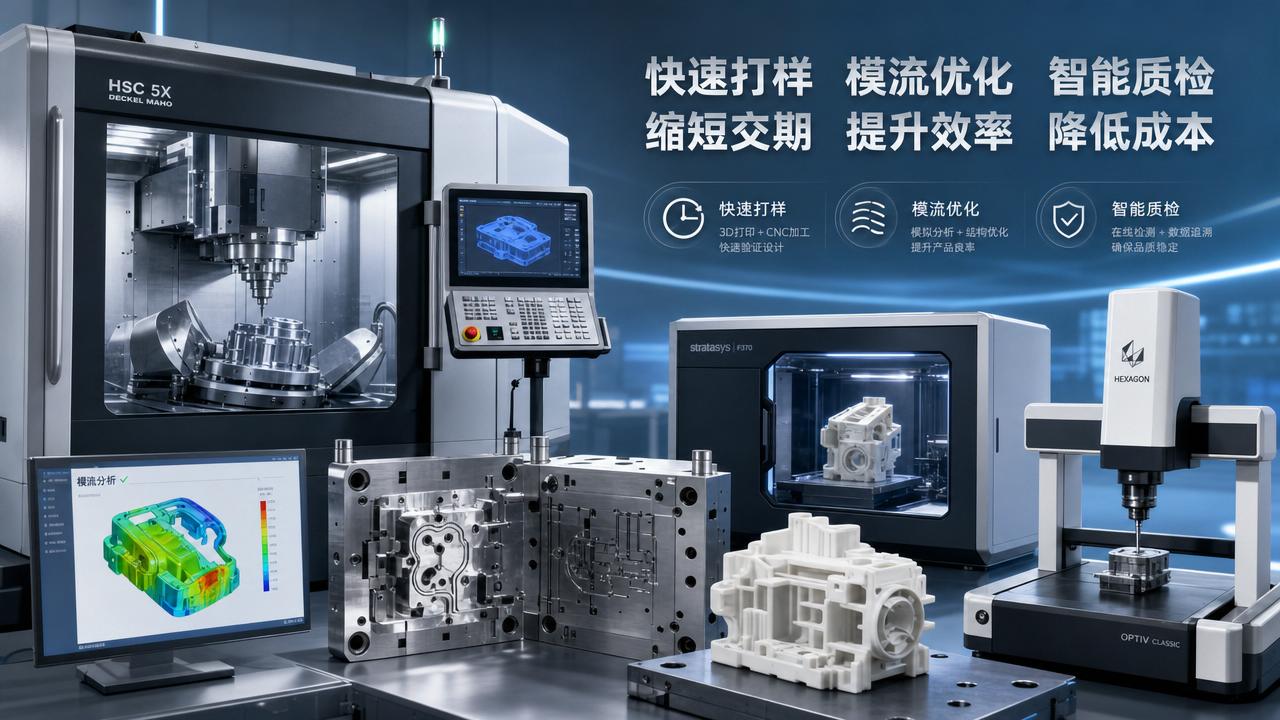
Lead time is no longer shaped by labor and logistics alone. Today, manufacturing technology is changing the rules for how quickly parts move from concept to qualified production, especially in hardware, tooling, electrical components, and mold-based systems. Faster simulation, digital validation, automated machining, and connected quality control are compressing timelines that once seemed fixed. In complex industrial markets, that shift matters because shorter and more predictable lead times improve sourcing flexibility, reduce project risk, and make it easier to respond to design changes without losing commercial momentum.
Why lead time now varies by production scenario, not by a single factory average
One of the biggest mistakes in lead-time planning is assuming that all products benefit equally from the same manufacturing technology. In reality, the impact depends on the production scenario. A precision mold insert, a batch of hardened fasteners, a low-volume machined housing, and an electrical enclosure with compliance constraints each face different bottlenecks. In one case, tooling validation dominates the schedule. In another, material availability, process capability, or inspection speed becomes the limiting factor.
This is why industrial teams increasingly evaluate lead time through scenario-based judgment. The core question is no longer “How fast is the supplier?” but “Which stage of this manufacturing route can modern technology compress without adding hidden quality risk?” That distinction is especially important across the broad industrial component ecosystem covered by GHTN, where micron-level tolerances, durability requirements, and cross-border standards often influence turnaround more than shop-floor headcount.
Scenario 1: Rapid prototyping is rewriting early-stage lead time expectations
For concept validation and pre-production review, manufacturing technology has dramatically reduced waiting time. Additive manufacturing, high-speed CNC machining, and digital design-to-machine workflows allow prototype iterations to be produced in days instead of weeks. This matters most when fit, assembly logic, ergonomics, airflow, or cable routing must be checked before final tooling is approved.
The key judgment point in this scenario is whether the prototype is intended for visual confirmation, functional testing, or process simulation. A resin-printed mockup may be enough for dimensional review, while a metal machined prototype is often necessary for torque, wear, sealing, or thermal testing. Faster prototyping is valuable, but only when the chosen process reflects the real production requirement closely enough to prevent later redesign.
What changes in this scenario
- CAD-to-production data transfer is shorter and more accurate.
- Multiple iterations can be tested before committing to hard tooling.
- Design errors are caught earlier, lowering rework later in the project.
- Lead time becomes more dependent on validation discipline than machine availability alone.
Scenario 2: Tooling-heavy production sees the biggest gains from simulation and automation
In mold manufacturing, die-casting tools, and precision stamping systems, lead time has traditionally been constrained by tool design, machining, trial runs, and correction cycles. Here, advanced manufacturing technology is changing the timetable through CAM automation, high-speed milling, electrode optimization, in-machine probing, and mold flow simulation. Instead of discovering filling defects or cooling imbalance late in the process, many risks can now be identified before steel is cut.
The critical judgment point is whether simulation results are integrated with shop-floor execution. A well-modeled tool still loses time if electrode management, cavity polishing, or heat treatment scheduling remain disconnected. The fastest tooling programs are usually those where design data, machining strategy, inspection checkpoints, and first-shot feedback operate as one digital thread rather than as separate departments.
Best-fit applications
This scenario is especially relevant for injection mold programs, multi-cavity tools, die-casting molds, and high-precision fixtures where every correction loop can add days or weeks. In such cases, manufacturing technology does not just speed production; it reduces uncertainty in approval milestones.
Scenario 3: Mid-volume component production benefits from connected machining and inspection
For machined components, mechanical tools, housings, brackets, shafts, and custom hardware, the lead-time shift is often driven by cell-level efficiency rather than breakthrough process changes. Smart scheduling, tool-life monitoring, palletized machining, robotic loading, and inline metrology help shorten setup loss and reduce queue time between operations. In this environment, manufacturing technology improves flow consistency as much as raw speed.
The core judgment point is mix complexity. If the product family changes frequently, flexible machining systems and digital work instructions bring more value than a single high-output machine. If the geometry is stable and volumes are repetitive, automated loading and fixture standardization create greater lead-time savings. The right investment depends on whether variation or throughput is the true bottleneck.
Scenario 4: Compliance-sensitive electrical and industrial parts follow different timing rules
Electrical hubs, enclosures, connector assemblies, and safety-related industrial parts often face a lead-time pattern that is less about machining speed and more about verification. Materials must align with flame, conductivity, insulation, or environmental standards. Documentation, traceability, and approval testing can consume more time than fabrication. In these cases, manufacturing technology helps by improving digital traceability, test automation, and document control rather than only accelerating production equipment.
A common judgment point is whether a design change affects compliance scope. Small geometry changes may seem harmless, but they can trigger new validation steps, altered tooling inserts, or updated test records. In compliance-sensitive scenarios, the fastest route is often the one that preserves approved material systems and validated process windows.
How different scenarios reshape lead-time priorities
Practical ways to match manufacturing technology to the right scenario
- Map the longest delay point first. Separate quoting time, engineering release, material sourcing, tooling, machining, finishing, inspection, and shipping.
- Classify the project by risk profile. New geometry, tight tolerances, special materials, and regulated performance all require different lead-time assumptions.
- Ask which digital tools affect outcomes, not just speed. Simulation, automated inspection, and MES visibility are valuable when they remove repeat errors.
- Check change-management maturity. Strong manufacturing technology loses value if version control and process updates are weak.
- Use pilot runs strategically. A short controlled run can reveal cycle instability, quality drift, or fixture weakness before full-scale production.
Common misjudgments that still create hidden lead-time risk
A frequent mistake is confusing equipment modernization with end-to-end responsiveness. A factory may have advanced machines, yet still lose time in drawing clarification, material substitution approval, or offline inspection queues. Another error is overestimating the value of rapid prototyping when production tooling remains unprepared. Fast samples do not guarantee fast scale-up.
There is also a tendency to ignore supply chain fit. Even the best manufacturing technology cannot fully offset delays caused by specialty alloys, certified resins, plated finishes, or outsourced heat treatment with limited capacity. Lead-time strategy works best when process innovation is paired with realistic sourcing intelligence and secondary-process planning.
Finally, many projects underestimate how much inspection architecture shapes throughput. If quality checks remain manual, sequential, and detached from machine data, production speed improvements may simply move the bottleneck downstream. Connected metrology and real-time SPC often deliver more schedule value than another marginal machine upgrade.
What to do next when evaluating manufacturing technology for lead-time improvement
The most effective next step is to review current projects by scenario rather than by supplier name alone. Identify whether the main delay comes from iteration, tooling, machining flow, compliance, or inspection. Then assess which layer of manufacturing technology directly addresses that constraint. This creates a more accurate basis for sourcing decisions, timeline forecasting, and program risk control.
For organizations tracking hardware, tooling, electrical, and mold-sector developments, GHTN provides a useful lens because lead time is ultimately a systems issue. Precision tools, robust fasteners, mold design intelligence, and compliance-aware production methods are closely linked. Understanding those connections makes it easier to judge which technology shifts are truly changing lead-time rules and which are only improving optics.
As industrial markets become more complex, the advantage will come from aligning manufacturing technology with the right application scenario, validating assumptions early, and building a supply strategy around measurable process capability. That is how lead time becomes not just shorter, but more reliable.
Related News