
Industrial Digitalization Costs That Rarely Appear in Early Plans

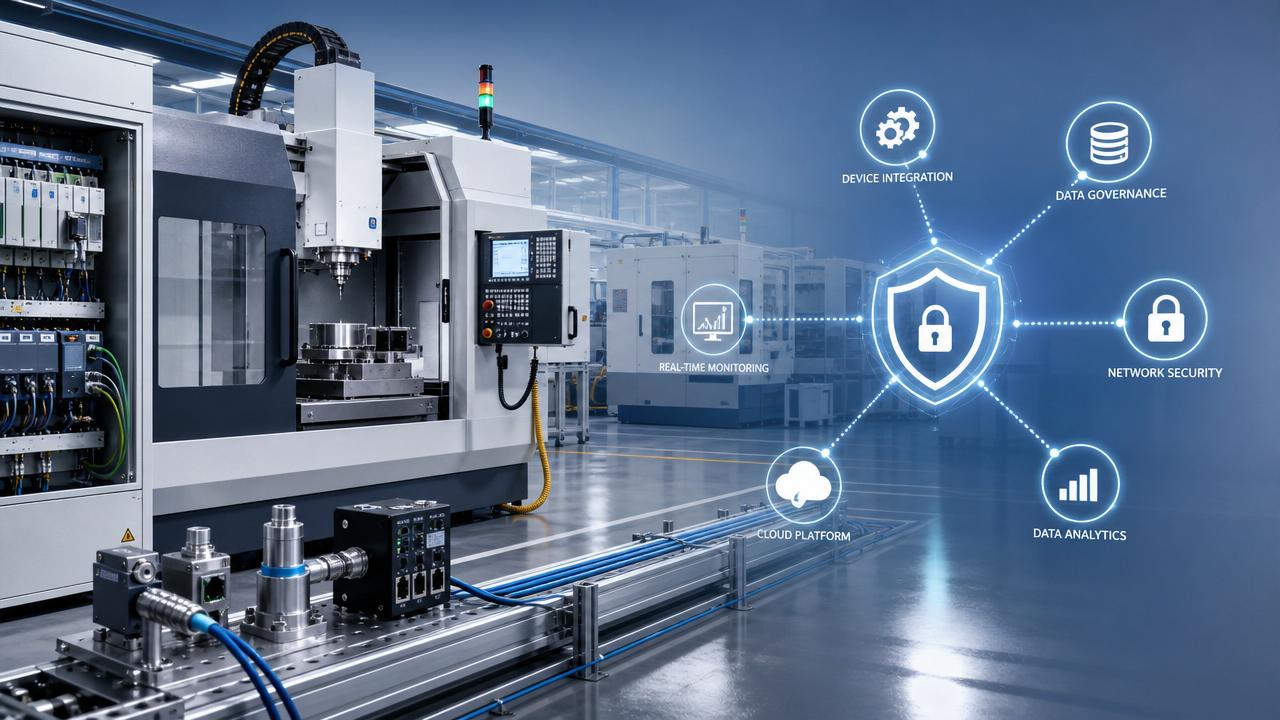
Industrial digitalization often wins approval on the promise of efficiency, but many cost drivers stay invisible until implementation begins. For finance decision-makers, overlooking integration delays, data governance, cybersecurity upgrades, workforce retraining, and vendor lock-in can distort ROI and extend payback periods. This article highlights the hidden expenses that rarely appear in early plans, helping you evaluate digital investment with greater accuracy, control, and long-term confidence.
For companies operating across hardware, electrical systems, precision tooling, mold production, and industrial distribution, the financial picture is rarely limited to software licenses or automation hardware. Industrial digitalization usually touches production data, supplier coordination, compliance workflows, maintenance logic, and the decision chain between plant management and finance. That is why early business cases often underestimate both cash timing and organizational friction.
In sectors where tolerances can sit within microns, uptime targets may exceed 95%, and procurement cycles can run from 6 to 20 weeks, even a small delay in data integration or operator readiness can create outsized cost effects. For financial approvers, the real task is not to reject digital investment, but to model hidden cost layers before approval and set controls that protect return on capital.
Where Early Industrial Digitalization Budgets Commonly Fall Short
Most initial industrial digitalization plans focus on visible categories: platform subscription, sensor deployment, network equipment, and implementation fees. In practice, the budget gap usually appears in 5 overlooked zones: legacy integration, master data cleanup, cybersecurity hardening, workforce adaptation, and post-launch support. Each one can add 8% to 25% to the original scope depending on site complexity.
Legacy equipment integration is rarely a one-line item
Many factories in the hardware and tooling ecosystem operate mixed environments: newer CNC units beside 10- to 15-year-old machines, pneumatic lines with different communication protocols, and electrical panels built to regional standards. Industrial digitalization in this context demands adapters, protocol converters, custom APIs, and often manual mapping of machine states. What looks like a 2-week connection task can become a 6- to 10-week engineering effort.
The cost is not only technical labor. During integration, planners may need scheduled downtime windows of 4 to 12 hours per line, test runs that consume raw material, and temporary duplication of reporting. If your production relies on precision molds, die-casting tools, or safety-critical electrical assemblies, validation cycles can also extend because every digital signal must match physical process reality.
Typical hidden integration burdens
- Manual data mapping between ERP, MES, WMS, and supplier portals
- Retrofit components for machines lacking modern communication interfaces
- Extra commissioning time for multi-shift production environments
- Validation of sensor accuracy within operational tolerance ranges
The table below shows how hidden cost categories often emerge before the first measurable return appears. This framework is especially useful for finance reviewers comparing site-level budgets across tooling, electrical, and mold manufacturing operations.
A key takeaway is that industrial digitalization costs are cumulative rather than isolated. A plant can absorb a moderate integration challenge or a moderate training challenge, but when both arrive together, cash flow, internal labor demand, and implementation confidence can all tighten at the same time.
Data governance looks administrative but affects ROI directly
Finance teams often see data cleanup as a low-cost background activity. In industrial environments, it is closer to infrastructure. If part numbers for fasteners, mold inserts, tooling assemblies, or electrical subcomponents are inconsistent across systems, dashboards become unreliable. That means delayed reporting, duplicate purchasing, and poor inventory decisions. A company can spend on industrial digitalization and still fail to trust its own output.
Even a mid-sized operation may manage 5,000 to 50,000 active SKUs. Standardizing naming logic, unit structures, revision controls, and supplier attributes may require a 3-step governance process: audit, cleanse, and ownership assignment. Without that, digital reporting often becomes visually impressive but financially weak.
Cybersecurity is no longer optional overhead
As machines, quality stations, and supplier gateways become connected, the attack surface expands. Industrial digitalization projects that begin as performance initiatives often trigger overdue security investments: segmented networks, role-based access, backup design, patch scheduling, and vendor access controls. These are not fringe expenses. They are part of operational continuity, especially where tooling programs, CAD files, and compliance records have commercial value.
For finance leaders, the implication is straightforward: if the project adds connectivity across 2 or more plants, introduces cloud visibility, or links external partners, cybersecurity should be priced from day one, not treated as a later exception request.
The Operational Costs That Extend Payback Periods
Many industrial digitalization proposals assume benefits start immediately after deployment. Realistically, the first 90 to 180 days are often a stabilization period. During this time, productivity may dip before it rises because teams are learning new interfaces, maintenance routines are being rewritten, and plant decisions shift from experience-based judgment to data-backed control.
Workforce retraining can be broader than expected
Training is not limited to operators. In a typical project, at least 4 groups are affected: machine operators, maintenance technicians, production planners, and line supervisors. In some cases, procurement, quality, and finance analysts also need training to interpret new data fields and workflows. A 2-hour software demo is not enough if the project changes escalation paths, maintenance intervals, or rejection reporting.
For example, a predictive maintenance dashboard may reduce unplanned downtime in the long run, but only if technicians trust sensor alerts and know when to intervene. In high-mix production, retraining may require 3 to 5 sessions per team over 6 to 8 weeks, plus supervisor follow-up during live operation.
Signs that training cost is being underestimated
- No shift-based training plan for day, night, and weekend crews
- No budget for temporary productivity loss in the first 30–60 days
- No ownership for revising SOPs, inspection points, and exception rules
- No mechanism to measure adoption beyond login activity
Change orders and scope drift are common in multi-site rollouts
Industrial digitalization can start with a focused target such as equipment monitoring, then expand into quality traceability, spare parts visibility, supplier collaboration, and energy reporting. This is strategically logical but financially dangerous if governance is weak. Each add-on may look small on its own, yet 6 or 7 minor changes can materially shift total cost of ownership.
In complex industrial networks, site-to-site variation makes this worse. One plant may use different mold maintenance routines, another may apply distinct electrical compliance checks, and a third may still rely on spreadsheet-based scheduling. Standardization itself becomes a project layer, sometimes adding 10% to 18% to implementation effort.
To help financial approvers challenge assumptions, the following table outlines common operating-phase cost drivers and the questions that should be raised before sign-off.
This table matters because many industrial digitalization projects do not fail on concept; they underperform on operating discipline. Finance teams that ask these questions early are more likely to preserve forecast credibility and avoid serial budget amendments.
Vendor lock-in is a strategic cost, not just a legal concern
A platform that works well today may still become expensive tomorrow if data extraction is difficult, integration standards are closed, or every workflow change requires paid vendor intervention. For industrial digitalization programs linked to production quality, maintenance history, and supplier performance, switching costs can become significant after 24 to 36 months.
Financial approvers should review at least 4 elements before approval: data portability, API openness, custom development ownership, and annual price adjustment terms. In practical terms, the lowest year-one price may produce the highest 5-year spend if the business becomes dependent on one ecosystem for every upgrade and interface change.
How Finance Decision-Makers Can Evaluate Industrial Digitalization More Accurately
A stronger approval process does not require finance teams to become plant engineers. It requires a disciplined review model that connects digital ambition to implementation reality. In industrial settings, this usually means checking whether the proposal reflects asset age, data maturity, compliance complexity, and post-launch support needs.
Use a phased cost model instead of one blended ROI figure
A practical approach is to separate industrial digitalization costs into 3 buckets: pre-deployment readiness, deployment and validation, and post-launch optimization. This avoids the common error of compressing 12 to 18 months of work into a single payback assumption. It also helps distinguish one-time engineering from recurring support and governance costs.
For example, pre-deployment may include data audit, network review, and process mapping. Deployment may include retrofits, connector development, testing, and training. Post-launch may include dashboard refinement, role permission updates, support contracts, and cybersecurity maintenance. Each bucket should have its own owner, timeline, and decision gate.
A 5-point review checklist for approvers
- Has the project identified all systems and machines to be connected in phase 1?
- Is there a quantified plan for data cleansing, ownership, and governance?
- Are cybersecurity upgrades included with timelines and responsibilities?
- Has training been budgeted by role, shift, and plant location?
- Are exit conditions and integration rights clear in the vendor agreement?
Model downside scenarios, not only target savings
Industrial digitalization cases often present savings from scrap reduction, labor efficiency, inventory accuracy, or uptime gains. These are valid, but finance teams should also test downside scenarios. What happens if adoption reaches only 60% in quarter one? What if a plant needs 4 additional weeks of integration? What if cybersecurity remediation must be accelerated after a network assessment?
Running best-case, base-case, and conservative-case models can materially improve approval quality. A project with a projected 18-month payback may still be acceptable under a 24-month conservative scenario, but only if leadership understands the path and control points in advance.
Build cross-functional review into the approval process
In industrial parts and precision manufacturing environments, finance should not review digital investment in isolation. A stronger model includes at least 3 operational voices: engineering, IT or cybersecurity, and plant operations. If the project affects traceability, quality or export-related documentation, compliance input may also be needed.
This matters for organizations like those served by GHTN, where the industrial chain runs from base components and fastening systems to electrical controls and mold tooling. The digital layer must support material traceability, manufacturing logic, and market readiness, not just visual reporting. A financially sound project is one that reflects the physical realities of production.
Practical Guidance for Industrial Firms Planning the Next Digital Investment
Before approving the next industrial digitalization initiative, decision-makers should ask whether the proposal is designed for the actual operating environment. A project built for discrete assembly may not fit a mold shop with revision-sensitive tooling records. A generic reporting tool may not serve an electrical component supplier facing compliance documentation and serial traceability demands.
Focus on fit, not just feature volume
More functions do not always produce more value. In many cases, the better investment is the one that solves 2 or 3 high-friction problems first: unplanned downtime, poor inventory visibility, inconsistent quality records, or weak supplier coordination. Once those are stabilized, expansion becomes easier and financial confidence improves.
For hardware, electrical, and mold-related businesses, it is often wise to prioritize use cases that directly affect throughput, traceability, or working capital. These tend to be easier to measure within 1 to 2 quarters than broad transformation goals framed only in strategic language.
Tie every implementation phase to a measurable control point
A sound industrial digitalization roadmap should define stage gates such as data readiness, integration completion, user adoption, and operational benefit validation. Each gate should have a measurable threshold: for example, 95% asset mapping completed, 100% critical SKU fields standardized, 3-role training finished, or first-month dashboard variance below an agreed limit.
This control structure improves governance and also strengthens communication between finance and operations. Instead of debating whether the entire program is succeeding, teams can review whether each phase has earned the right to move forward.
Industrial digitalization can deliver real value, but only when budgets reflect the full operating picture: integration effort, data discipline, cyber protection, training load, support requirements, and future flexibility. For financial approvers in industrial sectors, sharper cost visibility leads to better ROI discipline, fewer surprise requests, and stronger implementation outcomes.
GHTN helps industry stakeholders understand these deeper operational realities across hardware, electrical, and precision tooling ecosystems, linking technical insight with commercial decision-making. If you are evaluating a new digital investment, refining approval criteria, or comparing implementation approaches, contact us to explore tailored insights, practical benchmarks, and solution guidance for your industrial environment.
Related News