
Why Mechanical Efficiency Drops Even After a New Upgrade

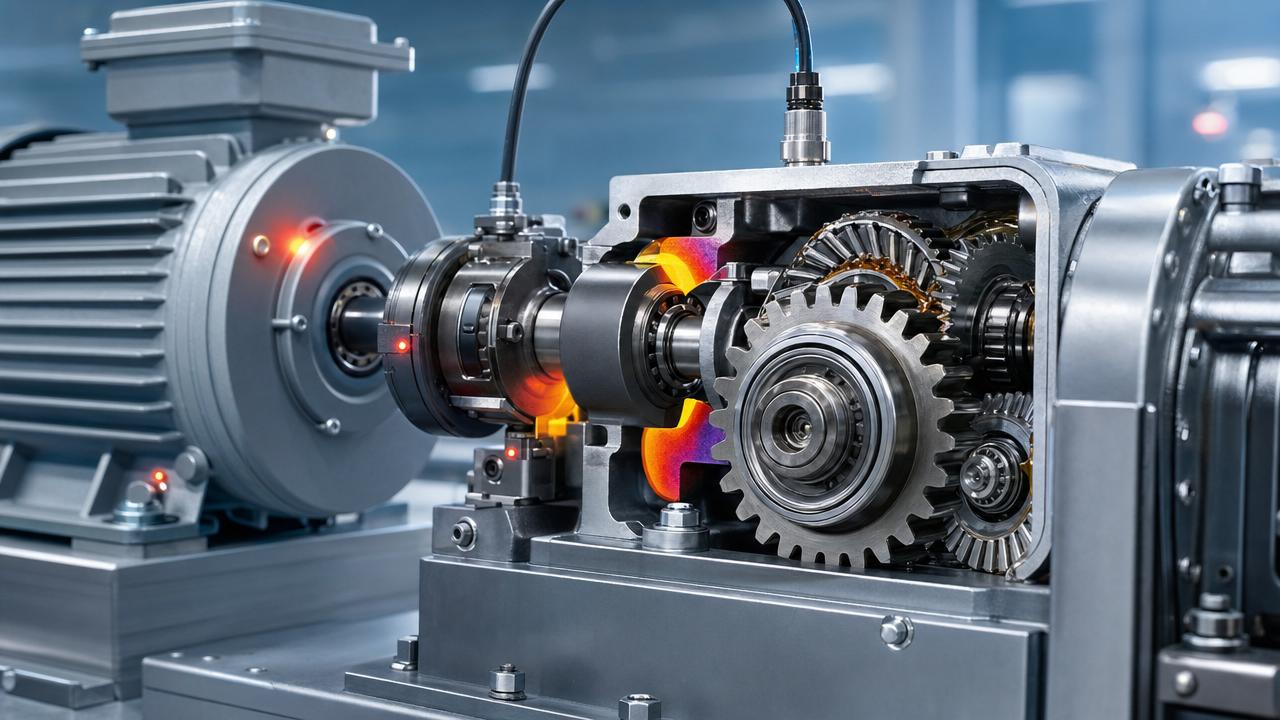
A new upgrade is usually expected to raise throughput, reduce energy loss, and stabilize output. In real production environments, however, mechanical efficiency often declines shortly after new components, drives, couplings, bearings, gear sets, or control modules are installed. This pattern is common across general industry because an upgrade changes more than one part: it shifts load paths, speed profiles, lubrication demands, thermal behavior, and control logic at the same time. When these interactions are not checked carefully, mechanical efficiency can fall even though the new hardware itself is technically superior. Understanding these causes helps maintenance teams isolate losses faster, avoid repeated stoppages, and protect the long-term value of the upgrade.
Mechanical Efficiency in Post-Upgrade Systems
Mechanical efficiency describes how effectively a machine converts input power into useful output after friction, vibration, slippage, heat, and transmission losses are considered. In industrial systems, mechanical efficiency is not determined by a single component. It is the result of how shafts, bearings, seals, belts, gears, lubrication circuits, motors, and controls perform together under real operating loads.
After an upgrade, a machine may show excellent no-load results but still lose mechanical efficiency under production conditions. That happens because installation quality, load variation, tolerance stack-up, and software settings can offset the benefit of the new part. In other words, an upgrade improves design potential, but only system integration delivers actual mechanical efficiency.
This is especially important in mixed industrial environments where legacy equipment is paired with modern modules. A high-performance gearbox, servo motor, or linear guide may be installed into an older machine frame that was never designed for tighter response or higher torque density. The result can be hidden drag, resonance, overheating, and declining mechanical efficiency within weeks of commissioning.
Current Industry Signals Behind Efficiency Loss
Across hardware, tooling, electrical, and mold-related production lines, several recurring signals appear when mechanical efficiency drops after an upgrade. These signals are often visible before a major failure occurs.
These signals matter because they show that mechanical efficiency is a cross-disciplinary issue. It sits at the intersection of mechanics, controls, materials, and maintenance practice. That is why post-upgrade troubleshooting should never focus only on the newly installed part.
Main Reasons Mechanical Efficiency Drops After a New Upgrade
The most common cause is misalignment. Even small shaft or coupling misalignment increases radial and axial loads, which raises bearing friction and heat. A machine may still run, but mechanical efficiency declines because more power is consumed to overcome induced resistance. Precision upgrades often make this worse if mounting surfaces or base flatness are not corrected first.
A second cause is component incompatibility. A new motor with faster acceleration may overload an old transmission path. A harder seal material may increase drag against a shaft finish that was acceptable for the previous design. A higher-capacity bearing may require a different preload range. In each case, the equipment is technically upgraded, yet the assembled system loses mechanical efficiency because one part’s advantage creates stress elsewhere.
Lubrication errors are another major factor. Maintenance teams sometimes keep the previous lubricant even after changing speed, load, or operating temperature. The wrong viscosity, additive package, or grease fill level can sharply reduce mechanical efficiency. Over-lubrication can be as harmful as under-lubrication, especially in high-speed bearings where churn losses rise quickly.
Control mismatch also plays a large role. If servo parameters, inverter ramps, or pneumatic timing are not retuned after a hardware change, the machine can experience overshoot, unnecessary braking, micro-stoppages, and repeated correction cycles. These issues may look electrical, but they directly affect mechanical efficiency because unstable motion wastes transmitted energy.
Finally, hidden structural limits can block the expected gains. A new spindle, press drive, or mold motion assembly may perform well on paper, yet frame stiffness, foundation looseness, or poor damping can absorb the added performance. In such cases, mechanical efficiency drops not because the upgraded part failed, but because the surrounding structure cannot support the new operating envelope.
Why This Matters for Industrial Reliability and Cost
When mechanical efficiency declines, the problem extends far beyond energy consumption. Lower mechanical efficiency often causes higher cycle variability, earlier wear, unstable product quality, and reduced asset life. In hardware processing, it can affect torque consistency and fastening reliability. In electrical assembly equipment, it can disturb indexing accuracy and pneumatic response. In mold manufacturing or mold handling systems, it can create dimensional inconsistency through vibration, thermal growth, or unstable closing force.
There is also a clear business effect. A recent upgrade usually carries expectations of improved output, reduced maintenance frequency, or better market responsiveness. If mechanical efficiency drops instead, the operation absorbs hidden costs through spare parts consumption, troubleshooting hours, rework, and lost production time. That weakens the return on investment and makes future upgrade decisions harder to justify.
For industrial intelligence platforms such as GHTN, this is exactly where deeper component-level analysis creates value. Mechanical efficiency is rarely a headline issue until a line begins losing stability. Yet at the granular level of bearings, fasteners, couplings, surface finishes, and motion logic, it often explains why upgraded equipment underperforms in the field.
Typical Post-Upgrade Scenarios Where Efficiency Loss Appears
Mechanical efficiency problems usually follow recognizable patterns. The table below summarizes common scenarios across general industry.
Practical Steps to Restore Mechanical Efficiency
A structured approach is the fastest way to recover mechanical efficiency after an upgrade. Start by comparing pre-upgrade and post-upgrade baseline data. Motor current, vibration, temperature, cycle time, noise, and lubrication consumption often reveal where losses began. Without this comparison, teams may replace more parts without correcting the true source of reduced mechanical efficiency.
- Verify alignment under operating temperature, not only during cold installation.
- Confirm that bearings, seals, couplings, and shafts match the upgraded speed and load profile.
- Review lubricant selection, fill volume, relubrication interval, and contamination control.
- Retune drives, servo loops, and pneumatic timing after any mechanical change.
- Inspect base rigidity, fastener integrity, and structural resonance if vibration increased.
- Run the machine through actual production loads rather than relying on idle-state acceptance tests.
It is also useful to separate symptoms from causes. Rising heat may be caused by preload, lubricant, contamination, or misalignment. Poor output may be linked to control tuning rather than weak hardware. Mechanical efficiency improves when diagnosis follows energy flow through the full system, from input power to final motion or force delivery.
A Practical Next Step for Better Upgrade Outcomes
The best way to prevent post-upgrade mechanical efficiency loss is to treat every retrofit as a system change rather than a parts change. Before commissioning, build a simple verification checklist covering alignment, compatibility, lubrication, controls, and structural support. After startup, monitor temperature, current, vibration, and cycle stability during the first weeks, when most hidden losses appear.
For organizations tracking industrial component performance, deeper technical intelligence is essential. GHTN supports this need by linking precision-level insight across mechanical tools, electrical systems, and mold-related applications, helping uncover why mechanical efficiency shifts in real operating conditions. When upgrade decisions are supported by component logic, standards awareness, and field-based analysis, performance gains become far more durable.
In practice, restoring mechanical efficiency is rarely about undoing the upgrade. It is about finishing the integration work that turns new hardware into reliable output. That is the difference between a nominal improvement and a true productivity gain.
Related News