
Manufacturing Trends Reshaping Cost Control in 2026

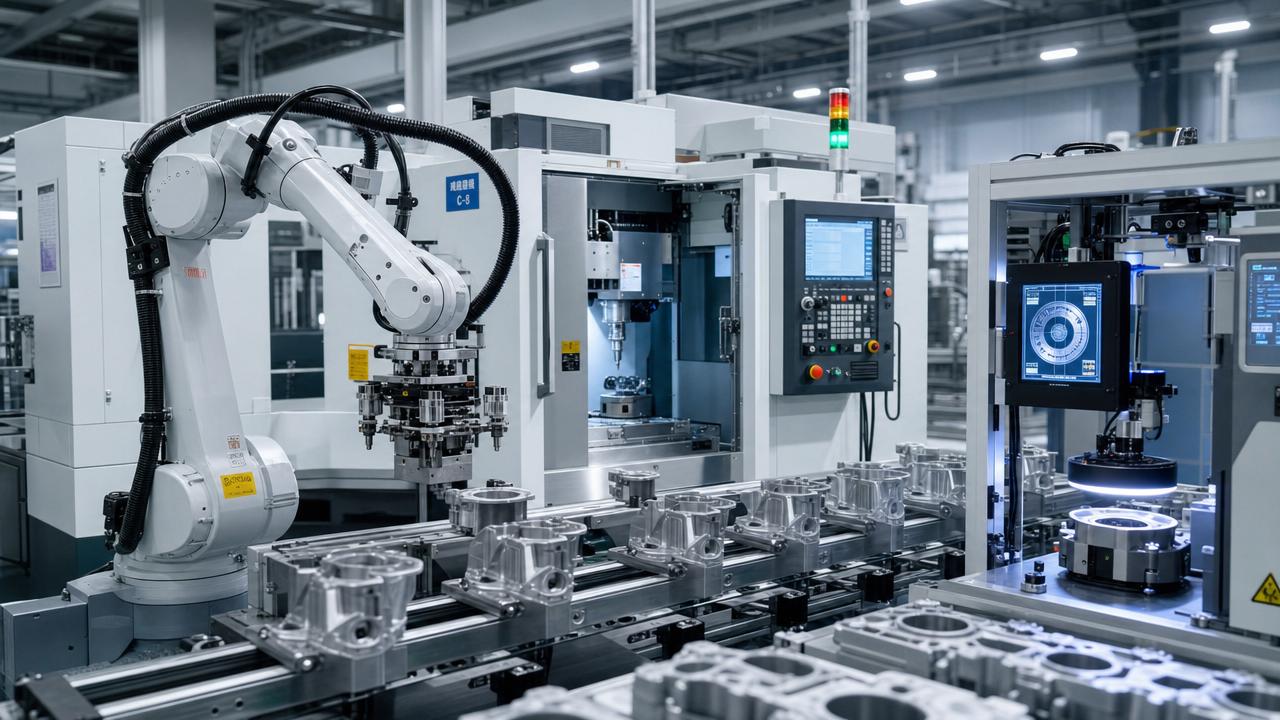
In 2026, manufacturing trends are no longer just operational signals—they are strategic levers for cost control, resilience, and competitive growth. For business decision-makers, understanding how automation, precision tooling, supply chain shifts, and sustainability are reshaping industrial cost structures is essential to protecting margins and improving long-term performance in a rapidly evolving global market.
Why are manufacturing trends so important for cost control in 2026?
The biggest shift in 2026 is that cost control is no longer driven by labor rates alone. Today’s manufacturing trends affect the full cost architecture of an industrial business: raw material volatility, tooling life, energy efficiency, machine uptime, logistics risk, compliance costs, and inventory exposure. For decision-makers, this means margins are increasingly determined by system design rather than by isolated purchasing negotiations.
Several manufacturing trends are converging at once. Automated production is reducing repetitive labor dependence while increasing capital discipline. Precision tooling is improving yield and shortening cycle times, but it also raises the importance of supplier capability and maintenance strategy. Supply chains are becoming more regional and risk-aware, which changes landed cost calculations. At the same time, sustainability expectations are turning energy use, scrap reduction, and material selection into measurable cost variables rather than branding topics.
For companies in hardware, electrical, fastener, mold, and related industrial segments, the implications are direct. A poorly specified mold, an underperforming cutting tool, or an unreliable electrical component can create cascading waste far beyond the purchase price. That is why advanced cost control now depends on understanding manufacturing trends at the component and process level, not just at the financial reporting level.
Which manufacturing trends are having the strongest impact on industrial cost structures?
The most influential manufacturing trends in 2026 can be grouped into five cost-shaping forces. Each affects industrial profitability in a different way, and the most successful firms assess them together rather than separately.
1. Automation is shifting costs from labor variability to asset performance
Automation reduces dependence on manual repetition, but it does not automatically lower total cost. The real savings come when robotics, sensors, pneumatic systems, and control logic are integrated with stable cycle design. If throughput rises but maintenance discipline is weak, unplanned downtime can erase expected gains. Leaders therefore track cost per good unit, not just headcount reduction.
2. Precision tooling is becoming a margin lever
Cutting tools, dies, injection molds, and fixtures directly influence tolerance stability, scrap rates, rework, and machine utilization. In many operations, the cheapest tool is the most expensive option once wear rates, tool changes, and rejected output are included. This is especially true in high-volume or high-precision environments where micron-level variation affects downstream assembly or compliance.
3. Supply chain regionalization is changing the meaning of “best price”
One of the most discussed manufacturing trends is the move from single-source global dependency to hybrid sourcing models. Businesses are balancing offshore efficiency with nearshore responsiveness. The result is a new cost equation that includes lead-time risk, customs uncertainty, freight variability, quality inspection burden, and the financial cost of excess inventory.
4. Energy and sustainability metrics are now operating cost issues
Electricity use, compressed air losses, thermal efficiency, recyclable materials, and waste reduction are all becoming part of the cost-control agenda. In sectors where margins are tight, improving machine energy efficiency or reducing material scrap by even a small percentage can outperform traditional procurement savings.
5. Data-driven quality management is reducing hidden losses
Industrial firms are investing in traceability, in-process monitoring, predictive maintenance, and digital inspection because these capabilities reduce hidden costs. Warranty exposure, compliance failures, line stoppages, and customer returns often originate from process instability that was not visible in older management systems. Among current manufacturing trends, this may be the least visible but one of the most financially valuable.
How can decision-makers tell which trends actually reduce cost and which ones only look attractive?
A common mistake is evaluating manufacturing trends through marketing language instead of measurable operational impact. Business leaders should use a simple filter: does the trend reduce total cost per qualified output, shorten risk-adjusted lead time, or improve resilience without creating disproportionate complexity? If the answer is unclear, the investment case is incomplete.
The most practical evaluation method is to test each trend against five questions. First, what cost category will change—labor, scrap, energy, tooling, logistics, compliance, or inventory? Second, how quickly can that change be measured? Third, what process assumptions must remain true? Fourth, what new capability or supplier dependency will be introduced? Fifth, what is the downside if implementation underperforms?
This approach helps leaders separate fashionable initiatives from genuine operational leverage. The most valuable manufacturing trends are usually the ones that improve process capability while also reducing the volatility of costs.
What do these manufacturing trends mean for hardware, electrical, mold, and component-focused businesses?
For component-driven sectors, cost control depends heavily on technical details that are easy to overlook. A fastener supplier may face rising alloy and coating costs, but the larger profit issue may be inconsistent heat treatment that causes failures in harsh environments. An electrical component producer may focus on unit assembly labor, while the larger cost burden comes from compliance redesign for multiple export markets. A mold manufacturer may quote competitively on steel and machining hours, yet lose margin through prolonged tryout cycles caused by weak design-for-manufacture discipline.
This is where manufacturing trends become highly practical. Precision engineering, traceability, better material matching, and digital process visibility are not abstract ideas for these industries; they influence durability, certification, repeatability, and aftermarket cost. GHTN’s industrial perspective is especially relevant here because the economics of manufacturing are often hidden inside the smallest parts and tightest tolerances. In many cases, the “granular core” of cost control lies in tooling geometry, mold flow behavior, electrical compliance adaptation, or the fatigue performance of standard components under extreme service conditions.
Executives should therefore ask not only whether a trend is popular, but whether it improves component reliability, process repeatability, and market-entry efficiency. Those three factors frequently determine whether a company can sustain margin across global OEM and distributor relationships.
What are the most common mistakes companies make when responding to manufacturing trends?
The first mistake is treating manufacturing trends as isolated technology purchases. A robot without stable fixtures, quality sensors without corrective workflows, or premium tooling without operator standards will not produce durable savings. Cost control improvements come from process alignment, not from equipment announcements.
The second mistake is comparing options on unit price alone. In industrial manufacturing, hidden costs often exceed quoted costs. Short tool life, non-compliant components, slow changeovers, high energy draw, and variable lead times all create expenses that are rarely visible in the initial sourcing conversation.
The third mistake is underestimating implementation capability. Many manufacturing trends promise strong returns, but only when internal teams can manage process redesign, supplier qualification, calibration, maintenance, and training. Without these supports, firms may add complexity faster than they add value.
The fourth mistake is ignoring cross-functional decision-making. Finance, engineering, operations, procurement, and quality often evaluate costs differently. If these teams are not aligned, a company may reject a strategically better tooling or sourcing decision because one department measures the wrong variable.
How should companies prioritize action if they cannot invest everywhere at once?
Most businesses do not need to respond to all manufacturing trends simultaneously. A smarter approach is to rank opportunities by speed of impact, scale of savings, and strategic relevance. In 2026, the best starting points are usually the areas where process losses are already measurable but under-managed.
For example, if scrap, rework, or frequent tool replacement is hurting output, precision tooling and process control should come before large automation projects. If lead-time instability is damaging customer service, sourcing diversification and component traceability may deliver more value than a new production cell. If utility costs are rising sharply, compressed air systems, motor efficiency, and machine energy audits can create near-term savings with lower disruption.
A useful prioritization model includes three layers:
- Quick wins: reduce scrap, improve maintenance discipline, optimize tool selection, tighten process monitoring.
- Medium-term moves: regionalize critical suppliers, upgrade molds or fixtures, improve compliance readiness, digitize inspection data.
- Strategic investments: automation architecture, advanced manufacturing cells, deeper supplier collaboration, sustainability-linked process redesign.
This staged path aligns with how many leading industrial firms are responding to manufacturing trends: first stabilize, then optimize, then scale.
What should decision-makers ask before launching a cost-control initiative tied to manufacturing trends?
Before moving forward, leaders should verify that the initiative is grounded in real operational economics. Ask which cost drivers are being targeted, what baseline data exists, and how success will be measured in the first 90, 180, and 365 days. Confirm whether the business has the internal engineering, tooling, sourcing, and quality capability to support the change.
It is also wise to ask suppliers more technical questions than usual. What are the actual material tolerances? How does tool wear affect output consistency? Which compliance standards may alter component design? What preventive maintenance assumptions are required? How will lead times perform under volume fluctuation? In precision industries, better questions often create more savings than aggressive price negotiation.
For companies seeking stronger visibility across hardware, electrical, and mold ecosystems, a knowledge-based partner can make these decisions more reliable. The value is not just in product access, but in understanding the manufacturing logic behind tool efficiency, component durability, process iteration, and global market readiness.
What is the practical takeaway for 2026?
The central lesson of 2026 is clear: manufacturing trends matter because they reshape how costs behave, not just how factories look. Companies that focus only on nominal pricing will struggle to defend margin against volatility, quality risk, and supply disruption. Those that manage tooling precision, process stability, sourcing resilience, energy efficiency, and data-led quality as one connected system will be better positioned to grow profitably.
For business decision-makers, the goal is not to follow every trend. It is to identify which manufacturing trends improve total cost performance in your specific operating model, customer mix, and industrial category. If you need to confirm the right direction, it helps to first discuss process bottlenecks, tooling requirements, material constraints, compliance targets, lead-time expectations, implementation cycle, and supplier collaboration options before moving into detailed solution, budget, timeline, or partnership decisions.
Related News