
Technological trends reshaping factory upgrades in 2026

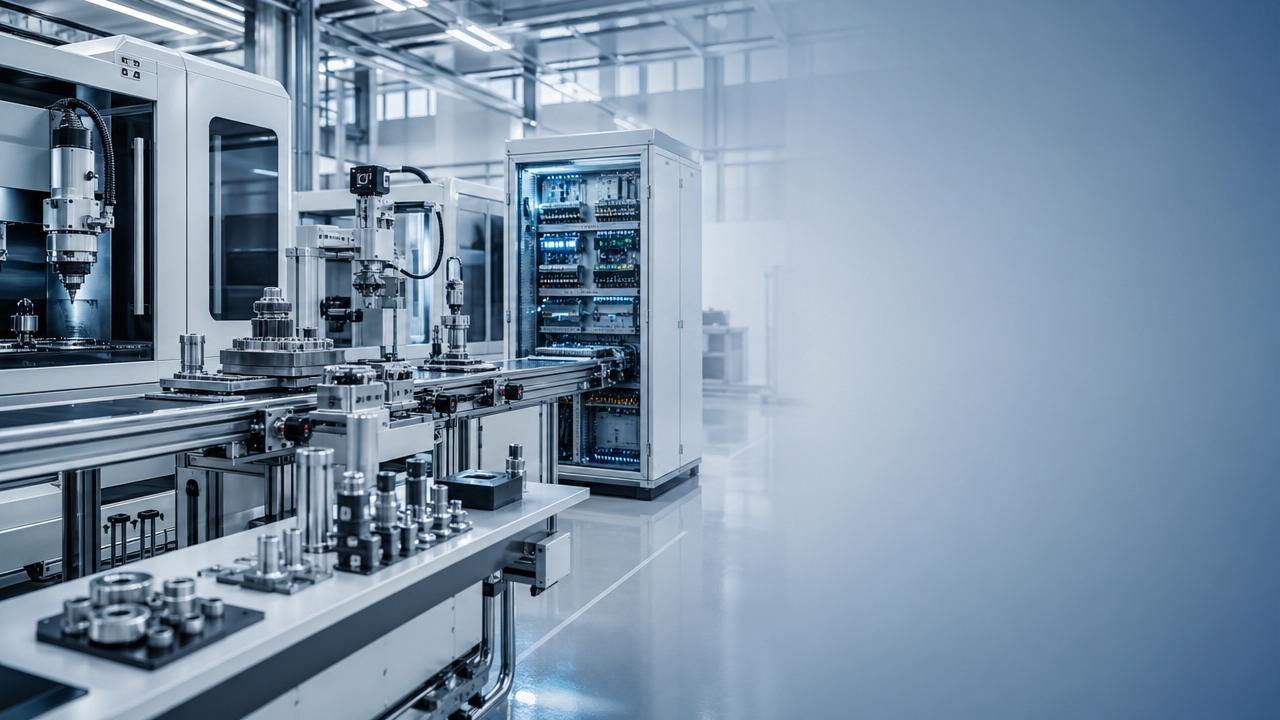
In 2026, technological trends are no longer optional considerations for factory leaders—they are the foundation of smarter upgrades, stronger resilience, and faster returns. From automation and precision tooling to energy efficiency and data-driven production, the next wave of industrial transformation is redefining how manufacturers compete. For decision-makers, understanding these shifts is essential to building future-ready operations with measurable value.
Why 2026 Feels Different for Factory Upgrades
Factory modernization is not new, but the context around it has changed sharply. In earlier upgrade cycles, companies often invested in isolated equipment improvements, such as a faster CNC machine, a better mold system, or a more stable electrical cabinet. In 2026, the dominant technological trends are more integrated and more strategic. They connect production assets, workforce decisions, energy systems, quality control, compliance, and supply chain resilience into one operating model.
This shift matters across the broader industrial ecosystem, especially for manufacturers that rely on hardware components, tooling systems, electrical control assemblies, fasteners, molds, and automation-ready parts. The factory upgrade discussion is no longer only about productivity. It is equally about uptime, traceability, flexibility, material efficiency, and the ability to respond to demand volatility without damaging margins.
For business leaders, the most important change is that technological trends now influence competitiveness at both the plant level and the commercial level. Buyers increasingly evaluate suppliers based on process consistency, energy performance, digital transparency, and precision capability. That means upgrade decisions are becoming market-facing decisions, not just engineering choices.
The Strongest Technological Trends Reshaping Upgrades
Several technological trends are emerging together rather than independently. Their combined effect is pushing factories toward connected, measurable, and more adaptive operations.
What Is Driving These Technological Trends
The current wave of factory upgrades is not driven by a single technology breakthrough. It is the result of multiple pressures converging at the same time. Understanding those drivers helps executives judge which investments are urgent, which are strategic, and which can be phased.
First, labor structure is changing. Many manufacturers face a shortage of highly skilled operators, maintenance specialists, and process technicians. As a result, technological trends that reduce dependence on manual intervention are becoming more attractive. Automated inspection, digital setup guidance, predictive maintenance, and intuitive machine interfaces are not only efficiency tools; they are risk-control tools.
Second, quality expectations are becoming stricter. In sectors linked to industrial hardware, electrical systems, and precision molds, buyers are less tolerant of variability. Even small inconsistencies in dimensions, fastening reliability, electrical stability, or mold performance can create downstream failure. This is why better process control, in-line sensing, and higher-precision tooling are among the most important technological trends for 2026.
Third, energy economics are changing investment logic. Rising concern over consumption, emissions, and utility volatility is making factories look closely at compressed air leaks, motor performance, thermal efficiency, and power distribution quality. Upgrades that once seemed operational are now seen as strategic because they directly improve cost predictability.
Fourth, supply chain uncertainty remains a major factor. Many companies have learned that resilience depends not only on supplier diversification but also on internal flexibility. Factories need equipment, tooling, and control systems that can adjust faster to alternate materials, varied order sizes, and shorter lead-time expectations.
From Equipment Upgrades to System Upgrades
One of the clearest technological trends is the move from standalone equipment investment to system-level upgrade thinking. In practical terms, this means a new machine is no longer judged only by speed or rated capacity. It is judged by how well it fits into the wider production architecture.
For example, a precision machining center creates more value when paired with better tool monitoring, stable fixturing, reliable electrical protection, digital production feedback, and downstream inspection integration. Similarly, a mold upgrade delivers stronger returns when it supports shorter setup times, more consistent cycle performance, and easier design modification. This systems mindset is becoming central to how leading manufacturers interpret technological trends.
This is especially relevant in industries supported by the kinds of components and tools highlighted by GHTN. Fasteners, pneumatic elements, electrical hubs, dies, inserts, and machine tools are often treated as procurement line items. In reality, they shape process reliability at a granular level. A factory’s upgrade success often depends on these underlying parts more than on headline automation spending.
Where the Impact Is Most Visible Across the Factory
Not all business functions feel technological trends in the same way. Some areas experience immediate operational effects, while others see more strategic implications over time.
Why Precision Components and Tooling Matter More in 2026
A common mistake in factory upgrade planning is overemphasizing visible automation while underestimating the performance of industrial components and tooling. Yet many technological trends depend on component-level reliability. A robotic cell cannot maintain consistency if fixtures wear too quickly. An energy optimization program will underperform if electrical distribution is unstable. A high-speed mold process cannot deliver value if inserts, surface treatment, cooling paths, or fastening systems are not engineered for repeatability.
This is where the deeper industrial logic promoted by GHTN becomes useful. Precision manufacturing performance is shaped by hidden variables: material behavior under stress, tolerance control, electrical compliance, pneumatic response, wear patterns, and micron-level mold adjustments. Decision-makers who understand these details can interpret technological trends with more realism. They can avoid expensive upgrade programs that look advanced on paper but remain weak at the component foundation.
The New Decision Criteria Behind Smart Upgrades
In 2026, successful upgrade decisions are increasingly based on five criteria. These criteria reflect how technological trends are changing investment evaluation.
1. Interoperability
Can new equipment, tooling, controls, and data systems work together without excessive custom integration? Factories that ignore interoperability often create digital islands instead of operational intelligence.
2. Measurable operational value
Leaders now expect clearer links between technological trends and business outcomes. The right question is not whether a solution is advanced, but whether it reduces scrap, stabilizes throughput, cuts energy use, or shortens launch cycles.
3. Workforce fit
An upgrade is only effective if operators, engineers, and maintenance teams can use it reliably. Human-machine design, training burden, and serviceability matter as much as technical specifications.
4. Resilience under variability
Can the system adapt to batch-size changes, material variation, or customer design modifications? Technological trends favor modular and reconfigurable production approaches.
5. Compliance and sustainability alignment
Industrial buyers and regulators are paying closer attention to electrical safety, process transparency, and environmental performance. Upgrade choices increasingly affect market access as well as plant efficiency.
Signals That Factory Leaders Should Track Now
Because technological trends move at different speeds across sectors, decision-makers need practical signals rather than broad hype. The most useful signals are operational and commercial at the same time.
- Customers asking for more process traceability or tighter validation data
- Higher downtime linked to aging electrical, pneumatic, or tooling infrastructure
- Rising defect costs caused by tolerance drift, inconsistent clamping, or unstable mold performance
- Longer time-to-market due to slow design iteration or limited tooling responsiveness
- Energy costs becoming material enough to change product margin assumptions
- Procurement difficulty in sourcing quality-assured components at the required consistency level
When several of these signals appear together, they usually indicate that the issue is not isolated inefficiency. It is a structural need for upgrade prioritization.
How to Respond Without Overinvesting
A useful response to technological trends is not to digitize everything at once. The smarter path is staged modernization. Companies should begin with constraints that create the highest hidden cost: repeat defects, unstable throughput, preventable energy waste, or chronic maintenance disruption.
From there, leadership teams can build an upgrade roadmap in layers. Start with critical components and process bottlenecks. Then strengthen data visibility. After that, expand automation where stability and repeatability already support it. This sequence reduces the risk of deploying advanced systems on top of weak production foundations.
For many manufacturers, especially SMEs, this staged method is more realistic than a full-scale transformation program. It also creates better learning loops. Each step generates evidence for the next investment decision, making technological trends easier to translate into business cases that finance, operations, and engineering can all support.
A Practical 2026 Upgrade Outlook
Looking ahead, the factories that benefit most from technological trends will not necessarily be the ones with the largest budgets. They will be the ones that connect detail-level industrial knowledge with disciplined upgrade logic. In sectors shaped by hardware, tooling, electrical systems, molds, and precision manufacturing, the future belongs to organizations that can align component quality, process intelligence, and commercial responsiveness.
For decision-makers, the immediate task is to identify where technological trends intersect with actual business pressure. Is the core challenge labor dependency, launch speed, quality variation, energy cost, or supplier reliability? Once that is clear, upgrade priorities become easier to rank and justify.
If your business is evaluating what these technological trends mean for your own operations, focus on three questions: which hidden process constraints are limiting competitiveness today, which underlying components or tooling decisions are amplifying those constraints, and which upgrades can create measurable gains within the next 12 to 24 months. That is where smarter factory transformation begins.
Related News