
Where industrial automation technical analysis saves downtime

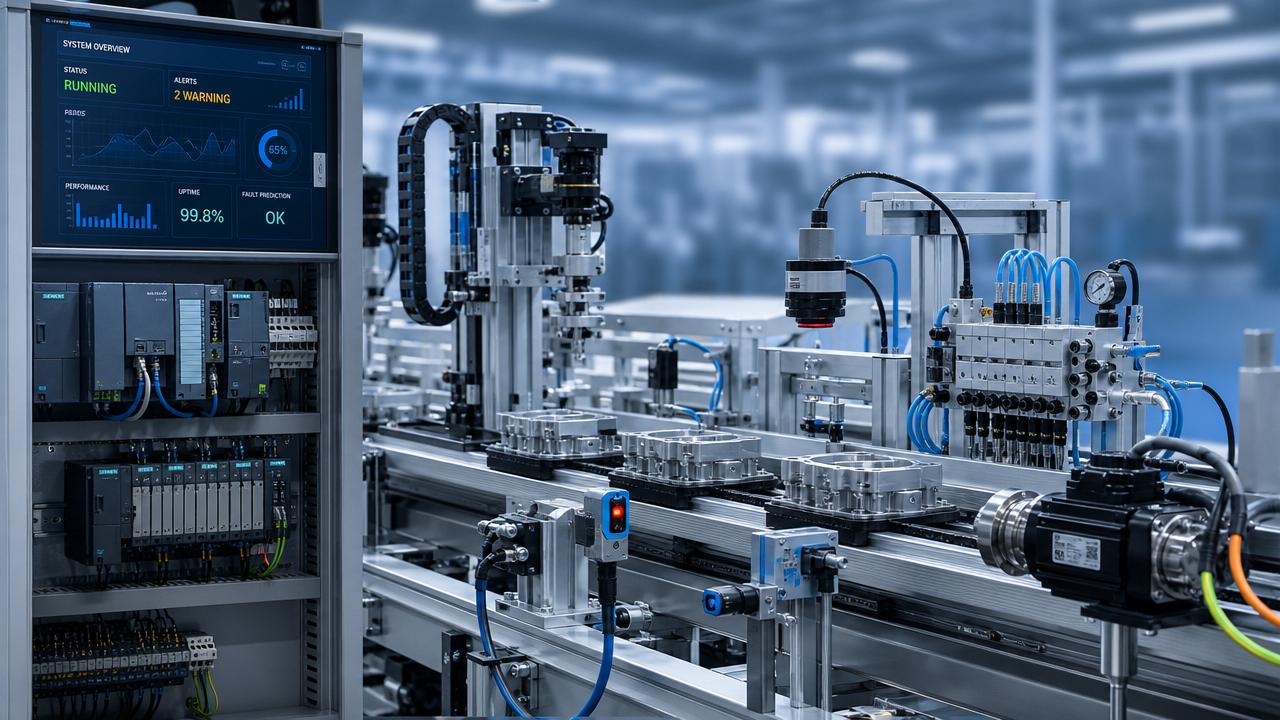
Unexpected stoppages on automated lines often begin with small, overlooked signals. That is where industrial automation technical analysis becomes essential for operators and plant users who need faster fault detection, smarter maintenance decisions, and more stable output. By turning machine data, control logic, and component behavior into practical insight, this approach helps reduce downtime, improve efficiency, and keep production moving with greater confidence.
For operators in mixed industrial environments, downtime rarely starts with a dramatic breakdown. More often, it begins with a 0.3-second response delay from a sensor, a pneumatic valve cycling outside its normal pressure range, or a fastener gradually loosening under vibration. Industrial automation technical analysis helps users connect these small events before they escalate into a 2-hour line stop, scrap buildup, or unstable output quality.
This matters across the broader industrial supply chain that GHTN serves, from mechanical tools and electrical components to mold manufacturing and automated assembly. In these settings, plant users do not just need data; they need actionable interpretation tied to control logic, component wear, replacement cycles, and production priorities. When analysis is grounded in real hardware behavior, it becomes a practical tool for protecting throughput and making maintenance decisions with less guesswork.
Why industrial automation technical analysis matters on the plant floor
On an automated line, even a minor deviation can trigger a chain reaction. A motor overload warning may lead to conveyor instability, which then disrupts pick-and-place timing, pushes reject rates above 3%–5%, and creates unplanned intervention. Industrial automation technical analysis is valuable because it does not isolate one alarm at a time. It looks at timing, sequence, electrical load, pressure behavior, and physical component condition together.
For operators, this creates three direct advantages. First, fault finding becomes faster, often reducing troubleshooting time from 45–60 minutes to 10–20 minutes when alarm history, I/O states, and mechanical condition are reviewed together. Second, maintenance becomes more targeted because users can distinguish between a control issue, a wiring issue, and a wear issue. Third, line stability improves because recurring faults are treated at the root cause level instead of being repeatedly reset.
Typical hidden signals before downtime
Many stoppages show early symptoms 1–3 shifts before failure. These may include rising cycle time variance, inconsistent pneumatic actuation, temperature drift in control cabinets, or increased vibration near tool interfaces. In mold-related or precision assembly environments, a small positioning error of ±0.2 mm can be enough to create product defects, secondary jams, or safety interlocks.
- Cycle time increases by 5%–8% without a production plan change
- Air pressure fluctuates outside the normal operating band, such as 0.55–0.65 MPa
- Current draw trends upward on motors, drives, or tool spindles
- Sensor response becomes intermittent during temperature or dust exposure
- Fasteners, couplings, or mounts show repeat loosening under vibration
When these signals are studied as part of industrial automation technical analysis, operators can move from reactive recovery to planned correction. That is especially important in lines using precision tooling, electrical hubs, mold handling units, and pneumatic circuits, where one weak component can affect multiple stations.
Where users typically lose time
Line users often lose the most time in the gap between alarm appearance and root cause confirmation. A machine may stop in 3 seconds, but the investigation can take 30 minutes if the team has to inspect PLC logic, wiring terminals, pressure regulators, connectors, and mechanical clearances separately. Analysis reduces that delay by giving the operator a defined path.
The following table shows how common downtime sources differ in symptoms, likely causes, and operator response priorities.
The key lesson is that downtime is rarely caused by software alone or hardware alone. In practical use, industrial automation technical analysis works best when logic data is reviewed alongside component condition, installation quality, and environmental stress such as heat, dust, moisture, and vibration.
A practical operator checklist
- Capture the exact stop time and alarm code within the first 2 minutes.
- Check whether the fault repeats at the same step, part type, or shift period.
- Verify power, pressure, and communication status before replacing parts.
- Inspect critical components that bridge logic and mechanics, such as valves, relays, connectors, and mounts.
- Log the corrective action and compare recurrence frequency over the next 24–72 hours.
Key components and data points that reveal root causes faster
The quality of industrial automation technical analysis depends on what data is collected and how it is interpreted. Operators do not need every possible signal. They need the right combination of 4 to 6 indicators that describe machine behavior clearly enough to separate symptom from cause. In most industrial lines, these indicators include cycle time, alarm sequence, current or load trend, pressure stability, sensor reliability, and component wear condition.
GHTN’s focus on granular industrial components is relevant here because line reliability often depends on small parts with large system impact. A cable gland with poor sealing, a non-matched fastener in a vibrating fixture, or a connector exposed to oil mist can all undermine automation performance. Technical analysis becomes more accurate when users understand the physical limits of these parts, not just the control diagram.
Mechanical, electrical, and pneumatic signals to monitor
A balanced review should cover at least three layers: mechanical movement, electrical behavior, and pneumatic response. When one of these layers is ignored, diagnosis tends to be incomplete. For example, a recurring stop at an actuator station may look like a PLC issue, yet the root cause may be a 12% pressure drop during peak air demand or seal friction after extended service hours.
The table below highlights practical monitoring points that operators can use during routine inspections or post-fault reviews.
This kind of structured review supports better maintenance planning. Instead of replacing three or four parts based on suspicion, operators can narrow the issue to a likely zone. That reduces spare-part waste, shortens mean time to repair, and avoids repeated stoppages caused by unresolved installation or logic issues.
Why small components deserve closer attention
In many automated systems, foundational parts have a disproportionate effect on line uptime. Fasteners, cable connectors, pneumatic fittings, guides, clamps, and mold interfaces may represent a small fraction of machine cost, yet they influence positional repeatability, sealing, thermal stability, and vibration resistance. A single low-grade fitting or poorly selected mounting component can increase service calls over a 6-month period.
This is where industrial automation technical analysis aligns with GHTN’s component-centered perspective. Users need more than top-level machine advice. They need insight into whether a material choice suits washdown exposure, whether a connector housing tolerates oil and dust, or whether a fastening method can maintain torque under continuous shock. These details help prevent faults that software diagnostics alone cannot explain.
How to apply technical analysis in daily operation and maintenance
A workable approach should fit real production pressure. Operators cannot stop the line for hours to run a full engineering study. The most useful industrial automation technical analysis process is lightweight, repeatable, and linked to shift routines. In many factories, a 3-level method works well: real-time observation, short-cycle diagnosis, and scheduled trend review every 7 days or every 30 days depending on line criticality.
A 5-step implementation flow
- Define the critical stations that cause the highest production loss when down for more than 10 minutes.
- List the 4–6 signals that best describe normal behavior at each station.
- Set practical thresholds, such as cycle variance over 5%, pressure drift below target range, or recurring alarm count above 3 times per shift.
- Assign inspection responsibility by role, including operator, maintenance technician, and line supervisor.
- Review findings weekly and update spare-part strategy, inspection frequency, or replacement standards.
This process is particularly effective in environments that combine tooling, electrical assemblies, and mold-dependent operations. Because each area has different failure modes, a standardized review framework reduces confusion during shift handover and helps teams act on evidence rather than habit.
Common mistakes that limit results
One common mistake is treating every stop as an isolated event. If the same station fails 4 times in 2 weeks, the issue is no longer random. Another mistake is replacing components without checking mounting condition, pressure quality, wiring strain, or environmental stress. A third is ignoring component compatibility. A fitting, fastener, or sensor chosen for a mild environment may degrade quickly under heat, coolant, or vibration.
- Do not rely only on alarm text; compare alarm timing with physical behavior.
- Do not skip torque, alignment, and connector seating checks after maintenance.
- Do not assume all replacement parts perform equally under the same duty cycle.
- Do not wait for a complete failure if trend data already shows deterioration over 2–3 inspection cycles.
Maintenance timing that supports uptime
For many users, the goal is not maximum data complexity but better timing. If a wear part can be replaced during a planned 20-minute window instead of after a 2-hour breakdown, the return is immediate. The same logic applies to mold interfaces, drive couplings, pneumatic seals, and electrical terminals. Scheduled review intervals of 1 shift, 1 week, and 1 month can cover most high-frequency failure patterns without burdening operations.
Selecting the right support, components, and information sources
Not every plant user needs a large automation redesign. Often, the biggest gain comes from better component decisions and more precise technical interpretation. When choosing support resources, operators and buyers should look for information that links physical part performance to real automation conditions. That includes material behavior, tolerance range, environmental suitability, maintenance intervals, and installation risks.
For global OEMs, distributors, and plant users, this is where a platform like GHTN adds value. By focusing on underlying industrial components and precision tooling, it helps users evaluate the details that shape uptime: fastener performance in harsh environments, pneumatic logic behavior on automated lines, electrical compliance trends, and mold process precision at the micron level. Those details support better sourcing, stronger line reliability, and fewer hidden failure points.
What to evaluate before changing components or suppliers
Before switching a component used in an automated line, users should evaluate at least four factors: compatibility, durability, service interval, and installation consistency. A lower purchase price can be misleading if replacement frequency doubles or if the part causes alignment drift after 8–12 weeks of use. In automation, procurement and maintenance outcomes are tightly connected.
- Compatibility with voltage, pressure, load, vibration, and temperature conditions
- Expected wear behavior over standard production cycles
- Ease of installation and repeatability during shift maintenance
- Availability of technical documentation for diagnosis and replacement planning
Industrial automation technical analysis gives context to these decisions. It shows whether failures are caused by poor design fit, inadequate environmental resistance, or improper maintenance timing. That makes procurement more evidence-based and helps operators defend replacement recommendations with practical line data.
From analysis to long-term production stability
The strongest plants are not the ones that never see alarms. They are the ones that learn quickly from small deviations and use that learning to improve setup, parts selection, and maintenance routines. Over a 3- to 6-month period, even modest improvements in fault isolation and component consistency can reduce recurring micro-stops, improve operator confidence, and stabilize output without major capital investment.
Industrial automation technical analysis is most effective when it stays close to real operating conditions. For users on the floor, that means understanding how control logic interacts with electrical parts, pneumatic motion, tool wear, mold precision, and the hidden role of basic industrial components. When those links are clear, downtime becomes easier to predict, faster to resolve, and less likely to return.
For operators, maintenance teams, and sourcing decision-makers, the practical value is straightforward: fewer repeated faults, better replacement timing, and more reliable production from the parts level upward. GHTN supports that objective with deep insight into mechanical tools, electrical systems, mold manufacturing, and the industrial components that hold automated lines together. To explore component-focused strategies, evaluate line risks, or get a more tailored recommendation, contact us today, request a custom solution, or learn more about the right support for your production environment.
Related News