
US Court Strikes Down Aluminum, Copper Tariffs on Power Tools
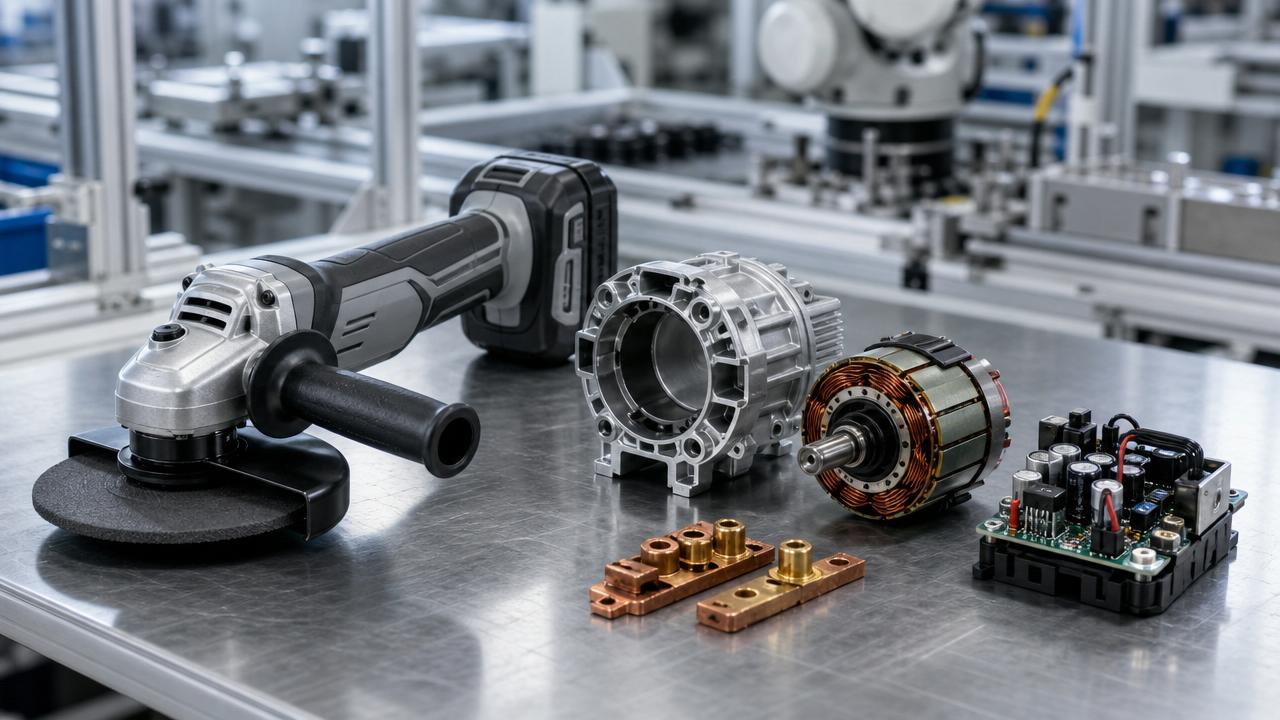
On May 28, 2026, the U.S. Court of Appeals for the Federal Circuit ruled that tariffs imposed by the Trump administration on aluminum, copper, and alloy components used in power tools — levied under the International Emergency Economic Powers Act (IEEPA) — lack statutory authority and constitute executive overreach. The decision immediately suspends enforcement of the tariff order, affecting key imported parts such as motor housings, brushless electronic control modules, and battery terminals. This development is especially relevant for manufacturers, exporters, and importers in the power tools, industrial hardware, and electromechanical components sectors — as it signals a near-term reduction in landed cost and potential recalibration of sourcing strategies.
Event Overview
On May 28, 2026, the U.S. Court of Appeals for the Federal Circuit issued a ruling declaring that the Trump-era tariffs on aluminum, copper, and alloy-based tool components — applied pursuant to the International Emergency Economic Powers Act (IEEPA) — are unconstitutional due to absence of statutory authorization. The court ordered immediate suspension of the tariff directive. Publicly available information confirms the scope includes motor housings, brushless electronic control modules, and battery terminals used in power tools. No further judicial or administrative actions have been reported as of the ruling date.
Industries Affected by This Ruling
Direct Exporters & Trade Firms
These entities face direct exposure to U.S. import duties on finished power tools or their core subassemblies. With the tariff suspension, landed cost for U.S.-bound shipments containing affected components may decline by an estimated 8–12%, improving margin visibility and competitiveness in the U.S. market. Impact is most pronounced for firms exporting assembled tools or high-value kits incorporating motor housings or battery interface parts.
Component Suppliers & Contract Manufacturers
Suppliers of aluminum/copper-based motor housings, brushless controllers, and battery terminals — particularly those operating in China or other jurisdictions subject to the original tariff order — may see renewed demand from U.S. OEMs seeking to re-source or scale up procurement. The ruling removes a structural cost barrier previously embedded in component-level import valuations.
U.S. Importers & Distributors
U.S.-based importers and distributors handling power tool inventory face lower duty liabilities on incoming shipments containing the specified components. This could translate into improved gross margins, faster inventory turnover, or flexibility to adjust retail pricing — depending on contractual terms with upstream suppliers and downstream channel partners.
Supply Chain & Logistics Service Providers
Firms offering customs brokerage, tariff classification advisory, or bonded warehousing services may observe shifts in classification requests and duty recovery inquiries related to the suspended tariff lines. While not directly impacted operationally, demand for post-ruling compliance support — including retroactive duty refunds or HTS code validation — may rise in the coming months.
What Relevant Businesses and Practitioners Should Monitor and Do Now
Track official implementation guidance and possible appeals
The ruling is effective immediately, but the U.S. government retains the right to appeal to the Supreme Court or seek rehearing. Businesses should monitor announcements from U.S. Customs and Border Protection (CBP) and the Office of the U.S. Trade Representative (USTR) for instructions on duty refunds, entry processing, and classification updates.
Verify HTS codes and entry documentation for affected components
Not all aluminum or copper parts fall within the suspended scope. Companies should cross-check Harmonized Tariff Schedule (HTS) codes cited in the court’s opinion — specifically those covering motor housings, brushless control modules, and battery terminals — against current import entries to identify eligible duty savings or refund opportunities.
Distinguish between legal effect and commercial execution
The court’s decision halts tariff collection prospectively, but does not automatically trigger refunds for past payments unless CBP issues formal guidance or companies file protests. Importers should assess whether prior entries qualify for protest or drawback claims — a process requiring precise timing and documentation.
Review procurement timelines and supplier agreements
Exporters and importers may consider adjusting near-term purchase orders or lead-time buffers, especially if sourcing decisions had previously factored in the now-suspended tariffs. Contract clauses referencing ‘duty pass-through’ or ‘tariff adjustment mechanisms’ should be reviewed for applicability in light of the ruling.
Editorial Perspective / Industry Observation
Observably, this ruling represents a procedural correction rather than a broad policy reversal: it challenges the legal basis of a specific tariff action, not the underlying trade concerns around aluminum or copper imports. Analysis shows the decision hinges narrowly on statutory interpretation under IEEPA — not on WTO compliance, national security merits, or broader Section 301 frameworks. As such, it functions more as a legal precedent than a signal of systemic tariff rollback. The industry should treat it as a discrete, actionable development — one that improves cost conditions for defined product categories, but does not preclude future measures using alternative statutory authorities.
From an industry standpoint, sustained attention is warranted because the ruling introduces uncertainty about the durability of executive-branch trade actions grounded solely on emergency statutes. It also underscores how judicial review can materially affect landed cost — even without legislative change or bilateral negotiation.
Consequently, stakeholders should prioritize operational responsiveness over strategic speculation: verifying eligibility, updating internal classifications, and preparing documentation — rather than assuming wider tariff relief will follow.
Concluding, this ruling carries concrete, near-term implications for power tool supply chains involving aluminum and copper components — primarily through reduced import duties and clarified regulatory risk. It is best understood not as the start of a new trade policy phase, but as a targeted legal adjustment with measurable, bounded impact on specific product categories and trade flows.
Source Disclosure:
Main source: U.S. Court of Appeals for the Federal Circuit, Opinion No. 2025-XXXXX, issued May 28, 2026.
Note: Ongoing developments — including potential government appeal, CBP implementation notices, or USTR statements — remain subject to observation and are not yet publicly confirmed.