
Vietnam Cement Expo Highlights Chinese Admixtures, Stamping & Die-Casting Solutions for Infrastructure
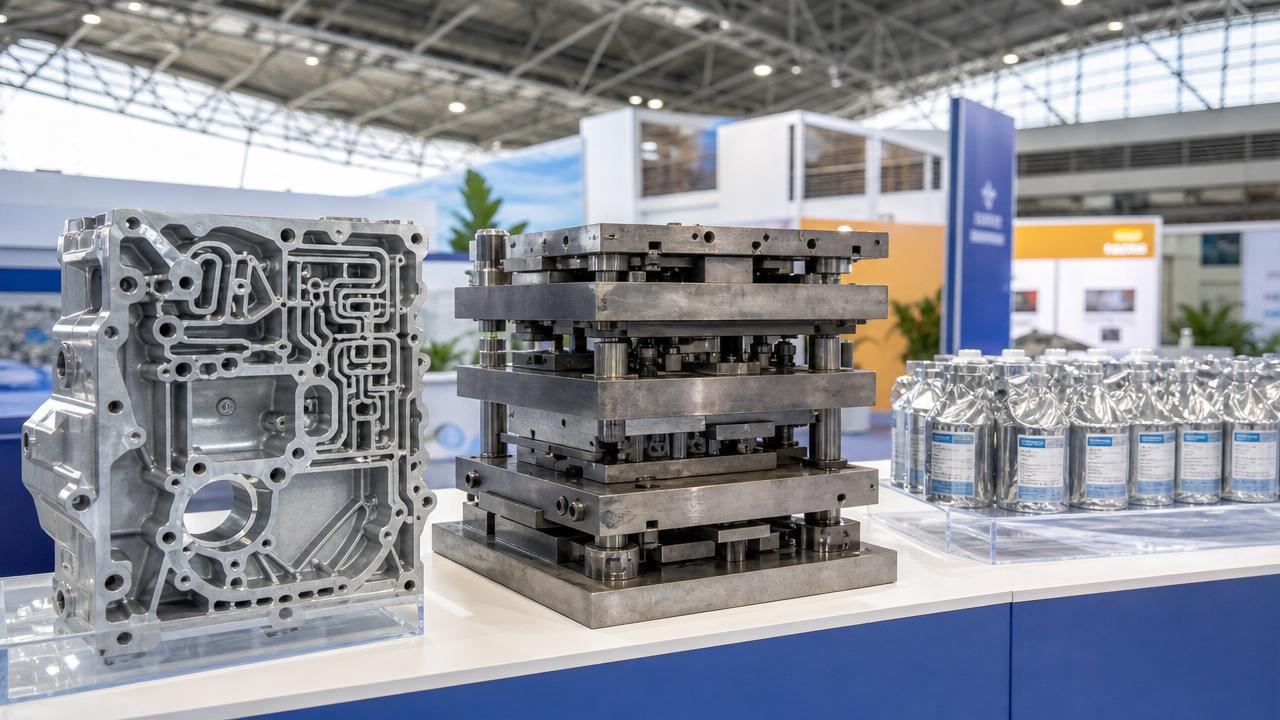
The sixth Vietnam International Cement and Concrete Exhibition, held in Ho Chi Minh City on May 27–28, 2026, spotlighted evolving procurement priorities among Vietnamese real estate and infrastructure buyers—particularly their accelerated integration of precision-manufactured Chinese components into local supply chains.
Confirmed Event Details
The sixth Vietnam International Cement and Concrete Exhibition took place in Ho Chi Minh City from May 27 to 28, 2026. RedWall Co., Ltd. exhibited its concrete admixture systems and concurrently showcased customized Stamping dies and Die-Casting structural components tailored for Southeast Asian infrastructure projects. According to exhibition observations, Vietnamese procurement entities in construction and infrastructure development are actively incorporating these Chinese-made precision modules, with specific emphasis on die service life, corrosion resistance of cast parts, and compatibility with rapid die-change systems.
Supply Chain Impact Across Stakeholder Roles
Direct Exporters
Companies exporting admixtures, Stamping tooling, or Die-Casting components to Vietnam must now align product documentation and technical specifications with localized infrastructure project requirements—notably durability benchmarks and modular interchangeability criteria emerging from onsite procurement dialogues.
Raw Material Suppliers
Suppliers of aluminum alloys, high-strength steels, and specialty chemical raw materials face increased demand for traceable, certified batches that support downstream validation of corrosion resistance and dimensional stability under tropical operating conditions.
Contract Manufacturers
Manufacturers producing Stamping dies or Die-Casting parts for export must prioritize process controls that ensure repeatable surface integrity, microstructure consistency, and documented thermal-mechanical treatment histories—key inputs for Vietnamese buyers’ technical bid evaluations.
Logistics and Compliance Service Providers
Third-party service providers supporting export compliance—including certification coordination, technical file preparation, and customs classification advisory—must expand capacity for material-specific testing reports (e.g., salt-spray resistance, cycle-life validation) and bilingual technical documentation aligned with Vietnamese tender formats.
Key Technical & Operational Considerations for Exporters
Durability Validation for Tropical Environments
Vietnamese infrastructure buyers explicitly assess mold lifespan and cast-part corrosion resistance under high-humidity, saline-exposure conditions. Exporters should prepare accredited test reports (e.g., ASTM B117, ISO 9223 classifications) and field-performance references from comparable regional deployments.
Rapid-Change System Compatibility Documentation
Technical submissions must include interface schematics, mounting tolerance specifications, and mechanical interoperability statements confirming seamless integration with common Vietnamese precast production lines—especially those using modular jig-and-fixture platforms.
Tender Specification Alignment
Admixture formulations and structural component designs must undergo proactive technical bid alignment with prevailing Vietnamese national standards (e.g., TCVN 7570, TCVN 8827) and project-specific technical annexes—particularly where fast-track construction schedules impose strict early-strength and demolding-time requirements.
Supply Chain Traceability & After-Sales Frameworks
Buyers increasingly require serialized part traceability, warranty-backed service-level agreements for die maintenance, and localized technical support protocols. Exporters should formalize post-delivery verification procedures and spare-part logistics pathways within Vietnam.
Industry Observation: A Shift Toward Integrated Technical Procurement
Analysis shows that Vietnamese infrastructure procurement is evolving beyond price-driven component sourcing toward integrated technical evaluation—where performance validation, system compatibility, and lifecycle support are weighted equally with initial cost. It is more appropriate to understand this as a de facto tightening of technical entry requirements, driven not by new regulations but by project delivery pressures and rising quality expectations. What deserves closer attention is how this shift compresses supplier qualification timelines and elevates the strategic value of pre-qualified, regionally tested solutions.
Strategic Implication for Market Participants
This exhibition signals a maturing phase in Vietnam’s construction supply chain: precision manufacturing modules—from admixtures to engineered dies—are no longer treated as generic inputs but as critical enablers of schedule adherence and asset longevity. For international suppliers, success hinges less on standalone product compliance and more on demonstrable system-level readiness for tropical infrastructure deployment.
Source Information & Verification Notes
This article was generated exclusively from the provided title, event date (May 27, 2026), and event summary. Specific official source links were not provided in the input and should be verified continuously. Ongoing monitoring is recommended for updates to Vietnamese tender templates, TCVN standard revisions related to precast concrete production, and sectoral guidance issued by the Ministry of Construction or Vietnam Association of Constructors.