
CPSC Recall Puts Focus on Pneumatic Valve Seal Risk

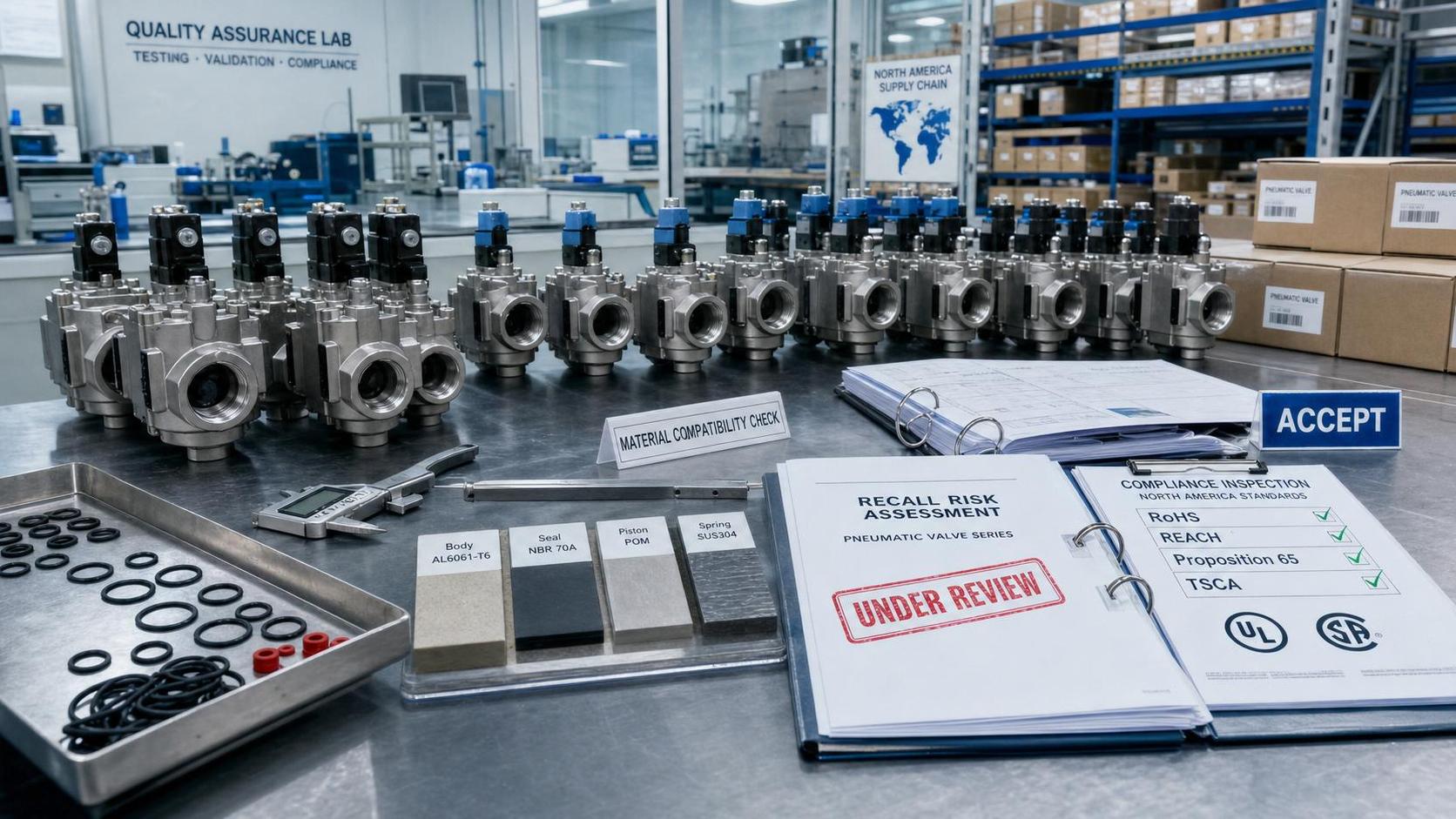
The time of the underlying incident is not specified in the available information, but the regulatory development is clear: on June 29, 2026, the U.S. Consumer Product Safety Commission (CPSC) issued recall notice #2026-187 covering multiple pneumatic valve models made by Chinese manufacturers. For companies involved in industrial components, North American distribution, import compliance, and supplier quality control, this matters because the issue is not limited to a single SKU; it points to a material compatibility problem that has already led to stock removals and tighter inspection practices in the channel.
What the recall notice confirms
According to the provided information, CPSC recall notice #2026-187 was issued on June 29, 2026 and covers 32 pneumatic valve models produced by 12 Chinese manufacturers. The affected products include items built to ISO 6431 and VDMA 24562 standards. The stated reason is leakage during operation caused by O-ring material that is incompatible with compressed air media. The same information also indicates that North American channel partners have already taken affected inventory off shelves and increased inspection requirements. Importers are being advised to review order batches immediately and request ASTM D2000 M2BC515 rubber compatibility verification reports from suppliers.
Where the pressure is likely to build across the chain
Import and trading teams face immediate batch-trace pressure
From an industry perspective, importers and trading companies are likely to feel the impact first because they sit between regulatory exposure and customer delivery commitments. The practical pressure points are batch identification, shipment review, and document collection. What deserves closer attention is whether existing purchase lots can be matched quickly to the recalled model scope and whether suppliers can produce compatibility evidence without delay.
Distributors and channel operators are dealing with inventory controls
Observably, North American distributors and channel partners are already responding through delisting and stricter incoming checks. For this group, the main impact is operational rather than theoretical: inventory segregation, inspection workflows, and communication with downstream buyers may all tighten. The key change to watch is whether these controls remain limited to the recalled scope or begin to extend to similar pneumatic valve categories from the same sourcing base.
Manufacturers and contract processors may face deeper material scrutiny
Analysis shows that producers and processing partners may come under closer review on sealing-system selection, especially where standard products are assumed to be interchangeable across markets. The business impact is likely to appear in material verification, supplier qualification, and technical file requests. In this case, attention is likely to center on whether O-ring specifications and media compatibility checks are documented clearly enough for export-facing business.
End-use buyers may tighten purchasing acceptance criteria
For industrial buyers and OEM procurement teams, the event may translate into stricter acceptance conditions for pneumatic components. The likely impact is concentrated in sourcing review, incoming inspection, and supplier communication. What deserves closer attention is not only product availability, but also whether documentation on rubber compatibility becomes a routine procurement checkpoint for compressed-air applications.
What companies should review now
Check order lots against the recalled scope
The most immediate practical step is to verify whether current or recent orders fall within the 32 recalled models referenced in the notice. This is especially relevant for companies serving North America, where channel actions have already begun.
Request material compatibility evidence early
Based on the provided information, importers are advised to obtain ASTM D2000 M2BC515 rubber compatibility verification reports from suppliers. In operational terms, this is not just a paperwork request; it may affect shipment release, customer acceptance, and internal risk review.
Separate regulatory wording from commercial implementation
Analysis shows that a recall notice and market-side enforcement do not always move at the same speed. Even where formal scope is defined, distributors and customers may apply broader caution in practice. Companies should therefore track both official recall details and actual customer-side inspection or hold requirements.
Prepare for longer communication cycles with customers and suppliers
Observably, once inventory checks and material verification requests begin, routine order communication can become more document-heavy. Businesses should pay close attention to supplier responsiveness, record consistency, and the time needed to confirm whether a batch is unaffected, restricted, or requires follow-up.
Why this matters beyond a single recall notice
Analysis shows that this development is best read as more than an isolated product withdrawal, but not yet as a fully formed long-term market shift. The immediate signal is that sealing-material compatibility in pneumatic valve applications is receiving closer scrutiny in North American trade channels. It is more appropriate to understand this as a near-term compliance and quality-control signal with potential to influence sourcing behavior if similar cases continue to appear. For now, the industry still needs to watch whether the response stays limited to the named products and suppliers or expands into broader category-level caution.
How the industry should read the current signal
At this stage, the clearest industry meaning is practical rather than dramatic: documentation, traceability, and material verification have become immediate priorities for affected product flows. The confirmed facts support a cautious reading of short-term disruption in channel management and supplier review. It is more appropriate to understand this as an active development that deserves continued monitoring, rather than as a settled conclusion about the wider pneumatic valve market.
Basis of this article and points for continued verification
This article is based on the user-provided news title, the event time note stating that the incident time was not specified, and the provided event summary describing CPSC recall notice #2026-187, the affected manufacturers and models, the reported cause, the channel response, and the recommendation to obtain ASTM D2000 M2BC515 compatibility verification reports. For this type of industry update, relevant source categories usually include official regulatory notices, company announcements, industry association updates, authoritative media coverage, and standard-related documents. No specific official source link was provided in the input, so the exact official link still needs to be continuously verified. Follow-up attention should remain on any updated official wording, any change in channel inspection practices, and whether documentation expectations broaden beyond the currently described scope.