
US Court Rules Trump-Era Aluminum, Copper Tariffs Lack Legal Basis
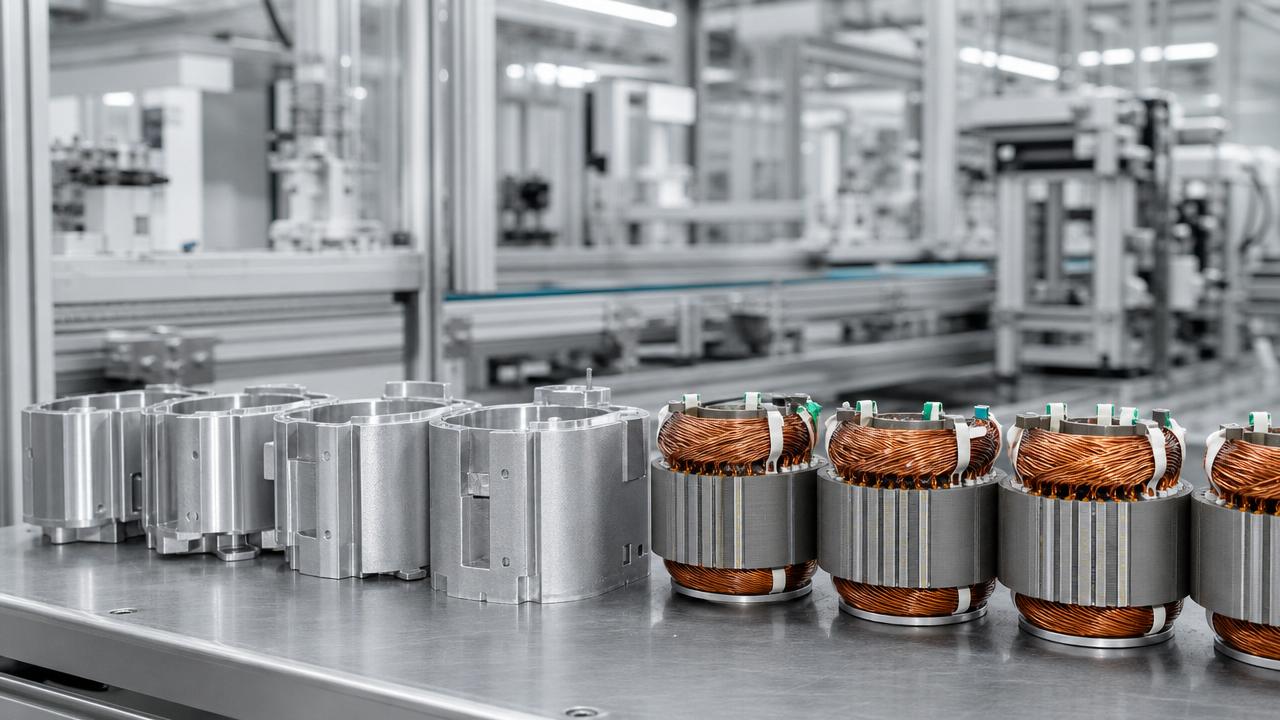
The U.S. Court of International Trade ruled on May 8, 2026, that the Trump administration’s global tariffs on aluminum and copper—imposed under the International Emergency Economic Powers Act (IEEPA)—lack statutory authority. This development is particularly relevant for exporters of power tools, cutting tools, and related hardware products, as aluminum castings and copper conductors are key input materials. The ruling may ease customs compliance uncertainty and reduce ancillary costs for U.S. importers, potentially lowering landed cost pressures for tool and hardware manufacturers supplying the U.S. market.
Event Overview
On May 8, 2026, the U.S. Court of International Trade issued a decision holding that the Trump administration’s imposition of global tariffs on aluminum and copper imports exceeded the legal authority granted under the International Emergency Economic Powers Act (IEEPA). The ruling is not yet final and remains subject to potential appeal or further administrative action. No additional factual or procedural details beyond this determination have been publicly confirmed.
Industries Affected by Sector
Direct Exporters of Tool & Hardware Products
These companies—especially those exporting powered or cutting tools containing aluminum components or copper wiring—may face reduced tariff-related compliance friction when shipping to the U.S. The ruling challenges the legal foundation of duties applied at the raw material level, which historically cascaded into classification and valuation assessments for finished tools.
Raw Material Procurement & Sourcing Firms
Firms sourcing aluminum castings or copper conductors for downstream tool assembly may see improved predictability in U.S. duty treatment. Since the contested tariffs were applied globally (not just on Chinese goods), procurement strategies involving third-country suppliers could become more viable—if the ruling ultimately invalidates those duties across the board.
Contract Manufacturers & OEMs
OEMs producing tools under private label or for U.S.-based brands may benefit from lower input-cost volatility. If the aluminum/copper tariffs are rescinded or retracted, landed cost calculations for assembled tools—including customs valuation, anti-dumping assessments, and bonded warehouse usage—could be simplified.
Distribution & Import Logistics Providers
U.S.-based distributors and customs brokers handling tool imports often absorb time and resource costs tied to tariff classification disputes, bond requirements, and post-entry audits. A sustained reduction in legal ambiguity around metal-based duties may streamline entry documentation and reduce request-for-information (RFI) frequency from U.S. Customs and Border Protection.
What Stakeholders Should Monitor & Do Now
Track official agency responses and appellate developments
While the court’s decision is binding within its jurisdiction, it does not automatically revoke tariffs. Stakeholders should monitor statements from the Office of the U.S. Trade Representative (USTR), U.S. Customs and Border Protection (CBP), and any notice of appeal filed by the Department of Justice. Enforcement posture—not just judicial opinion—will determine near-term operational impact.
Review HTS classifications and entry records for affected tool subassemblies
Importers should audit recent entries involving aluminum housings, motor windings, or copper-based electrical components under HTS headings 8205, 8467, 8505, or 9031. Even if tariffs are invalidated retroactively, claims for duty refunds require precise recordkeeping and timely protests—typically within 180 days of liquidation.
Distinguish between policy signal and enforceable change
Analysis shows this ruling reflects a narrow statutory interpretation—not a broad trade policy reversal. It does not affect Section 301 tariffs, anti-dumping/countervailing duties, or country-specific measures. Companies should avoid conflating this outcome with wider tariff relief unless subsequent actions confirm scope expansion.
Update internal compliance protocols ahead of possible CBP guidance
Customs compliance teams should prepare revised entry checklists, train staff on updated metal-component duty treatment assumptions, and coordinate with legal counsel to assess exposure for prior entries. Proactive alignment with brokers and freight forwarders will help mitigate delays if CBP issues interim instructions.
Editorial Perspective / Industry Observation
Observably, this decision functions primarily as a legal checkpoint—not an immediate policy reset. It underscores growing judicial scrutiny of executive trade authority exercised outside traditional tariff statutes like Section 232. From an industry perspective, the ruling is better understood as a procedural inflection point: it increases the likelihood that future metal-related duties will require clearer congressional delegation or renewed national security justification. However, actual duty removal or refund processing remains contingent on next steps taken by federal agencies and courts. Continued monitoring is warranted—not because change is guaranteed, but because legal uncertainty itself imposes measurable cost on cross-border hardware supply chains.
This ruling signals a recalibration of legal risk in U.S. metal import regulation, rather than an outright rollback. For tool and hardware exporters, the primary near-term value lies in reduced compliance overhead and greater clarity in duty forecasting—not in automatic margin improvement. Stakeholders are advised to treat the decision as a catalyst for internal process review, not as a trigger for strategic pivot.
Source: U.S. Court of International Trade, Opinion No. 26-00432 (issued May 8, 2026).
Note: The decision is not yet final; status remains subject to appeal or remand. Ongoing developments will be tracked through official USTR and CBP channels.