
U.S.-Iran Tensions Spike Red Sea Freight Costs: +42% Weekly Surge
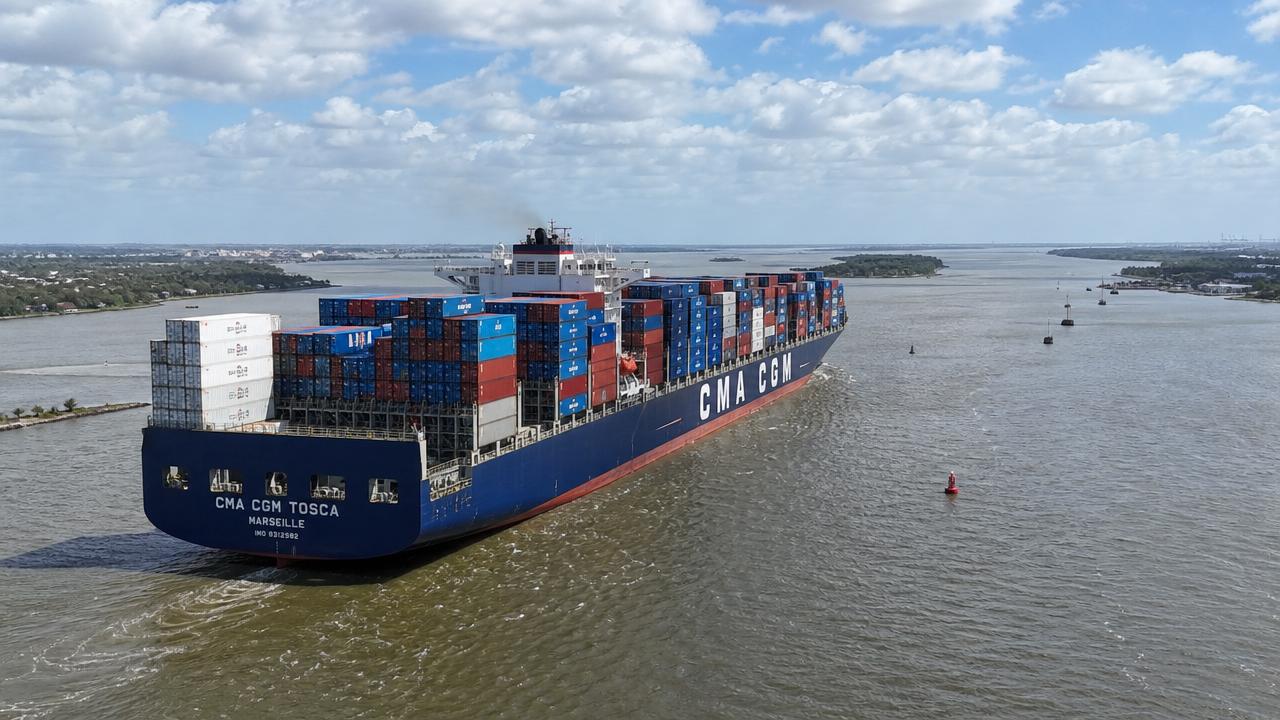
Geopolitical tensions between the U.S. and Iran have disrupted maritime traffic through the Strait of Hormuz, triggering a sharp rise in container freight rates for routes from China’s Yangtze River Delta ports to the Middle East and East Africa — as confirmed by Shanghai Shipping Exchange data released on 27 May 2026.
Confirmed Freight Rate Surge Effective 27 May 2026
According to Shanghai Shipping Exchange, the containerized freight index for China’s major ports to Middle Eastern and East African destinations rose 42% week-on-week as of 27 May 2026. This increase directly stems from sustained navigation constraints in the Strait of Hormuz. The surge impacts export logistics costs and delivery reliability for high-value-density industrial goods — including bolts & screws, stamped components, and die-cast parts — and has prompted Middle Eastern distributors to request dual quotation formats (FOB plus marine insurance) from Chinese suppliers.
Impact Across Supply Chain Roles
Export-oriented trading enterprises
These firms face immediate margin pressure due to the 42% freight cost jump and heightened uncertainty in transit times. Their quoting, contract negotiation, and risk allocation processes — especially regarding Incoterms® selection and insurance coverage — are now under intensified scrutiny.
Raw material procurement enterprises
While not directly shipping finished goods, such firms may absorb indirect cost increases when sourcing from upstream suppliers who pass on elevated logistics expenses. Procurement timelines and landed-cost modeling must now incorporate volatile ocean freight variables.
Contract manufacturing enterprises
Manufacturers of precision-engineered components — particularly those with tight profit margins and small physical footprints (e.g., bolts & screws, stamping, die casting) — experience compressed lead-time buffers and rising landed-cost unpredictability. Delivery commitments tied to fixed-price export contracts are increasingly exposed to freight volatility.
Logistics and supply chain service providers
Freight forwarders and multimodal integrators must revise routing advisories, reassess contingency capacity (e.g., via Cape Horn or Suez alternatives), and update insurance coordination protocols. Real-time rate monitoring and dynamic surcharge communication mechanisms are now critical operational requirements.
Key Operational Priorities for Exporters
Adopt dual-quotation frameworks for Middle East clients
Respond proactively to distributor requests for FOB-plus-marine-insurance quotes by formalizing internal pricing models that separate base product cost, freight, and insurance — enabling transparent risk-sharing and contractual clarity.
Reassess Incoterms® alignment and insurance scope
Evaluate whether current Incoterms® usage (e.g., FOB, CIF, DAP) remains operationally sustainable amid persistent Strait of Hormuz disruptions. Confirm marine insurance policy coverage limits, war risk endorsements, and claims procedures with underwriters.
Strengthen shipment scheduling and buffer planning
Extend production-to-shipment lead time allowances and build inventory safety stock where feasible — especially for high-turnover, high-value-density items — to mitigate delivery slippage caused by port congestion or rerouting delays.
Verify documentation readiness for trade finance and customs
Ensure bills of lading, commercial invoices, and insurance certificates comply with updated banking and customs requirements for Middle East-bound shipments, particularly where war-risk clauses or alternative routing declarations are mandated.
Industry Observation: A Structural Shift in Trade Risk Management
Analysis shows this is more than a transient cost spike — it reflects an emerging structural recalibration in how exporters manage geopolitical freight risk. Observably, buyers in the Middle East are no longer treating marine insurance as optional; they are embedding it into baseline commercial expectations. From an industry perspective, this signals a growing need for exporters to institutionalize freight volatility assessment — integrating real-time shipping intelligence, war-risk insurance access, and flexible Incoterms® strategy — as core competencies rather than ad-hoc responses.
Strategic Implications for Industrial Exporters
This event underscores that geopolitical instability in key maritime chokepoints is now a first-order variable in export competitiveness — especially for compact, high-value industrial goods. It is more appropriate to understand this as a catalyst accelerating the convergence of trade compliance, logistics agility, and financial risk management into a single operational discipline. Sustainable export performance will increasingly depend less on unit cost alone and more on resilience architecture across pricing, documentation, insurance, and delivery execution.
Source Attribution and Monitoring Guidance
This article was generated exclusively from the user-provided title, event date (27 May 2026), and summary. Specific official source links were not provided in the input and should be verified continuously. Stakeholders are advised to monitor updates from Shanghai Shipping Exchange, international freight indices (e.g., Drewry WCI, XSI), carrier announcements, and national maritime safety advisories — particularly regarding evolving war-risk clauses, insurance market capacity, and regional port authority guidance on alternative routing and documentation requirements.