
2026 Shanghai Fastener Show Closes Amid Shifting Global Procurement Trends
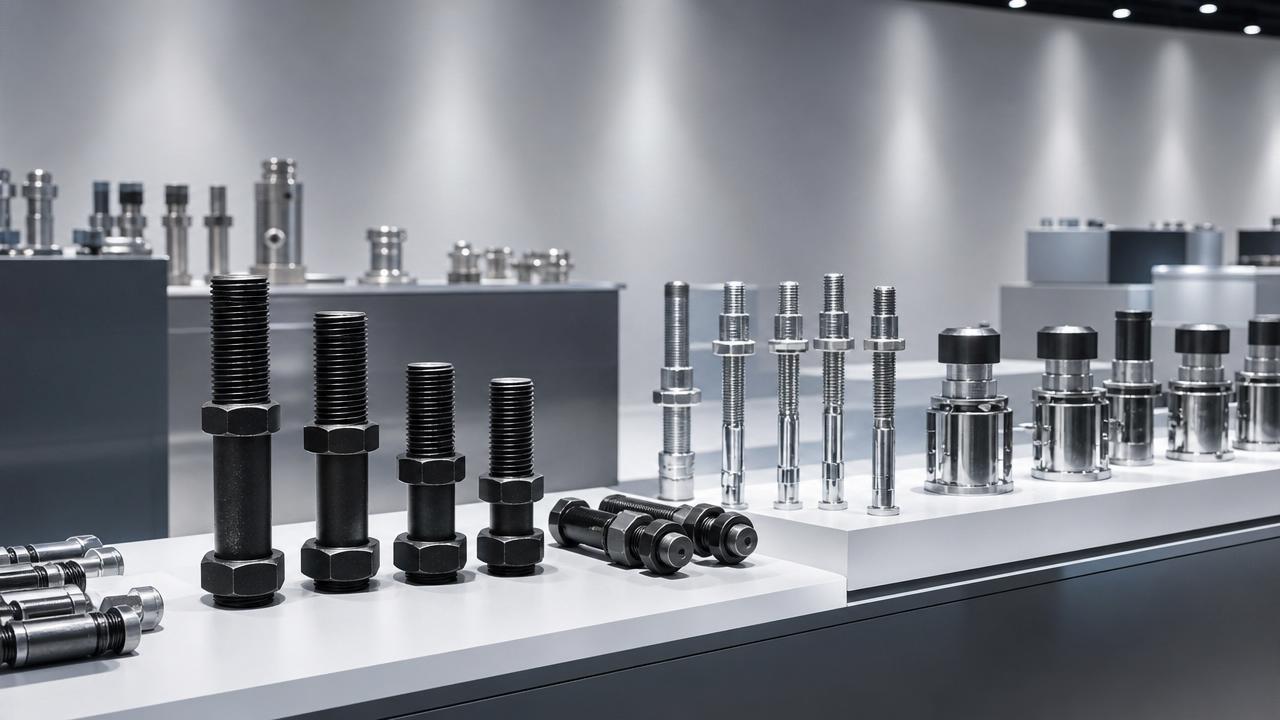
The 2026 Shanghai International Fastener Industry Expo — one of the world’s top three fastener exhibitions — concluded on May 22, 2026. Its outcomes signal notable shifts in global sourcing behavior, particularly for manufacturers and suppliers serving automotive, construction, energy infrastructure, and industrial equipment sectors. This development warrants close attention from stakeholders involved in high-strength fastener production, corrosion-resistant component supply, and export-oriented quality compliance services.
Event Overview
The 2026 Shanghai International Fastener Industry Expo was held from May 20 to 22, 2026. It hosted over 1,300 exhibitors and attracted more than 21,000 trade visitors, including importers and OEM procurement teams from Germany, the United States, Japan, India, and Southeast Asia. Exhibition data indicated strong order growth for high-tensile bolts (grade 10.9/12.9), stainless steel corrosion-resistant anchor bolts, and smart pre-set torque connectors. Additionally, demand from European and U.S. buyers for test reports compliant with ISO, ASTM, and GB standards rose by 37%, reflecting accelerated adoption of export compliance at earlier stages of product development and manufacturing.
Industries Affected
Direct Trading Enterprises
Trading firms engaged in cross-border fastener distribution are affected because buyer expectations around documentation have tightened. The 37% increase in demand for triple-standard (ISO/ASTM/GB) test reports means trading partners must now verify not only product conformity but also the scope and traceability of third-party certifications before shipment — adding verification steps to standard order workflows.
Raw Material Procurement Enterprises
Suppliers of specialty steels and stainless alloys face upstream pressure as demand rises for materials meeting tighter mechanical property and surface treatment specifications — especially for grade 10.9/12.9 bolts and corrosion-resistant anchors. This may influence raw material qualification timelines and inventory planning for heat-treated or passivated grades.
Manufacturing Enterprises
Fastener producers are directly impacted by shifting order profiles: higher volumes for high-tensile and smart torque products require adjustments in production scheduling, tooling calibration, and quality control protocols. Notably, increased emphasis on pre-shipment compliance reporting suggests that final inspection and certification processes are becoming integrated earlier into production cycles — rather than treated as post-manufacturing add-ons.
Supply Chain Service Providers
Logistics, testing, and certification service providers see evolving demand patterns. The rise in requests for multi-standard test reports implies greater need for coordinated lab services capable of issuing aligned documentation across international regulatory frameworks — potentially favoring providers with dual-accredited facilities or interoperable QA systems.
What Relevant Enterprises or Practitioners Should Focus On Now
Monitor official updates on harmonized testing guidelines
While the 37% rise in demand for ISO/ASTM/GB-compliant reports is confirmed, no formal policy change has been announced. Enterprises should track updates from national metrology institutes and industry associations — especially any guidance on accepted equivalencies or mutual recognition arrangements between standards bodies.
Prioritize capacity planning for high-demand product categories
Confirmed order growth for grade 10.9/12.9 bolts, stainless steel anchors, and smart torque connectors indicates sustained near-term demand. Manufacturers should assess current line utilization, lead times for specialized tooling, and availability of certified raw stock — avoiding reactive scaling once orders peak.
Distinguish between buyer-driven requirements and formal regulatory mandates
The observed shift toward early-stage compliance reflects commercial preference, not new legislation. Companies should avoid assuming all customers will adopt this requirement uniformly; instead, segment procurement accounts by region and end-use sector to allocate compliance resources efficiently.
Prepare documentation workflows ahead of order intake
Given that testing and reporting now influence purchasing decisions earlier in the cycle, enterprises should review internal QA handover points, align lab partnerships, and pre-validate report templates against common customer request formats — reducing turnaround time without compromising audit readiness.
Editorial Perspective / Industry Observation
Observably, this exhibition outcome functions less as a discrete event and more as a measurable inflection point in export-oriented fastener supply chains. The 37% surge in demand for multi-standard test reports is not yet codified in regulation, but its consistency across major importing markets suggests it is maturing into an operational norm — particularly for technically demanding applications. Analysis shows that the trend reflects growing buyer risk aversion in complex supply environments, where failure in fastener performance carries disproportionate downstream liability. From an industry perspective, this signals a broader transition: compliance is shifting from a gatekeeping function to an embedded design and procurement criterion. Continued monitoring is warranted, as further acceleration could affect certification cost structures and testing lead times across the value chain.
This development does not indicate an immediate regulatory overhaul, nor does it reflect universal adoption across all buyer segments. Rather, it highlights a widening gap between baseline export readiness and the expectations of high-value, specification-sensitive procurement teams — a gap that will likely widen unless addressed proactively.
Conclusion
The conclusion of the 2026 Shanghai Fastener Show underscores an accelerating alignment between technical product capability and verifiable compliance infrastructure — especially for high-performance fasteners destined for regulated end markets. It is best understood not as a sudden policy shift, but as evidence of deepening operational discipline among leading global buyers. For industry participants, the priority lies in calibrating internal systems to match this emerging baseline — not as a temporary adjustment, but as a structural element of competitive positioning in export channels.
Source Attribution
Main source: Official post-event summary released by the organizers of the 2026 Shanghai International Fastener Industry Expo. No additional external data sources were used. Note: The 37% figure refers specifically to reported buyer inquiries for ISO/ASTM/GB-compliant test reports during the exhibition period; ongoing tracking of whether this translates into sustained contractual requirements remains advised.