
G7 Paris Meeting Sets New Compliance Bar for Critical Minerals
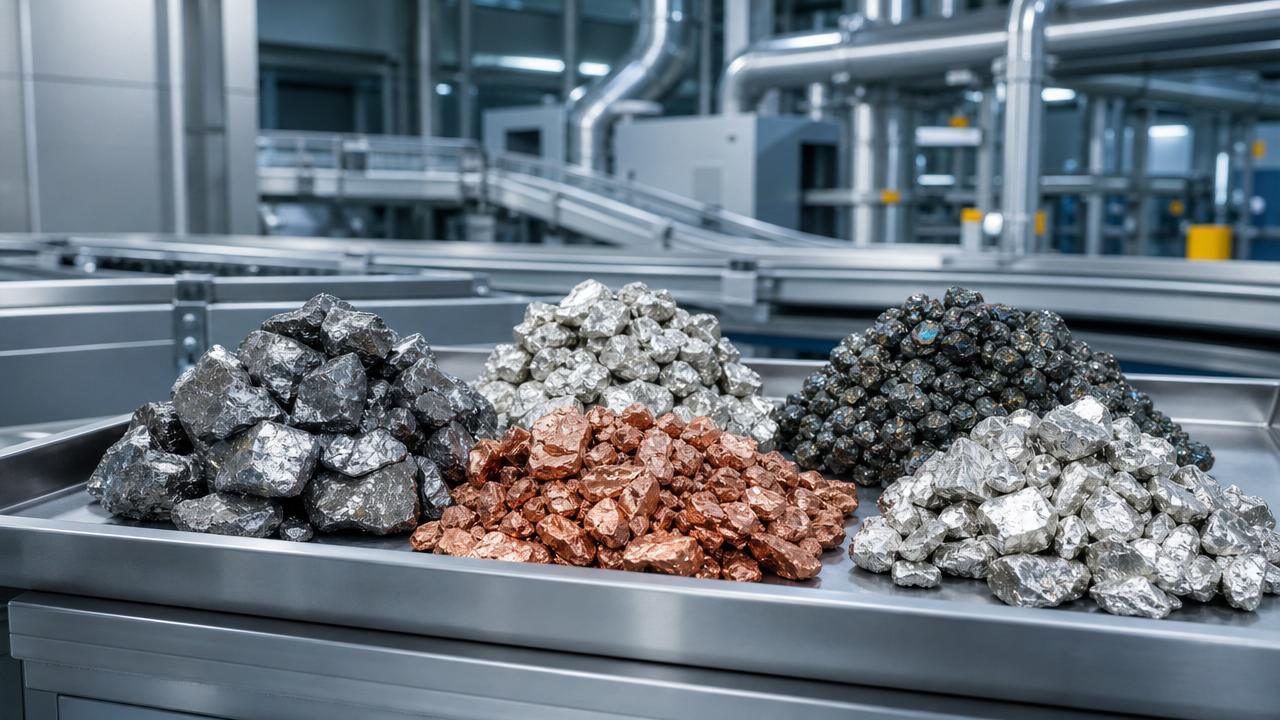
On May 6, 2026, G7 trade ministers convened in Paris to prioritize supply chain security for critical minerals—marking a pivotal shift in global trade expectations for manufacturers and suppliers serving European and North American markets.
Key Outcome of the G7 Trade Ministers’ Meeting
At the May 6, 2026 meeting in Paris, G7 trade ministers formally elevated critical mineral supply chain resilience as a core agenda item. French Minister for Foreign Trade underscored consensus on implementing a tripartite certification framework for rare earth elements, nickel, cobalt, and copper—requiring demonstrable traceability, low-carbon production pathways, and regulatory compliance across the entire upstream value chain.
Downstream Industry Impact Across Supply Chain Roles
Direct Exporters and Traders
Companies engaged in cross-border trade of finished components—including electric motor assemblies, pneumatic valve bodies, tooling steels, and connector terminals—may soon face new contractual clauses mandating mineral origin documentation and third-party verification reports from their material suppliers.
Raw Material Procurement Teams
Procurement functions will need to reassess existing supplier contracts and audit protocols, particularly for inputs containing rare earths, Ni, Co, or Cu. Traceability systems (e.g., blockchain-enabled ledgers or certified chain-of-custody records) are expected to become mandatory prerequisites—not optional enhancements.
Component and Equipment Manufacturers
Manufacturers supplying into regulated sectors must now consider upstream material provenance during product design and sourcing decisions. For instance, motor stator laminations or high-strength mold steels may require documented carbon intensity metrics alongside traditional mechanical specifications.
Supply Chain Service Providers
Logistics integrators, certification bodies, and ESG verification platforms are likely to see increased demand for integrated services covering mineral traceability mapping, Scope 3 emissions validation, and jurisdictional compliance screening (e.g., alignment with EU Conflict Minerals Regulation or U.S. Uyghur Forced Labor Prevention Act due diligence expectations).
Actionable Priorities for Affected Enterprises
Prepare for Expanded ESG Audit Requirements
Anticipate new customer-led assessments focused specifically on raw material origins—not just final product compliance. Documentation such as smelter lists, mine-level due diligence summaries, and verified emissions data per tonne of metal will be essential.
Map and Validate Mineral Inputs in Existing BOMs
Conduct internal material bill-of-materials (BOM) reviews to identify dependencies on rare earths, nickel, cobalt, or copper—even in trace amounts (e.g., permanent magnets, plating layers, alloying elements). Prioritize high-exposure items for immediate traceability gap analysis.
Engage Early with Certification and Verification Partners
Proactively align with recognized schemes such as the Responsible Minerals Initiative (RMI) Smelter Validation Program or the Initiative for Responsible Mining Assurance (IRMA), especially where clients reference these frameworks contractually.
Update Supplier Qualification Protocols
Integrate mineral-specific due diligence criteria into supplier onboarding and periodic re-evaluation processes—including requirements for auditable traceability systems, publicly disclosed decarbonization roadmaps, and adherence to international labor and environmental standards.
Industry Observation: Beyond Certification, a Structural Shift
Analysis shows this is not merely an incremental compliance update but signals a structural recalibration of procurement governance. From an industry perspective, what deserves closer attention is how rapidly these upstream requirements propagate—not only through Tier-1 buyers but also via multi-tier subcontracting clauses embedded in OEM technical specifications. Observably, lead times for qualifying new material sources may extend significantly, and small- to mid-sized manufacturers lacking dedicated ESG or sourcing compliance teams could face disproportionate operational friction. It is more appropriate to understand this as a foundational step toward harmonized global critical mineral governance—not a temporary regulatory spike.
Strategic Implication for Global Manufacturing
This development underscores that material integrity is increasingly inseparable from product competitiveness in advanced industrial markets. Rather than representing a standalone compliance burden, the ‘traceable + low-carbon + compliant’ expectation reflects an evolving definition of technical readiness—one where responsible sourcing is treated as a core engineering parameter, not a peripheral administrative task.
Source Attribution and Monitoring Guidance
This article synthesizes the provided information: title, event date (May 6, 2026), and summary description. Specific official source links were not provided in the input and should be verified continuously. Stakeholders are advised to monitor updates from G7 working groups, the OECD Due Diligence Guidance for Responsible Supply Chains of Minerals, the EU Raw Materials Club, and national export control authorities for implementation timelines, certification scope definitions, and sector-specific guidance documents.